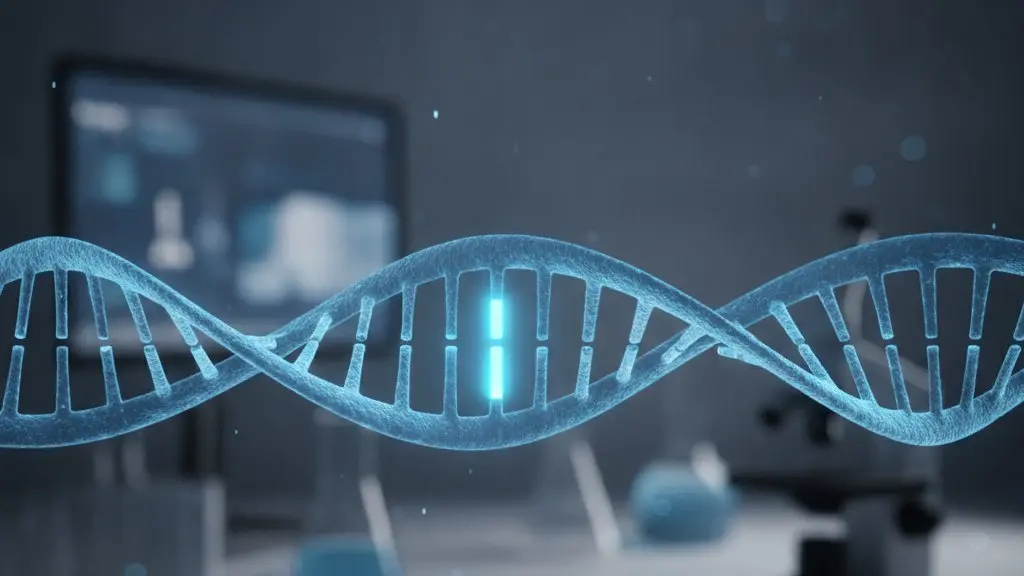
Few laboratory tools have jumped from obscure to famous as fast as CRISPR. In not many years it went from a curiosity in microbiology to a technique discussed in newspapers, ethics panels and film. Some of that attention has blurred what CRISPR actually is. It is not a magic wand that rewrites organisms at will. It is, at its core, a remarkably precise pair of molecular scissors, and the story of where those scissors came from is half the fun.
Understanding the mechanism strips away both the hype and some of the fear. What CRISPR does is specific and, once explained, fairly intuitive.
A defence system borrowed from bacteria
CRISPR did not start as a human invention. It is part of a natural immune system that many bacteria use to defend themselves against viruses. When a virus attacks a bacterium and the bacterium survives, it can store a small snippet of the virus’s genetic code, filing it away as a kind of mugshot. If that virus, or a close relative, shows up again, the bacterium uses the stored snippet to recognise the intruder’s DNA and cut it, disabling the attacker.
The name is an acronym for the repeating genetic structures where those viral snippets are stored. What researchers realised is that this recognise-and-cut machinery could be redirected. If you could choose the snippet, you could tell the system what DNA to find. That insight, adapting a bacterial defence into a programmable tool, is what launched the modern gene-editing era. The National Human Genome Research Institute describes this bacterial origin as the foundation of the whole technique.
The guide and the scissors
In practical terms, a CRISPR editing system has two key parts. The first is a guide molecule, a short piece of RNA written to match the exact DNA sequence you want to target. Because the guide pairs with DNA according to the normal rules of genetic base-matching, it acts like a search term: it steers the system to one specific address in a genome that may contain billions of letters.
The second part is a cutting protein, the most famous of which is called Cas9. Once the guide finds and binds its matching sequence, the protein cuts through both strands of the DNA at that spot. That double-strand break is the actual edit event. On its own, a cut does nothing useful, but cells hate leaving broken DNA unrepaired, and that repair instinct is what scientists exploit.
When the cell rushes to fix the break, it can make mistakes that disable the gene, which is useful if the goal is to switch a gene off. Alternatively, if researchers supply a template alongside the CRISPR machinery, the cell can sometimes patch the break using that template, allowing a specific, intended change to be written in. The precision of targeting is what set CRISPR apart from earlier, clumsier editing methods, and it is why it spread across https://pqrnews.com/category/science/ labs so quickly and touched adjacent https://pqrnews.com/category/technology/ fields from agriculture to diagnostics.
What it can and cannot do
It is worth being clear about the limits. CRISPR is powerful, but it is not flawless. The guide can occasionally direct a cut to a sequence that is similar but not identical to the intended target, an “off-target” effect that researchers work hard to detect and minimise. The efficiency of getting a precise, intended edit rather than just a disruptive cut also varies. And editing a few cells in a dish is very different from safely and evenly editing cells inside a living body, which is one reason medical applications move carefully through testing. Scientific journals such as Nature regularly cover both the advances and the caveats.
There is also a hard line many scientists draw between editing ordinary body cells and editing the cells that pass DNA to future generations. Changes to the latter would be inherited, which raises questions that are as much ethical and social as scientific. Those debates spill over into https://pqrnews.com/category/world/ policy and into how societies decide what should be attempted at all.
Why the mechanism matters to the debate
Much of the public conversation about gene editing makes more sense once you see the tool clearly. CRISPR did not make gene editing possible for the first time; earlier techniques existed. What it did was make editing dramatically faster, cheaper and more accessible, which is precisely why it forced urgent conversations about oversight. A capability that used to be confined to a handful of specialised labs became something far more widely usable.
That accessibility is the double edge. The same precision that could help address certain genetic diseases also lowers the barrier to uses that many people find troubling. Knowing that CRISPR is fundamentally a targeted cut, guided by a matching sequence and healed by the cell’s own repair, is the grounding needed to follow those debates without getting lost in the mythology. To see how PQR News reports on biology and biotechnology, visit our https://pqrnews.com/about-pqr-news/ page.
Sources
Related from Science

What Causes Earthquakes, and Why Some Are Worse
Most earthquakes come down to stress building up along faults in the Earth's crust and releasing all at once. The where, the…

How Climate Change Drives Rising Sea Levels
Warmer oceans and melting ice are lifting the sea, but the two causes work in very different ways. Here is the physics…
Get PQR News in your inbox
Daily premium coverage, free. Independent · Source-cited.