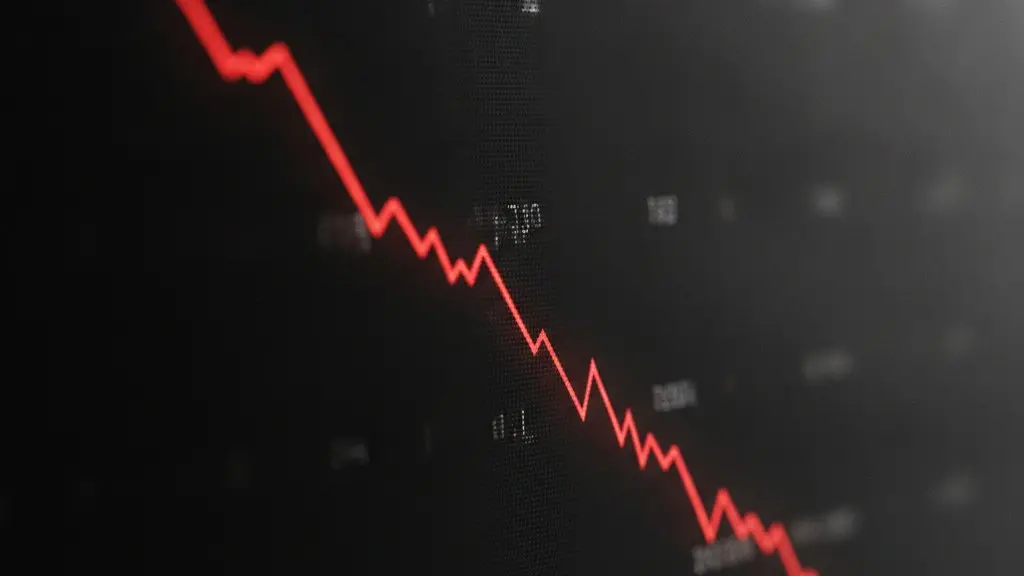
Few economic words carry as much weight as “recession.” It moves markets, shapes elections and reorders household plans, and yet ask ten people what it means and you will get answers that do not quite agree. The most common one — two quarters in a row of shrinking output — is a useful shorthand that even many economists reach for. It is also not the definition the people who officially call recessions actually use.
Understanding the gap between the popular rule and the working definition explains a lot: why a downturn can be declared without two negative quarters, why one can be confirmed months after it began, and why arguments about whether an economy “is in recession” are often really arguments about words. For anyone following the economy, it is worth getting straight.
Beyond the two-quarters rule
The two-consecutive-quarters test is popular because it is simple and mechanical. Gross domestic product, the standard measure of an economy’s total output, is reported every quarter; if it falls twice in a row, the shorthand says recession. Journalists like it because it is unambiguous, and it often does line up with genuine downturns.
But it has real weaknesses. GDP figures are estimates that get revised, sometimes substantially, well after they are first published, so a call based on early data can later look wrong. The rule also ignores everything except output. An economy could suffer a sharp, broad collapse in employment and incomes that does not happen to produce two neatly negative GDP quarters, or it could post a mild technical dip that no one experiences as a real slump. Relying on output alone can therefore both miss recessions and flag ones that were not.
This is why the bodies that make authoritative calls look wider. The definition most economists actually work from is qualitative: a recession is a significant decline in economic activity that is spread across the economy and lasts more than a few months. The three key words are depth, breadth and duration — the slump has to be meaningful, felt across many sectors, and sustained.
Who gets to call one
There is no global referee for recessions, and different places handle the decision differently. In the United States, the widely accepted arbiter is a committee of academic economists at the National Bureau of Economic Research, a private non-profit rather than a government agency. This committee dates the beginning and end of recessions by examining a range of monthly indicators — employment, industrial production, real incomes and spending among them — not GDP by itself.
Crucially, the committee works after the fact. It waits until enough data is in to be confident, which means a recession is often officially declared, and dated to a start well in the past, only once it is clearly under way or even over. That deliberate caution is a feature, not a bug: the aim is to be accurate rather than fast, and to avoid crying wolf over a wobble that turns out to be nothing.
Other economies use other conventions. Many statistical agencies and commentators in Europe and elsewhere lean on the two-quarters rule as a practical benchmark, while international institutions such as the OECD track a battery of indicators to gauge where economies sit in the cycle. The upshot is that a headline declaring a country “in recession” may rest on quite different criteria depending on who is speaking.
A normal part of the cycle
Whatever the precise trigger for a call, recessions are not freak events. Market economies move in a business cycle — periods of expansion, when output and employment grow, followed by contractions, when they fall, before recovery begins again. Recessions are the contraction phase, and over the long run they recur. What varies enormously is their character.
Some are shallow and brief; others are deep and prolonged. Their causes differ too. A recession can be set off by a financial crisis, by a central bank raising interest rates to curb inflation, by a collapse in confidence and spending, or by an external shock that disrupts supply. Because the causes differ, so do the remedies and the pain. The International Monetary Fund has documented how downturns tied to banking crises tend to be longer and harder to escape than ordinary ones, which is one reason policymakers treat threats to the financial system so seriously. These dynamics ripple through markets and, when a slump spreads across borders, become a matter of global concern that shapes the choices governments and central banks make.
Why the definition matters
The debate over what counts as a recession can look like semantic hair-splitting, but it has consequences. Declaring a recession can affect confidence, feeding the very slowdown it describes. It can trigger automatic government support and shape decisions on interest rates, taxes and spending. And in politics, the label is a cudgel: incumbents resist it, opponents wield it, and both sometimes lean on whichever definition suits them.
For an ordinary reader, the practical takeaway is to treat the word with a little skepticism about precision. A recession is best understood not as a single number crossing a line but as a broad, sustained deterioration in economic life — one usually confirmed only in hindsight, by people looking at more than output alone. Knowing that is the difference between reacting to a headline and understanding what it actually claims. Our approach to explaining these mechanisms plainly is set out on our about page.
Sources
Related from Business
What Tariffs Are, and Who Actually Pays Them
Tariffs are back at the centre of political argument, often described as a tax on other countries. The mechanics are more complicated,…

How Compound Interest Works, for Savers and Borrowers
Compound interest is often called the most powerful force in personal finance. It is the same mechanism whether it is quietly building…
Get PQR News in your inbox
Daily premium coverage, free. Independent · Source-cited.