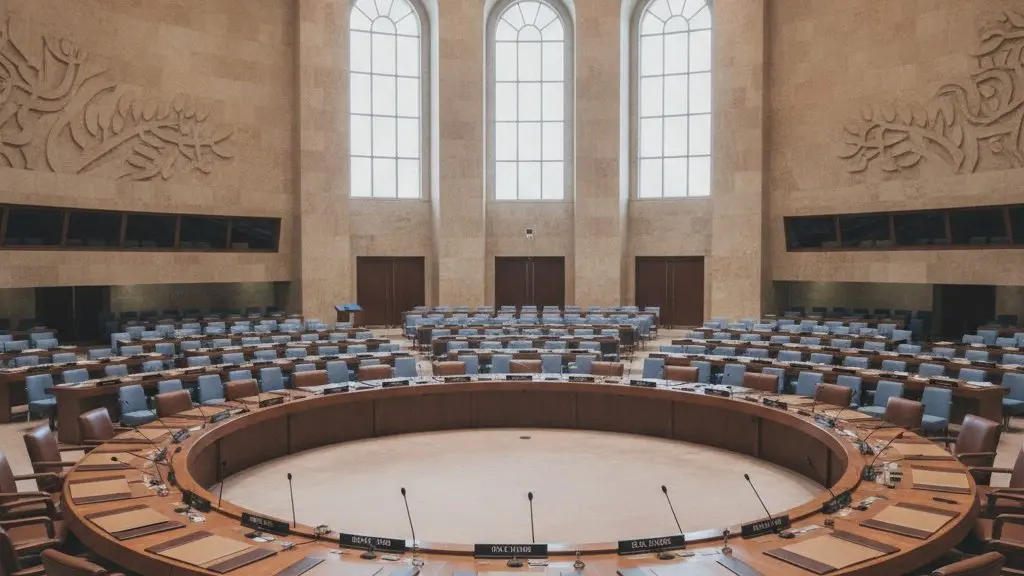
Of all the bodies within the United Nations, one stands apart in the reach of its authority. The General Assembly can debate and recommend, but its resolutions are not binding. The Security Council is different: its decisions carry the force of international law and are meant to be obeyed by every member state. That is why so much of world diplomacy runs through this single chamber, and why the way it is structured has consequences far beyond New York.
What the Council is for
The Security Council was created after the Second World War with a specific mandate: to maintain international peace and security. When a conflict threatens to break out or spread, or when aggression occurs, the Council is the body the UN Charter tasks with responding. Its tools range from calling for ceasefires and negotiating settlements to imposing economic sanctions and, in the most serious cases, authorizing the use of force or the deployment of peacekeeping missions.
This is a genuinely unusual power in international affairs. States are normally sovereign and cannot be told what to do. By joining the UN, however, members accept the Charter, which obliges them to carry out the Council’s decisions. That binding quality is the single most important thing to understand about the Council, and it separates its resolutions from the many other statements that emerge from https://pqrnews.com/category/world/ diplomacy.
The five permanent members and the veto
The Council has fifteen seats. Five belong to permanent members: China, France, Russia, the United Kingdom, and the United States. These five were the principal victorious powers of the Second World War, and their permanent status reflects the balance of power as it stood when the UN was founded. The other ten seats are filled by member states elected for fixed terms by the General Assembly, with seats distributed to ensure representation from different regions of the world. These elected members serve for a limited period and then rotate off.
The feature that dominates everything is the veto. Each of the five permanent members can block the adoption of a substantive resolution simply by voting against it. A proposal can command the support of every other member of the Council and still fail if a single permanent member is opposed. This means the Council can act decisively only when the great powers agree, or at least when none of them chooses to object. When their interests clash, the Council can be paralyzed on the very crises it exists to address.
Supporters of the veto argue that it was the price of getting the major powers to join and stay inside the system, and that binding them into the organization is safer than leaving them outside it. Critics say it lets a handful of states shield themselves and their allies from accountability, and that it can leave the Council silent during grave conflicts. Both observations are true at once, which is why the veto sits at the center of nearly every debate about UN reform. Discussions about how global https://pqrnews.com/category/politics/ institutions should be updated for the present century keep returning to this question.
How the Council actually operates
In practice, the Council meets frequently and can be convened at short notice when a crisis erupts. The presidency of the Council rotates among its members month by month, giving each a turn to set the agenda and chair meetings. Much of the real work happens through negotiation over the wording of resolutions, where the difference between a strong demand and a softer expression of concern can determine whether a text survives a veto.
The Council’s decisions take several forms. It can adopt binding resolutions, issue non-binding statements, and establish sanctions regimes or authorize missions. When it deploys peacekeepers, those forces operate under a mandate the Council defines, and their tasks can range from monitoring a ceasefire to protecting civilians. The scope and limits of each mission are political choices, hammered out among members with differing priorities. Full records of its decisions are published by the United Nations Security Council itself.
Why its design still shapes the world
The Security Council was built for the world of the mid-twentieth century, and its permanent membership still reflects that era rather than the present distribution of population and power. That mismatch is the root of long-running calls to expand the Council or to curb the veto, so that regions and rising states currently without a permanent seat could have a greater voice. Any such change would itself require the agreement of the existing permanent members, which is a formidable obstacle.
For anyone trying to follow international crises, the Council’s structure explains a great deal. When it acts, its word carries real legal weight; when it cannot, the reason is usually a division among the five permanent members. Recognizing that pattern makes the news from the Council far easier to read. More of our explainers on how global institutions function are collected on the https://pqrnews.com/about-pqr-news/ page.
Sources
Related from World
How the European Union Makes Its Laws
EU law shapes rules on trade, privacy, the environment, and much more across a continent. But who actually writes it? The process…
What NATO’s Article 5 Means, and Its Limits
Article 5 is the heart of the NATO alliance: the promise that an attack on one member is treated as an attack…
Get PQR News in your inbox
Daily premium coverage, free. Independent · Source-cited.