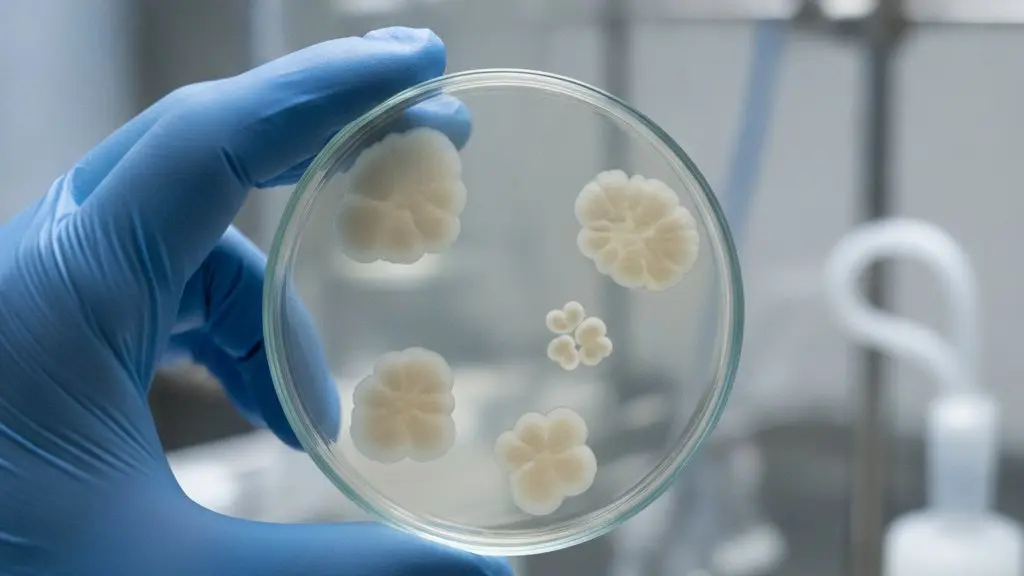
Antibiotics changed medicine so completely that it is easy to forget how recent they are. Infections that were once routinely fatal became, for a few decades, minor inconveniences. That reliability is now under strain. Public health bodies around the world describe antibiotic resistance as one of the most serious long-term threats to modern medicine, and the frustrating part is that it is not caused by any single villain.
It is caused by evolution doing exactly what evolution does, helped along by ordinary human behaviour. To see why it keeps getting worse, it helps to separate the biology from the habits.
The biology: survival of the toughest microbes
Bacteria reproduce fast, sometimes dividing every twenty minutes or so, and each generation carries small random genetic variations. In any large population of bacteria, a few individuals will happen to have a trait that lets them tolerate a given antibiotic. When the drug arrives and kills the vulnerable majority, those rare survivors are left with less competition and plenty of room to multiply.
Within a short time, the population can be dominated by descendants of the survivors, all carrying the resistance trait. This is natural selection, compressed into days. Nobody has to do anything wrong for it to begin; simply using an antibiotic, even entirely appropriately, applies the pressure that favours resistant strains. Bacteria also swap useful genes with each other directly, so a resistance trick that appears in one species can spread to others. That sharing is part of why the problem grows across many different infections at once.
The habits: how humans speed it up
If antibiotic use is the pressure, then more use means more pressure. This is where human behaviour turns a slow natural process into a fast one. Antibiotics are frequently taken for illnesses they cannot help, such as colds and most sore throats, which are caused by viruses. Antibiotics do nothing against viruses, so those courses apply resistance pressure without any medical benefit.
Stopping a course early, or taking leftover pills without guidance, can leave behind the hardier bacteria while removing only the weakest, which is close to a training regimen for resistance. The World Health Organization has repeatedly stressed that antibiotics should be used only when genuinely needed and exactly as directed.
Agriculture is the other major driver. In many parts of the world, antibiotics are given to livestock in large quantities, sometimes to prevent disease in crowded conditions or to promote growth rather than to treat a specific sick animal. That constant low-level exposure is a powerful engine for resistance, and resistant bacteria can then move between animals, food, water and people. These threads connect health to the broader https://pqrnews.com/category/science/ of evolution and to https://pqrnews.com/category/world/ debates about farming and trade standards.
The thin pipeline of new drugs
Losing an antibiotic would matter less if replacements arrived steadily. They have not. Discovering genuinely new classes of antibiotics is scientifically hard, and the economics are awkward: a successful new antibiotic is meant to be used sparingly and kept in reserve, which is the opposite of a blockbuster market. As a result, investment has lagged, and most antibiotics in use belong to families discovered many decades ago.
So the two curves move in opposite directions. Resistance keeps accumulating, while the supply of fresh weapons trickles rather than flows. Regional monitors such as the European Centre for Disease Prevention and Control track resistant infections precisely because the trend has been going the wrong way. The response now leans heavily on slowing resistance down, through more careful prescribing, better infection control in hospitals, and reducing unnecessary farm use. These questions increasingly overlap with https://pqrnews.com/category/business/ discussions about how to fund drugs that are meant to be rationed.
Part of the strategy is deliberately holding certain antibiotics in reserve. Some drugs are treated as last-resort options, kept for infections that nothing else can touch, so that resistance to them stays rare for as long as possible. This is why hospitals often restrict who can prescribe particular antibiotics, and why laboratories test which drug a specific infection will actually respond to rather than reaching for the strongest option by default. Programmes built around this careful, evidence-led prescribing are usually grouped under the term antibiotic stewardship, and they have become a standard part of how modern health systems try to preserve the drugs they still have.
Why this is everyone’s problem, not just patients’
Antibiotics are quiet infrastructure. They sit behind surgery, chemotherapy, childbirth care and treatment for ordinary wounds, all of which rely on being able to stop an infection if one takes hold. As resistance spreads, that safety net frays, and procedures we treat as low-risk could become riskier again.
The encouraging news is that the drivers are, in large part, things people and institutions can influence. Resistance is inevitable in the abstract, but the speed at which it spreads is not fixed. Using these drugs with more discipline buys time, and time is what the search for new medicines needs. To learn how PQR News reports on public health, visit our https://pqrnews.com/about-pqr-news/ page.
Sources
Related from Health

How mRNA Vaccines Work, Explained Simply
mRNA vaccines carry a set of instructions, not a piece of the virus. Here is what those instructions do inside the body,…

What Actually Happens to Your Body When You Sleep
Sleep is not the body switching off. It is a busy, structured process the brain runs on itself every night, and skipping…
Get PQR News in your inbox
Daily premium coverage, free. Independent · Source-cited.