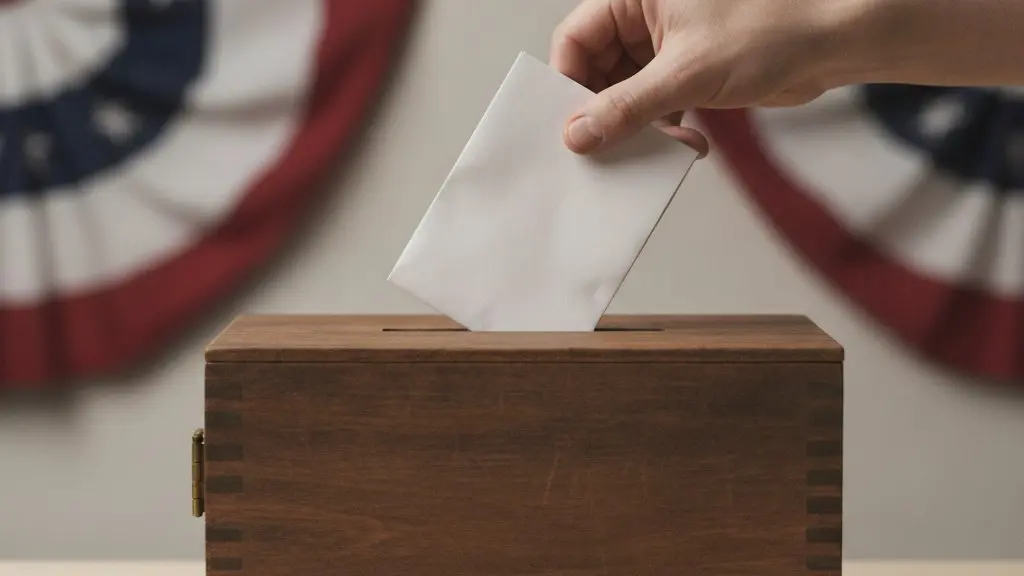
Every four years, tens of millions of Americans go to the polls to choose a president. Yet the name they mark on the ballot is not, strictly speaking, elected by that vote. The United States picks its president through the Electoral College, an indirect system written into the Constitution in 1787. Understanding it explains one of the more confusing features of American politics: how a candidate can lose the national popular vote and still take office.
What the Electoral College actually is
The Electoral College is not a place or a building. It is a process, and a group of people called electors. Each state is assigned a number of electors equal to its total representation in Congress: its two senators plus its number of members in the House of Representatives. Because House seats are apportioned by population, larger states get more electors and smaller ones get fewer, though every state gets at least three. The District of Columbia is also granted electors under the Twenty-third Amendment, bringing the current national total to 538.
When a voter chooses a presidential candidate, they are really instructing their state to appoint that candidate’s slate of electors. Those electors are the ones who cast the formal votes for president and vice president weeks after the general election. To win, a candidate needs an absolute majority of the electoral votes available. With 538 up for grabs, that majority is 270.
The design was a compromise. Some delegates at the Constitutional Convention wanted Congress to choose the president; others wanted a direct national vote. The College split the difference, keeping a role for the states while stopping short of a pure popular election. Debates over how the country’s https://pqrnews.com/category/politics/ institutions balance national and state power go back to that same founding period.
How the votes are counted, state by state
The feature that shapes modern campaigns is the winner-take-all rule. In almost every state, the candidate who wins the most votes statewide receives all of that state’s electoral votes, no matter how narrow the margin. Two states, Maine and Nebraska, are the exceptions: they award some electors by congressional district, so their votes can be split.
This all-or-nothing structure is why candidates concentrate on a handful of closely divided states, often called battlegrounds or swing states, and largely ignore places where the result is not in doubt. A large win in a reliably partisan state yields exactly the same number of electoral votes as a narrow one. That is also why the national popular vote and the electoral vote can diverge. A candidate who runs up huge margins in a few populous states may pile on popular votes without gaining any extra electors, while an opponent who wins many states by slim margins can assemble a majority in the College.
It has happened. On several occasions in American history, the winner of the presidency did not win the most individual votes nationwide. That outcome is not a glitch; it is a direct consequence of counting by state rather than by head. For readers comparing systems, the effect is the mirror image of how many parliamentary democracies convert votes into seats and then into governments.
From election night to inauguration
The results reported on election night are projections based on the statewide popular votes. The formal machinery grinds on afterward. Each state certifies its results and its slate of electors. In December, the electors meet in their respective state capitals and cast their ballots. Those results are sent to Congress, which meets in a joint session in early January to count them officially and declare the winner. The president is then sworn in on Inauguration Day, in January.
A recurring question is whether electors are bound to vote the way their state did. Many states have laws requiring electors to honor the popular vote, and an elector who breaks ranks is sometimes called a faithless elector. In practice such defections are rare and have never changed a presidential outcome. The Supreme Court has upheld the power of states to enforce those pledges, reinforcing that the elector’s role is largely ceremonial rather than a genuine second decision.
Why the debate over the College endures
Few features of the US system draw sharper argument. Supporters say the College forces candidates to build geographically broad coalitions and protects the influence of smaller states, preventing campaigns from focusing only on a few big cities. Critics counter that it can hand power to the loser of the popular vote, that it concentrates attention on a small number of swing states, and that a citizen’s vote carries different weight depending on where they live.
Changing it is hard. Abolishing the College would require a constitutional amendment, a demanding process. Some reformers instead back an interstate agreement under which participating states would pledge their electors to the national popular-vote winner, an approach that would take effect only if states controlling a majority of electoral votes signed on. Whether any such change gains traction is a live political question, tied up with the same disputes about representation that run through American https://pqrnews.com/category/law-courts/ and constitutional debate. For now, understanding the College is essential to reading any US presidential race, and you can find more of our plain-language guides to how power works on our https://pqrnews.com/about-pqr-news/ page. Reputable primers, such as the explainer maintained by the US National Archives, lay out the step-by-step timeline in full.
Sources
Related from Politics

How Judicial Review Works and Why It Matters
Judicial review is the power of courts to strike down laws and government actions that conflict with the constitution. It sits at…
What a Vote of No Confidence Is and How It Works
In parliamentary democracies, a government stays in office only as long as it holds the confidence of the legislature. A no-confidence vote…
Get PQR News in your inbox
Daily premium coverage, free. Independent · Source-cited.