

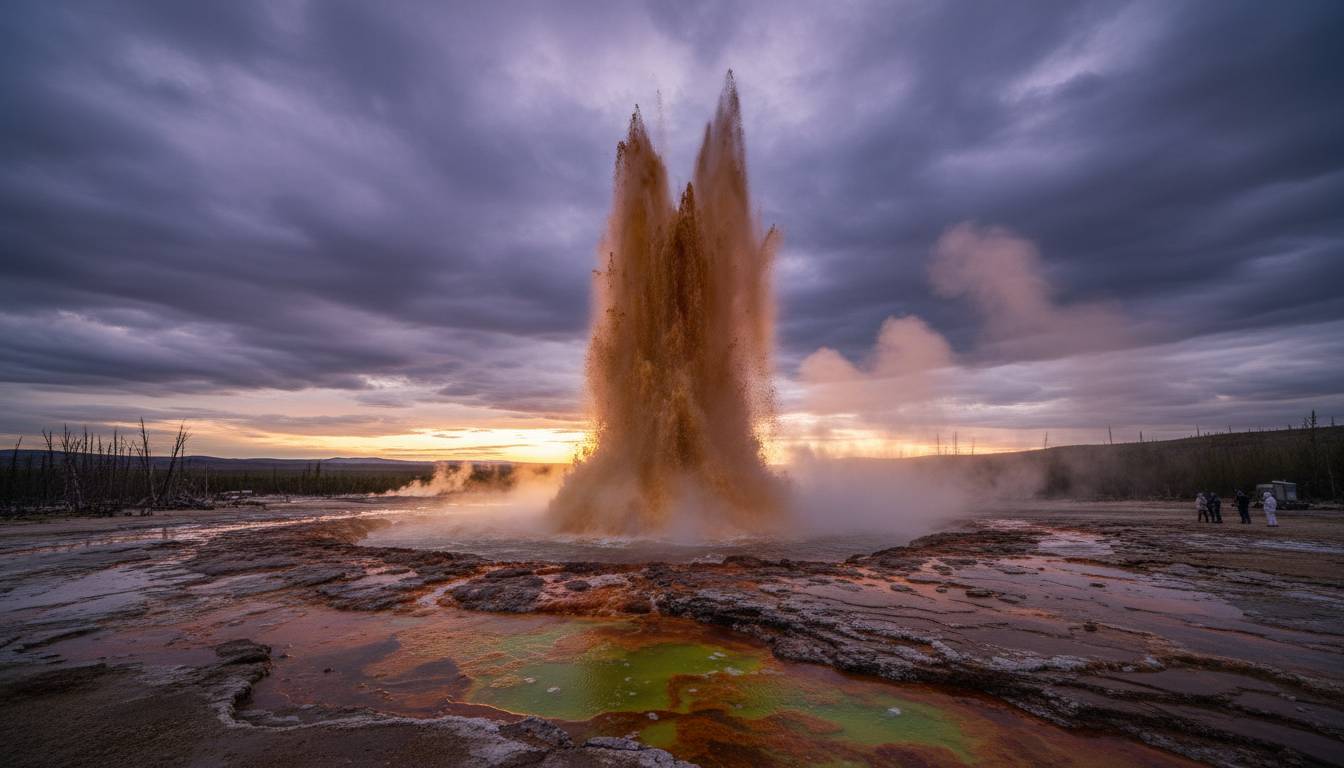
Yellowstone National Park’s renowned Norris Geyser Basin has drawn attention from geologists and visitors alike following increased activity from one of its thermal features. The Norris Basin, known for its dynamic thermal features and geological significance, has seen renewed interest in its unique hydrothermal systems. This activity has reignited interest in understanding the complex geological processes that drive Yellowstone’s thermal features.
Understanding Norris Geyser Basin
The Norris Geyser Basin stands apart from other thermal areas in Yellowstone due to its exceptionally hot temperatures and constantly changing features. Located in one of the hottest and most dynamic thermal areas within Yellowstone National Park, the basin contains numerous geysers, hot springs, and fumaroles. Steamboat Geyser, the world’s tallest active geyser, calls this basin home.
The geological conditions that create and sustain the features in Norris Basin involve a complex combination of volcanic heat sources and underground water systems. Yellowstone sits atop a massive volcanic caldera, providing the intense heat necessary to power the park’s numerous thermal features. The water in these features interacts with volcanic gases, particularly carbon dioxide and hydrogen sulfide, creating varying chemical compositions.
The size and power of Norris Basin’s features distinguish it from other thermal areas globally. Steamboat Geyser can erupt to heights exceeding 300 feet, dwarfing most other geysers worldwide. Scientists estimate that Norris Basin experiences the highest underground temperatures recorded in the park and contains some of the most dynamic and unpredictable thermal features in the world.
The Science Behind Geyser Dormancy and Activity Cycles
Geysers represent one of nature’s most dramatic geological phenomena, requiring precise conditions of heat, water, and pressure to produce their characteristic eruptions. Understanding why geysers experience periods of dormancy involves examining the complex hydrological systems that feed them. Like many large thermal features, geysers in Norris Basin do not erupt continuously but follow patterns of activity and rest that can span months, years, or even decades.
Dormancy periods occur when the conditions necessary for eruption temporarily cease to exist. This can happen due to seismic activity that alters underground water pathways, changes in groundwater recharge rates, or shifts in the volcanic heat source beneath the geyser. In Norris Basin, its location in a seismically active area means that even minor earth movements can affect thermal feature behavior. Scientists monitoring the basin have documented multiple periods of dormancy and activity throughout its recorded history.
The resumption of activity after dormancy typically occurs when underground conditions once again favor the buildup of pressure necessary for eruption. This process involves water heated by volcanic sources rising through conduits in the earth’s crust, accumulating and pressurizing until the confining pressure is overcome. Steamboat Geyser’s return to activity in 2018 after decades of dormancy demonstrated that the underlying geological processes can return to conditions conducive to regular eruptions.
Yellowstone’s Norris Basin: A Geological Wonder
The Norris Geyser Basin represents one of the most geothermally active regions in Yellowstone National Park, home to numerous hot springs, geysers, and fumaroles. This area experiences the highest underground temperatures recorded in the park and contains some of the most dynamic and unpredictable thermal features in the world. The basin receives its name from the Norris family, early settlers who once owned property near the thermal area.
What makes Norris Basin particularly significant is the diversity of its thermal features and the rapid changes that occur within the area. Unlike some thermal regions where features remain relatively stable for decades, Norris Basin features frequently change their behavior, sometimes dramatically. New geysers can suddenly appear while established ones may cease eruption or change their pattern entirely.
Scientists from around the world visit Norris Basin to study the unique processes that create and sustain thermal features. The research conducted in this area contributes to broader understanding of volcanic hydrothermal systems, geothermal energy potential, and the limits at which life can exist in extreme environments.
Significance for Science and Visitors
The activity of Norris Basin’s thermal features holds particular significance for the scientific community studying geothermal phenomena. Each eruption cycle provides new data about the underground processes that drive geysers, contributing to a body of knowledge about these rare features. Researchers continue to investigate the chemical processes that produce different water compositions, the geological structures that allow large eruptions, and the factors that influence eruption frequency and intensity.
For visitors to Yellowstone National Park, Norris Basin represents an opportunity to witness some of nature’s most dramatic thermal phenomena. Unlike the predictable eruptions of Old Faithful, which draw massive crowds based on its remarkably consistent schedule, Norris Basin offers a glimpse into the unpredictable and wild nature of Yellowstone’s thermal landscape.
The tourism and educational value of Norris Basin extends beyond mere spectacle. Park rangers use the basin’s features as educational tools to explain the geological forces that created Yellowstone’s remarkable thermal features. Visitors learn about the delicate balance of conditions required to sustain geysers and the importance of preserving these fragile environments.
Conservation and Monitoring Efforts
The management of Yellowstone’s thermal features involves ongoing efforts to protect both the natural resources and the visitors who come to experience them. The National Park Service maintains a network of instruments throughout Norris Basin that record temperature, seismic activity, and other parameters relevant to thermal feature behavior.
Conservation efforts focus on minimizing human impact on these delicate geological systems. The unique chemical compositions of Norris Basin’s thermal features mean that the surrounding environment has developed specialized ecosystems adapted to these conditions. Scientists have discovered extremophile microorganisms in and around thermal features that thrive in conditions previously thought impossible for life.
The challenge of balancing public access with resource protection requires constant attention from park managers. While Norris Basin remains accessible to visitors, certain areas around active thermal features require caution due to the risk of scalding and unstable ground. Educational programs emphasize the importance of staying on designated trails and respecting the power of these natural phenomena.
Future Implications and Scientific Understanding
The increased activity in Norris Basin provides scientists with renewed opportunities to study these geological phenomena. Researchers deploy monitoring equipment to capture data during active phases, comparing observations with information gathered during previous periods of activity. This comparative analysis helps build more complete models of how geysers function and evolve over time.
Understanding the long-term behavior patterns of Norris Basin’s features has implications beyond pure scientific interest. The knowledge gained from studying these features contributes to broader understanding of geothermal systems that have potential applications in energy production and environmental monitoring.
The geological processes operating in Norris Basin continue to evolve, meaning that the future behavior of its thermal features remains uncertain. Scientists anticipate that the basin will likely experience additional periods of dormancy and activity in the coming years and decades.
Conclusion
The activity in Norris Basin represents a significant ongoing event in Yellowstone National Park. The basin stands as a testament to the remarkable diversity of Earth’s thermal features and the complex processes that shape our planet’s interior. Its continued activity provides opportunities for scientific discovery while offering visitors an unparalleled glimpse into the raw power of nature.
As research continues and monitoring techniques improve, our understanding of Norris Basin will undoubtedly expand. The knowledge gained from studying these features contributes not only to scientific advancement but also to our appreciation of the natural wonders preserved within America’s national parks.
Frequently Asked Questions
What makes Norris Geyser Basin significant?
Norris Geyser Basin is one of the most geothermally active regions in Yellowstone National Park. It experiences the highest underground temperatures recorded in the park and contains Steamboat Geyser, the world’s tallest active geyser. The basin’s dynamic nature, with features frequently changing behavior, makes it unique among thermal areas.
How long do geysers in Norris Basin typically stay active?
Activity patterns vary significantly among Norris Basin features. Steamboat Gyser’s major eruptions can occur years apart, while other features may erupt more frequently. Unlike predictable geysers such as Old Faithful, many Norris Basin features do not follow reliable schedules.
Why is the water from some Yellowstone thermal features acidic?
The chemical composition of Yellowstone’s thermal features results from volcanic gases, particularly carbon dioxide and hydrogen sulfide, dissolving into underground water before it reaches the surface. This chemical interaction produces water with varying pH levels, creating conditions that support unique ecosystems of extremophile microorganisms.
Is it safe to visit Norris Geyser Basin in Yellowstone?
Visitors can safely observe Norris Basin’s features from designated viewing areas. However, it is essential to stay on marked trails and respect all safety barriers, as the ground around thermal features can be unstable and water temperatures are extremely hot. Park rangers provide current safety information at visitor centers throughout Yellowstone.
How do scientists monitor geyser activity in Yellowstone?
Scientists use a combination of seismometers, temperature sensors, satellite imagery, and visual observation to monitor geyser activity throughout Yellowstone National Park. These tools help researchers understand the underground processes that drive eruptions and provide early warning of significant changes in behavior.
What other notable thermal features exist in Norris Basin?
Norris Geyser Basin contains numerous notable thermal features, including Steamboat Geyser, the world’s tallest active geyser, and the intricate system of hot pools and fumaroles that make this area one of the most geothermally dynamic regions in Yellowstone. Each feature within the basin offers unique insights into different aspects of hydrothermal activity.















Leave a comment