

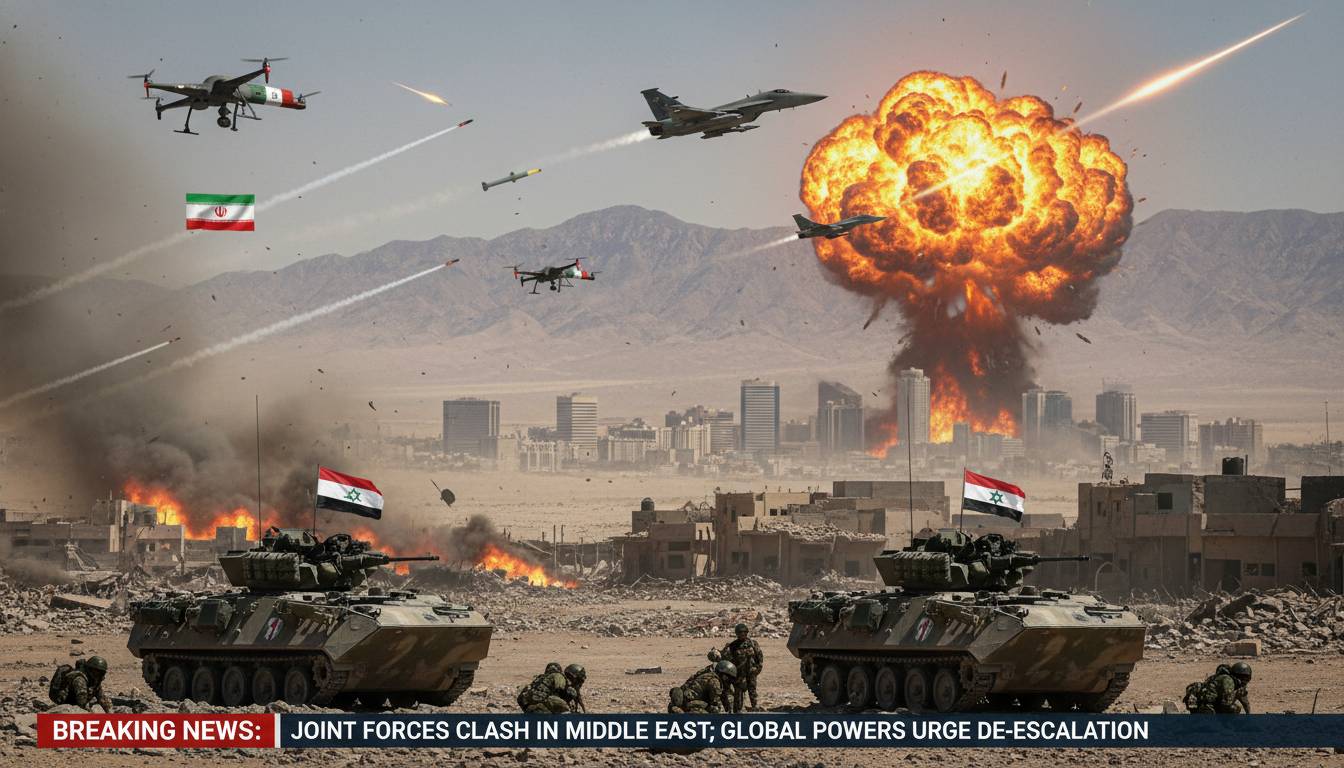
Iraq sits at the most unstable intersection of the US-Israel confrontation with Iran because it hosts US forces, contains Iran-backed armed factions inside its own security architecture, and depends on Iran for parts of its energy and trade system. That overlap turns every strike, airspace violation, and militia move into a test of Iraqi sovereignty. Since June 2025 and again in March 2026, official Iraqi statements, US military transition plans, and reporting from AP, Reuters-linked coverage, and regional outlets show the same pattern: Iraq is not the main battlefield, but it is the easiest place for the war to spill over.
⚠️
Iraq’s core vulnerability is structural, not episodic.
About 2,500 US troops were still in Iraq under Operation Inherent Resolve as the US-Iraq transition plan moved toward ending the coalition mission in Iraq by September 2025, with support for Syria continuing from Iraq until at least September 2026, according to the US Department of Defense and AP reporting published in September and October 2025. That means Iraq remains a live military platform even while Baghdad says it does not want to be part of the war.
September 2025 to March 2026: Iraq stayed exposed even as the mission shrank
The first reason Iraq is the most fragile front is simple: the country still hosts US personnel and facilities while trying to avoid becoming a launchpad or retaliation zone. Washington and Baghdad agreed in 2024 that the coalition mission in Iraq would wind down by the end of September 2025, but the second phase allows support for operations in Syria from Iraqi territory until at least September 2026. That leaves Iraq in a gray zone—less protected by a large coalition footprint, but still exposed to attacks tied to US regional operations.
Objective fact based analysis only: Are the U.S. and Isreal losing to Iran in the war they waged?
byu/AcadianAcademic inIRstudies
That gray zone became visible again in early March 2026. Reporting from The National and Al Jazeera described drone and missile attacks on US-linked sites in Baghdad and Erbil, alongside strikes on Iran-linked militia positions elsewhere in Iraq. Those reports indicate that Iraq was hit from both directions: armed groups targeted US interests, while militia infrastructure faced suspected US-Israeli pressure. In other words, Iraq became the arena where deterrence messages were exchanged at lower political cost than direct state-on-state escalation.
Iraq’s Exposure Points in the Conflict
Pressure PointVerified DetailWhy It Matters US troop presenceAbout 2,500 US troops in Iraq during the transition periodKeeps Iraq a target for Iran-backed factions Mission timelineCoalition mission in Iraq to end by September 2025; Syria support from Iraq until at least September 2026Creates a prolonged vulnerability window Airspace violationsIraq filed a UN complaint over Israeli use of Iraqi airspace on June 13, 2025Shows Baghdad cannot fully control its skies Energy dependenceAP reported potential loss of about 8,500 MW tied to Iranian gas and electricity flows after the US waiver decision in March 2025Links regional conflict to domestic power shortages Source: US Department of Defense, AP, Iraqi Foreign Ministry-linked reporting | accessed March 26, 2026
As night fell across the region, exchanges of strikes continued across several fronts, from Lebanon and Israel to Iraq and the Gulf, raising fears that the conflict between Israel and Iran has now evolved into a multi-theatre war drawing in both regional militias and global… pic.twitter.com/diK16Z52VR
— The Spectator (@spectator) March 4, 2026
Why June 13, 2025 exposed Iraq’s weakest sovereign boundary
The second reason is airspace. Iraq has repeatedly said it rejects the use of its territory and skies for attacks on neighboring states, yet it also acknowledged that Israeli operations against Iran crossed Iraqi airspace. On June 13, 2025, Iraq’s foreign minister said Baghdad had filed an official complaint to the UN Security Council over those violations. Iraq also temporarily shut its airspace that day, according to transport ministry reporting carried by dpa and INA-linked coverage.
Those who can remember Iraq, how similar was it to the current Iran War?
byu/threetimesacharm25 inAskBrits
This matters beyond symbolism. A state that cannot reliably deny use of its airspace is vulnerable to retaliation from both sides. Iran can argue that Iraq failed to prevent attacks transiting its territory. The US can argue Iraq must do more to stop militia attacks on US personnel. Israel can treat Iraqi skies as part of a wider operational corridor. That is why Iraq’s sovereignty problem is more acute than in Lebanon or Yemen: Baghdad is internationally recognized, formally partnered with Washington, economically tied to Tehran, and militarily penetrated by armed actors that do not always act on state command.
Timeline of Iraq’s Escalation Risk
September 27, 2024: Washington and Baghdad announce a phased transition ending the coalition mission in Iraq by September 2025, with a second phase tied to Syria support until at least September 2026.
Trump fear mongers the U.S American public, saying Iran threatens US citizens with possible nukes & bombs.
Iraq 2.0 is here. I implore you remember 2003–& if you don’t let me remind you: there were 0 WMDS. We went to war on lies & for Israel. We need to stop this from repeating. pic.twitter.com/6DgELCARfA
— Fiorella Isabel (@FiorellaIsabelM) February 28, 2026
June 13, 2025: Iraq files a complaint to the UN Security Council over Israeli use of Iraqi airspace in strikes on Iran and suspends air traffic.
July 27-August 9, 2025: Baghdad clashes involving Kataib Hezbollah-linked PMF brigades underline the Iraqi state’s difficulty controlling armed factions.
March 2026: Drone and missile attacks hit US-linked positions in Iraq while militia sites also come under attack, confirming Iraq as an active secondary front.
8,500 MW at risk made the war a domestic Iraqi crisis
The third reason Iraq is uniquely fragile is that conflict with Iran does not stay military. It quickly becomes an electricity and governance crisis inside Iraq. In March 2025, the US ended a sanctions waiver that had allowed Iraq to buy electricity from Iran. AP reported that Iraqi officials feared losing about 8,000 megawatts from plants running on Iranian gas plus another 500 megawatts of direct electricity imports. The US embassy said direct electricity imports from Iran accounted for only 4% of Iraqi consumption, but that figure did not include the much larger role of Iranian gas in Iraqi power generation.
That energy dependence gives Tehran leverage and raises the domestic cost of any escalation. It also means US pressure on Iran can produce immediate political stress in Baghdad, especially before summer demand peaks. Separate reporting in April 2025 said Iranian electricity and gas had accounted for up to 40% of Iraq’s power supply in 2023, showing why replacing those flows is slow even when Baghdad signs new deals with US and regional suppliers.
📊
Iraq’s fragility is measurable in overlapping dependencies.
It hosts US troops, relies on Iranian energy inputs, and contains PMF formations that are legally recognized yet politically contested. When those three systems are stressed at once, Iraq faces a sovereignty crisis, not just a security incident.
How PMF fragmentation created the easiest escalation channel
The fourth reason is the Popular Mobilization Forces. The PMF is part of Iraq’s state security structure on paper, but several factions retain independent chains of influence and close ties to Iran. AP’s August 9, 2025 reporting on the Baghdad clashes said fighters affiliated with Kataib Hezbollah’s 45th and 46th brigades were involved in an attack tied to an internal state dispute. That episode was not about Israel or Iran directly, but it showed the same underlying problem: armed groups embedded in the system can still challenge state authority.
That is why Iraq is more fragile than other fronts. In Lebanon, Hezbollah is the dominant armed non-state actor. In Yemen, the Houthis control a defined insurgent territory. In Iraq, the map is more fragmented: federal institutions, PMF units, party networks, Kurdish authorities, and foreign militaries all operate in overlapping space. This makes attribution harder, retaliation riskier, and de-escalation less reliable. Even when major militias stay relatively restrained, smaller factions or deniable networks can still trigger a crisis.
Three competing chains of command are driving Iraq’s instability
At the center of the problem are three command logics that do not fully align. Baghdad wants to preserve sovereignty and avoid war. Washington wants to protect personnel and maintain enough access to support regional operations. Iran and aligned factions want to preserve deterrence and influence without inviting a devastating response on Iraqi soil. Those goals can coexist for a time, but they break down quickly when airspace is violated, militia sites are hit, or US bases come under fire.
That is why Iraq is the most fragile front in the US-Israel war on Iran: it is the place where military geography, political ambiguity, and economic dependence overlap most tightly. Iraq does not need to choose war to suffer its consequences. The structure of the state already places it in the line of fire.
Frequently Asked Questions
Why is Iraq more vulnerable than Lebanon or Yemen in this conflict?
Iraq combines three risks at once: US troop presence, Iran-backed factions inside the PMF structure, and dependence on Iranian energy. The US Defense Department’s transition plan kept Iraq operationally relevant through at least September 2026, while AP and regional reporting showed militia and airspace pressures continuing into 2025 and 2026.
Did Iraq officially protest the use of its airspace?
Yes. On June 13, 2025, Iraq said it filed an official complaint to the UN Security Council over Israeli violations of Iraqi airspace during strikes on Iran. Iraq also suspended air traffic that day, according to official and state-media-linked reporting.
How many US troops are still in Iraq?
Public reporting tied to the US-Iraq transition plan put the number at about 2,500 troops in Iraq during the drawdown period. The coalition mission in Iraq was set to end by September 2025, but support from Iraq for Syria operations was expected to continue until at least September 2026.
How does Iraq’s energy system increase the risk of instability?
After the US ended a waiver in March 2025 for direct electricity purchases from Iran, Iraqi officials told AP the country risked losing about 8,500 MW tied to Iranian electricity and gas. That turns regional escalation into a domestic power and governance problem, especially during high-demand months.
Are Iraq’s militias fully under state control?
No clear public evidence supports that conclusion. AP’s August 2025 reporting on clashes involving Kataib Hezbollah-linked PMF brigades showed that some factions embedded in the PMF structure could still confront state security forces, underscoring the limits of centralized control.
Disclaimer: This article is for informational purposes only. Information may have changed since publication. Always verify information independently and consult qualified professionals for specific advice.















Leave a comment