

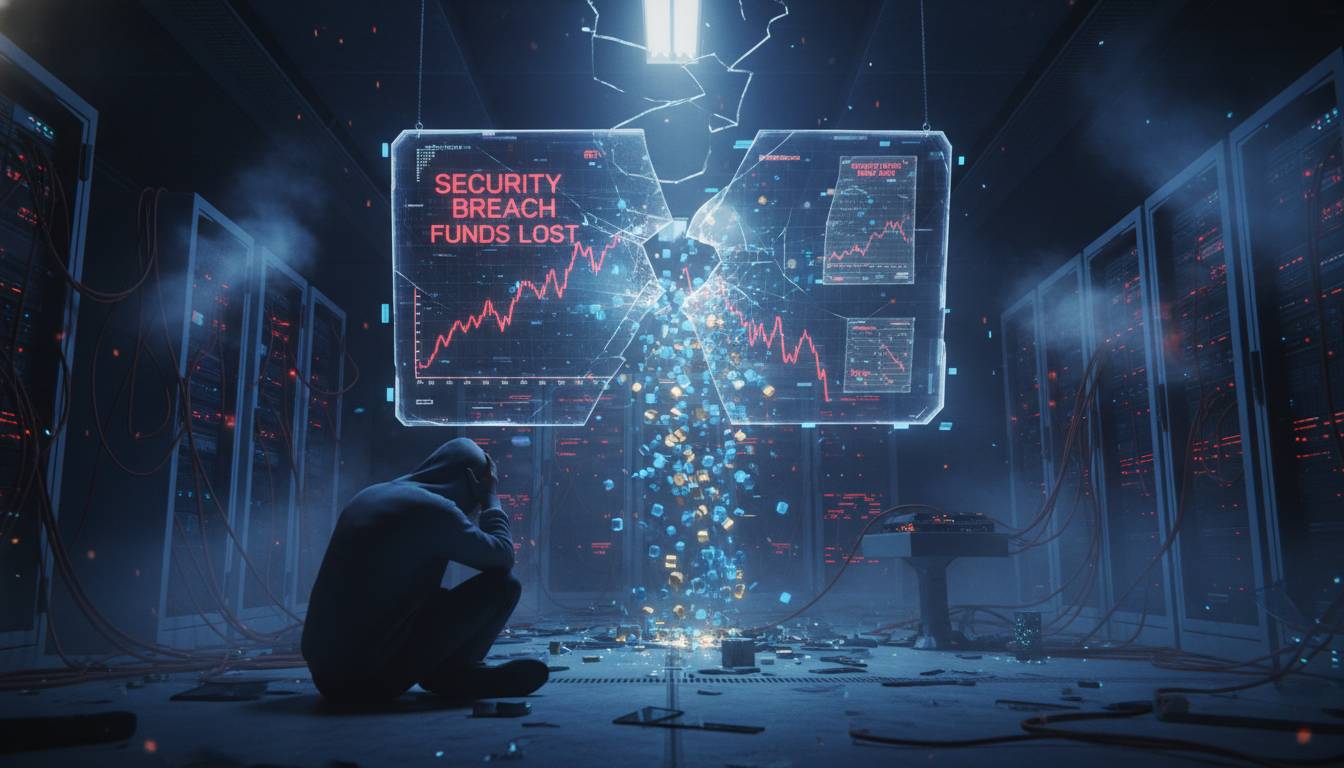
Cryptocurrency markets are infamous for their dramatic price swings. A single day can see double-digit percentage moves in either direction, leaving traditional investors bewildered and newcomers desperate for explanations. Understanding why crypto prices drop is not about predicting the unpredictable—it’s about recognizing the fundamental forces that drive these fluctuations and building resilience against them.
This comprehensive guide examines every major factor that pushes crypto prices downward, from market psychology and regulatory announcements to technical indicators and macroeconomic conditions. Whether you’re holding Bitcoin, Ethereum, or altcoins, knowing these dynamics will help you make smarter decisions when the market turns red.
Understanding Crypto Market Volatility
Before examining specific reasons for price declines, it’s essential to understand what makes cryptocurrency markets uniquely volatile. Unlike traditional stock markets, the crypto market operates 24 hours a day, seven days a week, with no trading halts or circuit breakers to cool过热情绪.
The crypto market lacks the institutional safeguards present in mature financial markets. There are no market-wide trading pauses when prices plunge rapidly, and the relatively thin order books mean that even moderate selling pressure can create outsized price movements. According to data from the Cambridge Centre for Alternative Finance , daily trading volumes in Bitcoin can swing by 40-60% within a single week, creating liquidity conditions that amplify price volatility.
Another fundamental difference lies in market structure. The stock market benefits from continuous order flow from institutional market makers who provide liquidity and stabilize prices during stress. Crypto markets, by contrast, rely heavily on decentralized exchanges where slippage—the difference between expected and actual trade prices—can be severe during rapid sell-offs.
Key takeaway: Crypto’s around-the-clock trading, thinner liquidity, and absence of protective mechanisms create structural conditions that naturally produce larger price swings than traditional markets.
1. Market Sentiment and Fear
Market sentiment is perhaps the most immediate driver of crypto price declines. When fear spreads through the market, selling begets more selling, creating feedback loops that accelerate drops.
The Crypto Fear & Greed Index, published by Alternative.me, measures market sentiment on a scale from 0 (Extreme Fear) to 100 (Extreme Greed). Historical data shows that periods of “Extreme Fear” often coincide with local market bottoms, while “Extreme Greed” readings frequently precede corrections. During the May 2021 crash, the index dropped to 12—its lowest level in years—before prices began stabilizing.
Social media amplifies sentiment-driven moves dramatically. Twitter (now X), Reddit’s r/cryptocurrency, and Telegram groups can create cascades of buying or selling as traders react to each other’s actions. A single viral post about regulatory concerns or a security breach can trigger waves of selling within hours.
Expert insight: Michael Novogratz, founder of Galaxy Digital and former Goldman Sachs partner, has repeatedly noted that “crypto markets are 90% psychology. The technology works, the networks grow, but price movements are driven by crowd behavior more than fundamentals.”
2. Regulatory Announcements and Crackdowns
Regulatory uncertainty represents one of the most powerful negative forces on crypto prices. When governments announce stricter rules or enforcement actions, markets often react with immediate, sharp declines.
The most dramatic example in recent years came in May 2021 when China announced a crackdown on cryptocurrency mining and trading. Bitcoin’s hashrate dropped by over 50% as miners shut down operations, and prices fell 50% from April highs within months. The Chinese central bank followed with multiple statements throughout 2021 and 2022, each triggering immediate market reactions.
In the United States, the Securities and Exchange Commission (SEC) has pursued enforcement actions against numerous crypto companies. The SEC’s 2023 lawsuit against Coinbase and Binance sent prices tumbling across the entire market. Similarly, statements from the Office of the Comptroller of the Currency (OAC) regarding banking services for crypto companies have created uncertainty that weighs on prices.
The European Union’s Markets in Crypto-Assets (MiCA) regulation, while ultimately providing regulatory clarity, created anxious waiting periods during its drafting and approval phases. Markets typically struggle with regulatory ambiguity more than with clear rules, even if those rules are strict.
Key takeaway: Regulatory announcements can trigger immediate 10-30% drops in a matter of hours. Staying informed about policy discussions in major economies is essential for managing crypto exposure.
3. Macro Economic Factors and Interest Rates
Cryptocurrencies don’t exist in a vacuum—they’re increasingly correlated with broader economic conditions. Changes in monetary policy, particularly interest rates set by the Federal Reserve, significantly impact crypto prices.
When the Fed raises interest rates, risk assets broadly suffer. Higher rates make bonds and savings accounts more attractive relative to volatile investments like cryptocurrencies. The Fed’s aggressive rate hikes in 2022 and 2023 coincided with some of crypto’s worst performing months. Bitcoin fell from $47,000 in January 2022 to around $16,000 by November—a 66% decline that mirrored broader risk asset sell-offs.
Inflation data also matters. While some proponents argue crypto serves as an inflation hedge—sometimes called “digital gold”—the evidence is mixed at best. During the high-inflation period of 2022, both gold and Bitcoin declined significantly, suggesting investors prioritized liquidity and sold risk assets to cover rising costs.
Global economic conditions, including GDP growth rates, employment figures, and geopolitical stability, influence crypto prices through their impact on investor risk appetite. Economic crises typically see “risk off” behavior where investors flee volatile assets for safer holdings like government bonds or the US dollar.
4. Technical Factors and Chart Patterns
Technical analysis—the study of historical price patterns and trading volumes—plays a significant role in crypto markets. Certain technical conditions reliably trigger additional selling.
Support and resistance levels are particularly important. A support level is a price point where buying has historically clustered, preventing further declines. When this support breaks, it often triggers automated selling from algorithms and stop-loss orders, accelerating the drop. Similarly, resistance levels (where selling has clustered) can become ceilings that cap rallies.
Moving average crossovers generate signals that influence trader behavior. When a shorter-term moving average crosses below a longer-term one (a “death cross”), it often triggers algorithmic selling. The Bitcoin death cross in June 2022 preceded significant additional declines.
Liquidations in the derivatives market amplify drops dramatically. When prices move against leveraged positions, exchanges automatically liquidate those positions, adding selling pressure. According to data from CoinGlass, over $1 billion in long positions were liquidated during the May 2021 crash alone—a cascade of forced selling that accelerated the decline.
5. Exchange Failures and Security Concerns
Crypto markets have experienced several major exchange failures that triggered sharp price declines and eroded investor confidence.
The most catastrophic was the November 2022 collapse of FTX, once the third-largest cryptocurrency exchange. Following rumors of liquidity problems and a subsequent bank run, FTX filed for bankruptcy, revealing an estimated $8-10 billion in missing customer funds. Bitcoin dropped 25% in the week following the news, falling below $16,000.
Smaller exchange failures also impact markets significantly. Celsius Network, Three Arrows Capital, and Voyager Digital all collapsed in 2022, creating contagion effects throughout the industry. Each failure reminded investors that holding crypto on exchanges carries counterparty risk—the risk that the exchange itself might fail.
Security breaches also trigger drops. Major hacks like the Ronin Bridge exploit (which lost $625 million in March 2022) or the Harmony Bridge hack ($100 million) create fear that shakes confidence in specific blockchain networks or the broader ecosystem.
6. Market Manipulation and “Whale” Activity
Crypto markets remain largely unregulated, creating opportunities for manipulation that would be illegal in traditional securities markets.
“Whales”—large cryptocurrency holders—can move markets with their trading activity. A single wallet moving thousands of Bitcoin to an exchange often signals intention to sell, triggering anticipatory selling by smaller traders. Blockchain analytics firms like Chainalysis and Glassnode track whale activity, and their alerts frequently precede notable price moves.
Wash trading—where traders artificially inflate volume by simultaneously buying and selling to create fake activity—remains prevalent in crypto markets. Studies have suggested that certain exchanges report volumes 50-90% higher than actual trading activity. This artificial volume can create misleading signals about market depth.
Pump and dump schemes targeting smaller altcoins remain common. Coordinated groups promote a coin to inflate its price, then sell their holdings once retail investors pile in, leaving latecomers with worthless tokens. While these schemes target specific coins, they contribute to overall market skepticism and can trigger broader sell-offs when they attract regulatory attention.
7. Network-Specific Issues and Protocol Risks
Individual cryptocurrencies face unique challenges that can trigger price declines independent of broader market movements.
Forks—splits in a blockchain’s rules—create uncertainty about which chain will become dominant. When Ethereum forked into Ethereum Classic and Ethereum (ETH) following the 2016 DAO hack, both chains traded simultaneously, confusing markets and fragmenting liquidity.
Protocol upgrades can introduce unexpected bugs. The September 2022 Ethereum Merge (which transitioned the network from proof-of-work to proof-of-stake) generated significant uncertainty, though prices ultimately stabilized. More concerning are upgrades that introduce vulnerabilities, which have historically caused rapid price declines.
Supply mechanics also influence prices. Bitcoin’s programmed supply halving reduces new issuance over time, but the exact timing and market expectations around these events create volatility. Altcoins with inflationary tokenomics sometimes face selling pressure when teams or early investors unlock vested tokens.
How to Navigate Crypto Price Declines
Understanding why prices drop is only half the battle—knowing how to respond is equally important.
Dollar-cost averaging (DCA) remains the most recommended strategy for individual investors. By investing fixed amounts at regular intervals regardless of price, you automatically buy more when prices are low and less when prices are high. This removes emotional decision-making from the process.
Position sizing matters enormously. No one can consistently predict market tops and bottoms, so allocating only capital you can afford to lose to crypto makes sense. Many financial advisors recommend limiting crypto to 1-5% of a diversified portfolio.
Stopping the noise helps preserve mental health and prevent emotional decisions. Checking portfolio balances multiple times daily during crashes typically leads to poor decisions. Setting price alerts and checking weekly or monthly reduces stress without sacrificing awareness.
Research before reacting prevents panic selling. Understanding whether a price decline is driven by fundamental issues (regulatory bans, security breaches) or temporary sentiment (fear-driven selling) helps determine appropriate responses.
Frequently Asked Questions
Why do crypto prices drop so suddenly?
Crypto prices drop suddenly because the market has thin liquidity, no trading halts, and operates continuously. A moderate amount of selling pressure can create large price movements, especially when combined with automated stop-loss orders, liquidations of leveraged positions, and herd behavior among retail traders. Unlike stock markets that have circuit breakers and market makers to stabilize prices, crypto markets lack these protective mechanisms.
Is it possible to predict when crypto prices will drop?
No one can consistently predict market tops or bottoms. While technical indicators, on-chain metrics, and sentiment readings can provide probabilistic insights, the efficient market hypothesis suggests that all publicly known information is already reflected in prices. Claims of accurate prediction should be viewed skeptically—anyone who could reliably predict crashes would be extraordinarily wealthy, and such individuals don’t typically share their secrets for free.
Should I sell my crypto when prices drop?
Selling during a drop locks in losses and eliminates any recovery potential. Historically, crypto markets have recovered from every major crash, though recovery timelines vary significantly (some taking years). Most financial advisors recommend against selling unless you need the money for expenses or have fundamentally changed your investment thesis. Instead, consider whether your original investment thesis still holds.
How long do crypto bear markets typically last?
Based on historical data from 2014, 2018, and 2022, crypto bear markets have lasted 12-24 months. The 2022-2023 cycle saw Bitcoin take approximately 12 months to reach its bottom and another 12 months to recover to previous highs. However, past performance doesn’t guarantee future results, and market conditions change with each cycle.
Are crypto price drops similar to stock market crashes?
Crypto crashes share some characteristics with stock crashes—liquidity crunches, margin calls, and panic selling—but also have unique features. Crypto’s 24/7 trading means price discovery happens faster. The absence of circuit breakers means single-day drops can be larger. Additionally, crypto’s smaller market cap makes it more susceptible to manipulation and sentiment swings.
Does regulation always cause crypto prices to drop?
Not necessarily. While immediate regulatory announcements often trigger short-term price declines, clear regulatory frameworks can be positive for prices long-term because they provide certainty and legitimacy. The European Union’s MiCA regulation, for example, was initially received with concern but ultimately provided clarity that helped markets stabilize. Uncertainty and ambiguity are generally more damaging than clear, enforceable rules.
Conclusion
Crypto price declines result from a complex interplay of factors: market structure that amplifies volatility, regulatory announcements that create uncertainty, economic conditions that shift risk appetite, technical patterns that trigger automated selling, and human psychology that amplifies fear into panic.
Understanding these forces won’t make you immune to losses, but it will help you respond thoughtfully rather than emotionally. The investors who succeed in crypto aren’t those who predict crashes—they’re those who build portfolios that withstand volatility, maintain perspective during downturns, and focus on long-term fundamentals rather than short-term price movements.
Remember that every major crypto decline has been followed by recovery and new highs. The 2014 crash led to the 2017 boom. The 2018 crash preceded the 2020-2021 bull run. Even the brutal 2022 decline is already showing recovery patterns. History doesn’t repeat exactly, but it does rhyme.
Stay informed. Stay calm. And never invest more than you can afford to lose.
The post Why Crypto Prices Drop: What Every Investor Must Know appeared first on PQR News.












Leave a comment