

It’s funny how that question, “Who discovered America?” trips people up—because there isn’t just one answer. And the truth is layered, a bit messy, often surprising. While most of us grew up hearing that Columbus discovered the continent in 1492, that story is one thread in a much larger tapestry. Let’s unpack multiple strands—from ancient migrations and Viking voyages to Columbus’s transatlantic journey—and put them into context, examining why each narrative matters differently. The aim here is to explore these perspectives in a natural, almost conversational way—because history is never just neat bullet points, is it?
Early Presence: Indigenous Peoples as First Discoverers
Long before any European ship approached the shores, America was the profound homeland of its original settlers. Indigenous peoples migrated from Asia via the Bering land bridge thousands of years ago, shaping rich and diverse civilizations.
- This migration wasn’t a one-off—it unfolded across millennia, giving rise to countless societies with languages, culture, and heritage deeply rooted in the land.
- Columbus or Leif Erikson might have made headlines, but they were stepping onto continents already inhabited for eons.
In practice, referring to Columbus as the “discoverer” erases these foundational histories—even if unintentionally.
Norse Voyages: Leif Erikson and Pre-Columbian Europe
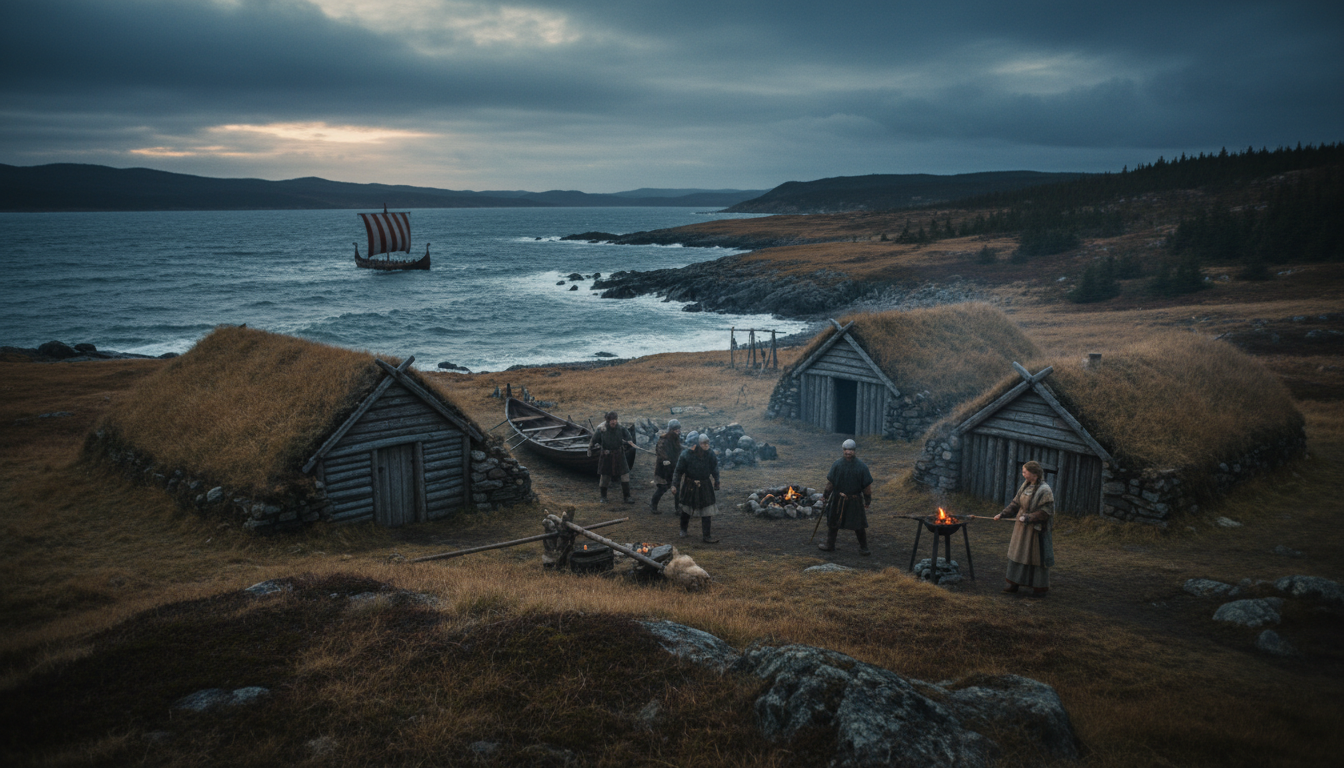
Let’s switch to another angle: Scandinavia, around a millennium ago. Leif Erikson, perhaps the most famous Norse explorer, is often credited as the first European to reach North American shores—somewhere around AD 1000.
- According to History.com, Erikson sailed from Greenland and “explored a region he called Vinland”—perhaps modern-day Newfoundland—thus predating Columbus by four centuries .
- Archaeological evidence supports this: the L’Anse aux Meadows site in Newfoundland contains Norse remains and artifacts dated to around AD 1000 .
- Moreover, recent tree-ring dating techniques have pinned down the Viking settlement at precisely 1021 AD—offering definitive proof of European presence well before Columbus .
Still, scholars caution that pinpointing Leif Erikson himself as the leader of that expedition isn’t absolutely certain; other Norse groups might have made landfall, using shared sagas and oral histories as placeholders of identity .
“Much kudos should go to these northern Europeans for being the first human society to traverse the Atlantic,” Michael Dee, a geoscientist, noted when the 1021 settlement date was confirmed .
Columbus’s Impact: From Navigator to Colonizer
Then there’s Christopher Columbus—probably the most discussed and mythologized in European history.
- Columbus made landfall in the Caribbean on October 12, 1492, believing he’d reached Asia. He made four voyages in total under Spain’s flag, effectively launching a new era of transatlantic colonization .
- While he wasn’t the first European to reach America, his voyages triggered profound, irreversible changes: demographic shifts, biological exchanges, political reordering—the real beginning of the modern world in many senses .
- His letters and reports, such as the one sent in February 1493, quickly propagated the news across Europe and cemented his place in popular memory .
In short, Columbus matters less as the “first” and more as a catalyst—an emblem of the Age of Discovery’s massive global impact.
Other Speculative Claims: Myth, Memory, and Misrepresentation
History sometimes hears tales from the fringes—Irish monks in coracles (like St. Brendan), Welsh princes (Madog ab Owain Gwynedd), even Polynesians navigating across the Pacific. These stories are more myth than fact, but they show how “discovering America” became a part of many cultural narratives, often serving identity or ideological needs .
Times like these remind us that historical narratives are never neutral—they reflect what different groups wanted to believe, at particular times. The legend of Leif Erikson, for example, gained traction amid rising Scandinavian-American identity in the 19th and early 20th centuries .
Summary Table: Who Discovered America?
| Perspective | Contribution |
|————-|————–|
| Indigenous Peoples | Earliest settlers—first humans to inhabit the Americas |
| Norse Explorers (e.g., Leif Erikson) | First known European landfall in AD 1000, backed by archaeological and chronometric evidence |
| Christopher Columbus | Embodied a turning point—ushered in sustained European presence and global transformation |
| Mythic and Cultural Claims | Reflect identity construction, nationalist impulses, or speculative history |
A Shifting Lens on Discovery
“Discovery” isn’t just about who set foot first—but about recognition, consequence, and legacy. Columbus gets top billing in many textbooks, but many historians now stress that Indigenous peoples and Norse travelers deserve equal—or greater—attention. At the very least, it’s a question that demands nuance, not oversimplification.
So what do we do with this? Acknowledge layers. Recognize multiple discoveries. Favor storytelling that grapples with nuance over neatly packaged legends.
Conclusion
In truth, there’s no single, straightforward answer—“Who discovered America?” varies depending on perspective.
- Indigenous communities have inhabited the continent for millennia.
- Norse explorers like Leif Erikson likely arrived in AD 1000, centuries before Columbus, with evidence increasingly pointing to a Norse presence.
- Columbus himself wasn’t the first European here, but his voyages triggered the widespread European colonization that reshaped the world.
Ultimately, the “true story” isn’t a single name—it’s a tapestry of multiple actors, motivations, and understandings. And maybe that complexity, messy as it is, feels more honest than a tidy narrative.
FAQs
Who was really the first to discover America?
The earliest “discoverers” were Indigenous peoples who migrated from Asia thousands of years before any Europeans arrived. Among Europeans, the Norse—likely Leif Erikson—landed around AD 1000, centuries before Columbus.
Did Leif Erikson really reach America before Columbus?
Yes, archaeological evidence at L’Anse aux Meadows, dated to AD 1021, supports Norse landfall in North America prior to Columbus. However, attributing the voyage specifically to Erikson remains plausible but not certain.
Why does Columbus get such credit then?
Columbus’s voyages in 1492 triggered widespread European colonization, global exchange, and enduring geopolitical changes. His reports also spread swiftly across Europe, solidifying his place in history—even if his “discovery” isn’t first.
Are there other claims of discovery?
Yes, other claims include mythical voyages by St. Brendan (Irish), Prince Madog (Welsh), and Polynesian contacts. These, however, lack robust evidence and often reflect cultural myths rather than concrete history.
How should we modernly discuss “discovery” responsibly?
By framing discovery as a process involving multiple peoples and events. Acknowledge Indigenous habitation, Norse exploration, and Columbus’s pivotal role—without oversimplifying history into a single moment or person.
What does the term “discovery” overlook?
It often erases the presence of Indigenous peoples—that America wasn’t “blank” before Europeans arrived. A more accurate view sees discovery as layered and contextual, not tied to a single event.















Leave a comment