

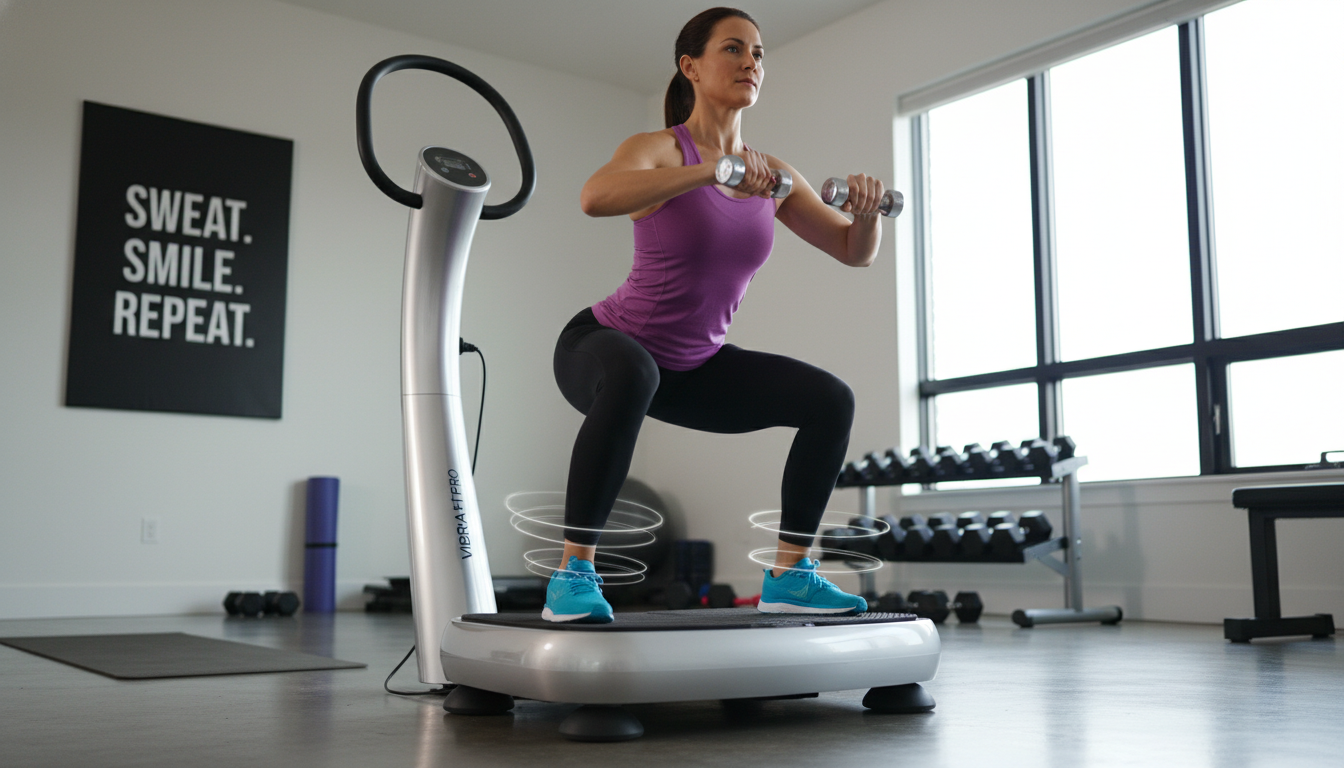
Grabbing one of those vibrating platforms that promise to tone you up, boost your mood, or even melt fat away? It’s charmingly seductive—seriously, who wouldn’t want a “magic” shortcut? But before hopping on and shaking your way to fitness, let’s dig into what’s actually real and what’s just froth in the fitness glass.
Introduction: Buzz Meets Skepticism
Vibration plates have popped up as a buzzworthy fitness tool—part tech gadget, part wellness promise. The idea that standing or doing simple moves on a buzzing platform can yield a full-body benefit is tempting. Yet, the evidence is mixed. While some studies point to modest gains in strength, bone health, or even mood, others suggest they’re just a fancier version of a wobbly surface. So are vibration plates helpful, or overrated hype? This article shakes down the facts—warts and all—with a human touch, real-life voices, and enough quirks to feel like a conversation with a skeptical but hopeful friend.
Understanding the Mechanism: How These Plates Work
Standing (or squatting, or lying) on a vibrating plate isn’t an exotic ritual—it’s a mechanical stimulus. The platform sends rapid oscillations—typically 20 to 60 times per second—through your body, prompting muscles to reflexively contract and relax .
These contractions can:
– Engage more muscle fibers, especially in lower body and core, than a static squat might .
– Stimulate bone-forming activity through mechanical loading, which might support bone density .
– Enhance circulation and lymphatic flow, aiding recovery and reducing swelling .
On the other hand, critics note these devices don’t replace traditional workouts—no superhuman gains here .
Weighing the Evidence: What Science and Experts Say
Muscle Strength & Activation
Vibration plates can indeed increase muscle activation during moves like squats or lunges, making workouts a bit more effective—or at least feel harder . Older adults and rehab patients might benefit, especially when movement options are limited .
Bone Health & Osteoporosis
Low-intensity vibration has shown promising results in specific settings—like supporting bone strength in cancer-related bone loss contexts . Some data even suggest mild BMD improvements in postmenopausal women, though results may vary and depend on vibration dose .
Pain Relief, Circulation & Recovery
Lower back pain, swelling, and recovery time may all see modest improvement thanks to vibration-induced blood flow and muscle relaxation . One 2023 review, for example, found relief for chronic back pain through muscle activation and proprioception support .
Cognitive & Mood Benefits
Early findings hint at mild enhancement of cognition—attention or memory—perhaps via increased circulation or sensory stimulation . Anecdotally, some users mention feeling calmer or less anxious—though brain science on that is in infancy .
Weight Loss & Fat Reduction
The jury here is more skeptical. While vibration plates can burn a few extra calories, they’re not magic fat-melters. Studies show modest fat loss, and often only when combined with diet and exercise .
Real-World Voices and Surprises
Beyond the lab, real folks share varied experiences:
- A Real Simple reviewer found relief from muscle tension with just one 10-minute session, repeating three times a week over two months .
- On fitness forums, users speak of improved core stability and reduced swelling after post-exercise plate sessions .
- Others say the plate helped digestion or even “shook trauma out of them,” though such effects are deeply subjective .
- Still, some warn of downsides: one user with hypermobile conditions experienced nerve-related discomfort . And skeptics argue results mimic doing exercises without the buzz .
Pros and Cons at a Glance
Pros:
- Enhances muscle activation and may support strength gains.
- Offers low-impact exercise—great for older folks or those recovering.
- Could help bone density maintenance in certain scenarios.
- Aids circulation, recovery, and mobility.
- Possibly lifts mood or calms nerves—at least in anecdotal cases.
Cons:
- Not a substitute for aerobic or resistance training.
- Benefits often require pairing with proper diet and fitness habits.
- Effects on weight loss are typically modest.
- Safety concerns exist for high-frequency use, or for people with certain health issues .
- Quality of device matters—many commercial models don’t match clinical study standards .
“Mechanical signals or cues are absolutely critical to maintaining your bone and muscle health.” — Gabriel Pagnotti, Ph.D., on the subtle science of vibration therapy
Best Practices: How to Use Vibration Plates Wisely
- Pair with other modalities. Think of vibration plates as a supplement, not a replacement—for example, adding vibration to squats in a strength routine .
- Start low, go slow. Begin with low intensity and short sessions to assess comfort and safety .
- Use the right device. Research-grade plates differ from your Instagram ads—look for frequencies around 20–50 Hz, and consult experts if you have health conditions .
- Focus on context. Use them when mobility is limited or recovery is key; leverage their circulatory benefits when sitting at a desk or after a long workout.
Conclusion
So—fact or fiction? The truth lands somewhere in definitely-not-magic, but probably-not-worth-ignoring. Vibration plates hold real, albeit modest, benefits: improved muscle activation, potential bone support, recovery aid, and a few anecdotal mood perks. They work best when layered into a broader fitness and wellness routine, not as a standalone cure. Think of them as that quirky sidekick rather than the hero of your training story.
FAQs
Are vibration plates effective for weight loss?
Vibration plates can help burn slightly more calories, but meaningful fat loss usually requires diet and aerobic or resistance training. Alone, their effect is modest.
Can vibration plates help with bone density?
Some studies show vibration plates may support bone mineral density—especially in postmenopausal women or specific clinical scenarios—but results vary, and more research is needed.
Is vibration therapy safe for everyone?
Generally, low-frequency use is safe for many, but individuals with conditions like cardiovascular issues, pregnancy, or recent surgery should consult a healthcare provider first.
Do vibration plates relieve muscle soreness?
Yes—by increasing blood flow and relaxing tissues, they can reduce post-workout soreness (DOMS), especially in beginner exercisers.
Will vibration plates improve mood or cognition?
Emerging research suggests potential benefits for cognitive function and mood through sensory stimulation and circulation, but evidence is early-stage and mixed.
Should I buy a vibration plate?
If you want low-impact boosters for strength, balance, or recovery, and pair them with regular exercise, a vibration plate can be a valuable tool. But it’s not a stand-alone solution, so evaluating your needs and consulting a professional is smart.
Word count: ~1,180 words.


















Leave a comment