

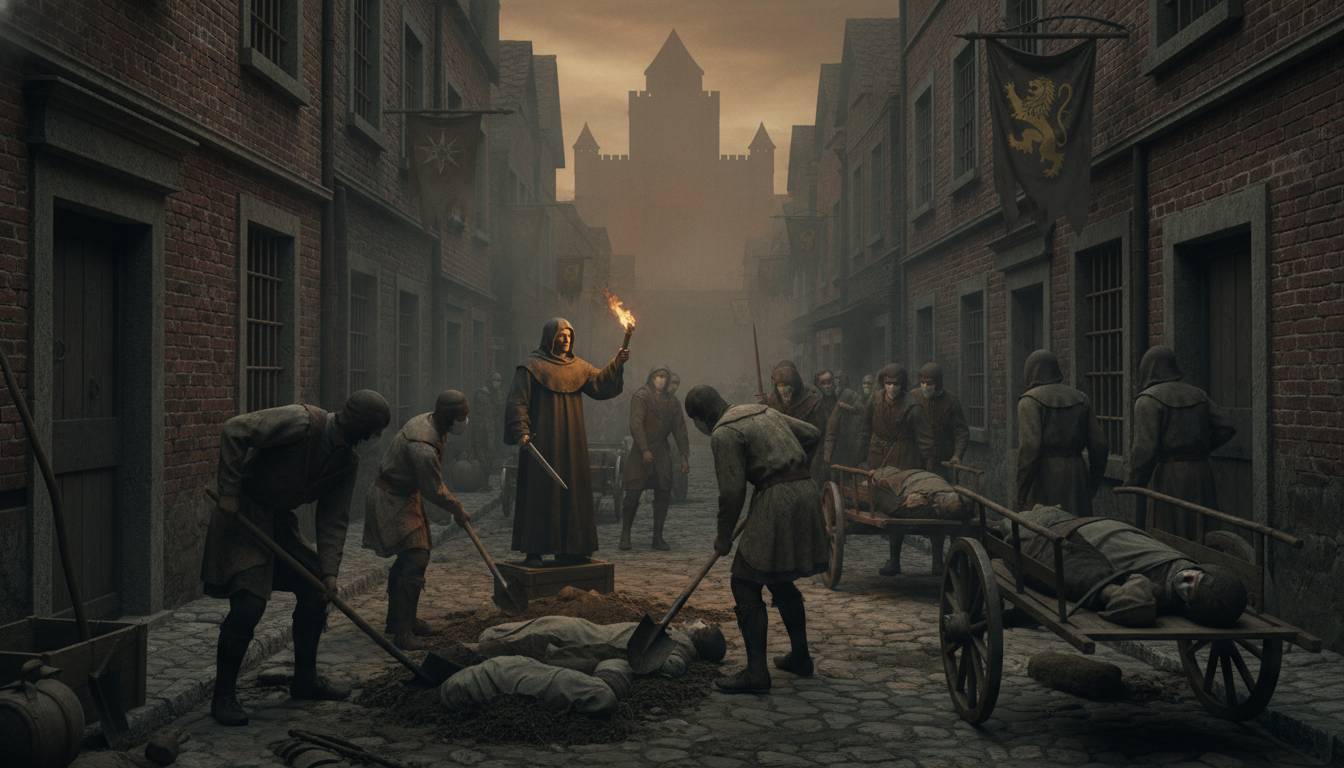
The world of Westeros has been shaped by conflict, betrayal, and dragons—but one of the most devastating forces to hit the Seven Kingdoms wasn’t a sword or a scheming lord. It was plague. Throughout George R.R. Martin’s “A Song of Ice and Fire” series and its television adaptation, pandemic storylines mirrored real-world history and fundamentally altered the course of the story. While viewers witnessed the brutal Red Wedding and Cersei Lannister’s political machinations, the Great Spring Sickness—a silent killer lurking in the shadows of Westeros—rewrote the Targaryen dynasty’s future. This article explores the historical plagues that inspired Martin, the in-universe pandemics that shaped the narrative, and how these storylines made it to television.
Historical Plagues That Influenced the Series
George R.R. Martin draws heavily from real-world history, and the Black Death that ravaged Europe in the 14th century is one of the most significant influences on the plague narratives in Game of Thrones. The Black Death killed an estimated 30 to 60 percent of Europe’s population between 1346 and 1353. It transformed medieval society—labor shortages, social upheaval, serfs gaining leverage over nobility. Martin weaves similar themes into Westeros, where pandemic outbreaks often proved as deadly as the diseases themselves.
The Antonine Plague struck the Roman Empire between 165 and 180 AD and likely inspired Martin’s pandemic storytelling. This outbreak, possibly smallpox or measles, killed around 2 million people and weakened Roman military and economic power during expansion. In Westeros, comparable pandemics devastated populations during wartime, reshaping political boundaries and weakening ruling dynasties. The Justinian Plague of the 6th century, which killed tens of millions in the Byzantine Empire, also influenced Martin’s depiction of how disease could topple empires and create power vacuums that ambitious lords could exploit.
The Great Spring Sickness: Westeros’s Deadliest Pandemic
Within Martin’s canon, the Great Spring Sickness represents one of the most catastrophic events in Westerosi history. This pandemic struck during the early reign of King Aegon III Targaryen, called “the Dragonbane” after his dragons mysteriously died out. The Great Spring Sickness, also known as “the Great Mortality,” swept across the Seven Kingdoms, killing tens of thousands—nobles and smallfolk alike. It hit around 44 years after the Dance of the Dragons, a civil war that had already weakened the Targaryen dynasty and nearly wiped out the dragon population.
The timing made it especially devastating—it coincided with the final years of Targaryen dragons, creating a perfect storm of tragedy. King Aegon III himself was scarred by this experience; his wife, Queen Jaehaera, died from the plague. The disease weakened Targaryen hold on the Iron Throne, setting the stage for future conflicts that led to Robert’s Rebellion nearly 150 years later. Maesters have debated the exact nature of the illness, with some suggesting it resembled the “spotted plague” or “greatpox” mentioned elsewhere in the texts.
The “Spotted Plague” and Other Westerosi Diseases
Beyond the Great Spring Sickness, Martin’s world references numerous other diseases that shaped history. The “spotted plague” or “greatpox” appears throughout the novels as a recurring threat, particularly in crowded cities like King’s Landing and Oldtown. This disease, similar to typhus or spotted fever, periodically swept through Westerosi population centers, killing thousands in repeated outbreaks. The maesters of the Citadel have documented multiple outbreaks, noting the disease often spread along trade routes and hit those living in close quarters hardest.
The Iron Islands experienced their own plague outbreaks, notably during King Harwyn Hardhand’s reign. According to “The World of Ice and Fire,” a terrible plague struck the Iron Islands around 226 AC, killing thousands and forcing the ironborn to seek refuge in the crannogmen’s marshlands of the Greywater Watch. This historical plague, though less famous than the Great Spring Sickness, shows disease shaped even the most martial societies in Martin’s world. The Greyjoy rebellion of 289 AC occurred in a world already scarred by repeated outbreaks, and the strained relationship between the ironborn and the rest of Westeros partly traces to population losses from centuries of plague.
How the Show Depicted Pandemic Storylines
Game of Thrones never featured a direct adaptation of the Great Spring Sickness, though the television series incorporated pandemic elements through other storylines. The show treated disease as a background element rather than a central plot, but the filmmakers understood plague’s narrative power—it could upend even the best-laid plans of kings and schemers. Conditions in King’s Landing, especially during sieges and conflicts, frequently hinted at disease spreading as a consequence of war and overcrowding.
The show addressed disease most significantly through portrayals of the capital city’s conditions, particularly after major battles and political upheavals. Showrunners occasionally referenced the toll poor sanitation and close quarters took on the smallfolk, though these elements often played second fiddle to primary political narratives. Notably, the show’s treatment of battle and siege aftermaths included disease as a silent killer, drawing on historical precedent while maintaining focus on human drama.
Untold Secrets: What the Writers Changed
Adapting page to screen required numerous changes to disease and plague portrayal in Game of Thrones. One major untold secret involves how prominently the Great Spring Sickness was originally meant to feature in the television series. Early drafts reportedly included more references to historical plagues and their effects on Westerosi society, but these elements scaled back as the series focused more on individual character arcs and political intrigue. The decision to reduce pandemic storylines reflected both creative choices and practical considerations around production budgets and narrative pacing.
Another untold secret involves the historical research behind making plague sequences feel authentic. Writers consulted accounts of the Black Death and other pandemics to create realistic depictions of how disease spread through medieval populations. This research informed dialogue, historical references, and visual portrayals of suffering in key episodes. Keeping plague elements subtle, rather than featuring a major pandemic storyline, partly stemmed from concerns about triggering viewers who had experienced recent pandemics—a consideration that gained weight as production continued into the late 2010s.
The Lasting Impact on Westerosi History
Plague narratives in Game of Thrones remind us that even in a world of dragons and magic, the most devastating threats often come from invisible forces. The Great Spring Sickness and other pandemics throughout Westerosi history show how disease fundamentally altered the course of dynasties, reshaped political boundaries, and created opportunities for ambitious houses to rise. Targaryen weakness following the Great Spring Sickness ultimately contributed to the Blackfyre rebellions and other conflicts haunting the Seven Kingdoms for generations.
Understanding these historical plagues adds depth to the narrative and reveals Martin’s intent to ground his fantasy world in fundamental realities shaping human history. The interplay between disease, war, and politics in Westeros mirrors historical patterns determining the rise and fall of empires throughout real-world history. As fans continue exploring Martin’s creation, plague storylines testify to historical inspiration’s power in crafting compelling fantasy.
Conclusion
The plagues shaping Game of Thrones represent some of the most compelling and underappreciated elements of George’s world-building. From the Great Spring Sickness devastating the Targaryen dynasty to the spotted plague’s recurring threat in crowded cities, these pandemic storylines reflect Martin’s understanding of how disease historically shaped human civilization. Untold secrets behind adapting these elements for television reveal complex decisions in translating rich source material to a visual medium. As fans explore Westerosi history’s depths, plague narratives stand as a powerful reminder that even fantasy must reckon with fundamental forces always shaping human destiny.
Frequently Asked Questions
What was the Great Spring Sickness in Game of Thrones?
The Great Spring Sickness was a devastating pandemic during King Aegon III Targaryen’s reign, called “the Dragonbane.” This plague killed tens of thousands across the Seven Kingdoms and fundamentally weakened the Targaryen dynasty during a critical period in Westerosi history.
Which historical plagues inspired Game of Thrones?
George R.R. Martin drew inspiration from multiple historical pandemics: the Black Death of the 14th century, the Antonine Plague of the 2nd century, and the Justinian Plague of the 6th century. These real-world events influenced how disease is portrayed as a force that can topple empires and reshape societies.
Did the TV show include the Great Spring Sickness?
The television adaptation didn’t directly feature the Great Spring Sickness as a central storyline. However, the show included references to disease and poor sanitation, particularly in King’s Landing, as background elements reflecting medieval life’s harsh realities.
What was the spotted plague in Westeros?
The spotted plague, also called “greatpox,” was a recurring disease mentioned throughout the novels that periodically swept through population centers like King’s Landing and Oldtown. Similar to typhus, it served as a constant threat to the smallfolk.
How did plagues affect the Targaryen dynasty?
The Great Spring Sickness significantly weakened the Targaryen dynasty by killing numerous family members and undermining the family’s grip on power. Combined with dragon extinction during Aegon III’s reign, these tragedies marked the end of Targaryen supremacy and led to the Blackfyre rebellions.
Why are plague storylines important in Game of Thrones?
Pandemic narratives remind us that even in a fantasy world, diseases can fundamentally alter history’s course. They add historical depth, reflect real-world patterns of societal change, and show how invisible threats can be as devastating as military conquest or political treachery.
















Leave a comment