

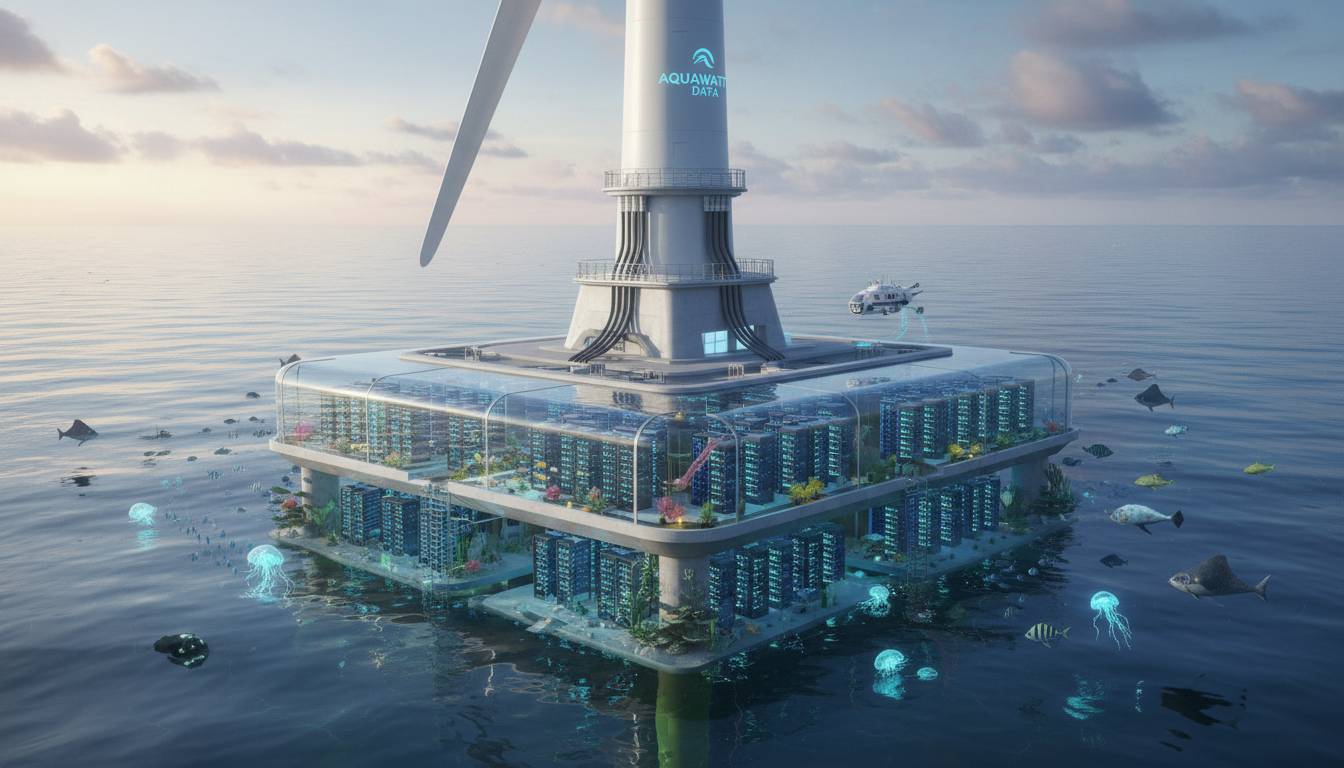
A startup has announced plans to place computing infrastructure directly beneath offshore wind turbines, an approach that could reshape both renewable energy and digital infrastructure.
The company argues that collocating data centers with offshore wind farms creates an opportunity to accelerate renewable energy adoption while solving the challenge of finding locations for power-hungry computing facilities. Industry analysts say this could mark a significant shift in how technology companies approach sustainable infrastructure deployment.
The Concept Behind Underwater Data Center Deployment
The idea involves using the physical footprint of offshore wind installations to host digital infrastructure in the spaces beneath and around turbine foundations. This colocation strategy addresses two problems facing the data center industry: the scarcity of suitable land and the enormous electricity consumption required to power computing operations.
Offshore wind farms occupy vast ocean areas with minimal competing land uses, making them attractive for integrated data center development. The infrastructure required for power transmission, including subsea cables and onshore grid connections, already exists at these locations, potentially reducing development costs and permitting complexity.
“We’re creating a symbiotic relationship between renewable energy generation and digital infrastructure,” said the company’s founder. “The wind turbines generate clean electricity, and we’re using that proximity to host computing operations that would otherwise require new transmission infrastructure and land acquisitions.”
The technical implementation involves modular data center units designed for marine environments, with specialized cooling systems that use seawater temperatures to maintain optimal operating conditions. This approach could significantly reduce the water and energy consumption typically associated with traditional data center cooling systems.
Market Opportunity and Industry Context
The announcement coincides with unprecedented growth in data center demand, driven by the rapid expansion of artificial intelligence applications and cloud services. Major technology companies have committed billions of dollars to expanding their computing infrastructure, creating intense competition for suitable sites and clean energy supplies.
Offshore wind capacity is also experiencing remarkable growth, with developers planning massive installations along coastal waters to meet climate targets and energy transition goals. The potential synergy between these two rapidly expanding industries has attracted attention from investors and policymakers seeking integrated solutions to interconnected challenges.
“The convergence of AI-driven computing demand and renewable energy targets creates a perfect storm for innovative infrastructure solutions,” said Sarah Chen, an analyst at energy consulting firm Wood Mackenzie. “Colocating data centers with offshore wind isn’t just conceptually interesting—it addresses real constraints in both sectors.”
Market research indicates that global data center power consumption could double by 2026, reaching approximately 1,000 terawatt-hours annually. Simultaneously, offshore wind capacity is projected to exceed 370 gigawatts globally by the end of the decade, creating substantial opportunity for integrated development approaches.
Technical Challenges and Engineering Solutions
Deploying data centers in marine environments presents significant engineering challenges. Saltwater corrosion, humidity control, and maintenance access all require careful consideration in the design and operational planning phases.
The startup has outlined several technical approaches to address these challenges, including hermetically sealed computing modules and remotely operated maintenance systems. Cooling represents perhaps the most critical engineering consideration, as data centers generate substantial heat that must be dissipated to maintain operational reliability.
“Seawater cooling offers remarkable efficiency gains compared to traditional air-cooled facilities,” said Dr. Michael Torres, a mechanical engineering professor specializing in data center thermal management at Stanford University. “The constant temperature of deep ocean water can provide cooling capacity that would require enormous amounts of energy with conventional systems.”
Connectivity presents another technical hurdle, as data centers require high-bandwidth, low-latency network connections to serve end users effectively. The startup plans to leverage existing submarine fiber optic cables that often run near offshore wind development areas, potentially reducing the infrastructure investment required for network connectivity.
Regulatory frameworks governing both offshore energy development and data center construction vary significantly by jurisdiction, creating additional complexity for projects that span multiple regulatory domains. Permitting processes for offshore wind farms and data centers typically involve different agencies and timelines, requiring careful coordination to align development schedules.
Investment Landscape and Funding Details
The startup has secured significant funding to advance its initial development plans, with venture capital firms specializing in clean technology and digital infrastructure leading the investment round. The funding amount, reportedly exceeding $50 million in Series A financing, will support engineering design, permitting activities, and pilot project development.
Several strategic investors with interests in both renewable energy and technology infrastructure participated in the funding round, reflecting broader industry interest in integrated infrastructure solutions. The investment marks one of the largest venture capital commitments to data center infrastructure innovation in recent years.
“This represents a compelling intersection of two megatrends—renewable energy expansion and digital infrastructure growth,” said Jennifer Walsh, a partner at infrastructure investor Actis, which participated in the funding round. “We see substantial potential for this model to scale globally as both offshore wind and AI infrastructure demands continue accelerating.”
The startup plans to develop its first pilot installation at an existing offshore wind farm, likely in European waters where regulatory frameworks for such projects are more established. Subsequent phases would expand to larger installations and additional markets, including the United States, where offshore wind development is accelerating under federal clean energy initiatives.
Environmental and Sustainability Implications
The environmental arguments for collocated data centers and wind farms extend beyond simply utilizing available space. By consuming renewable electricity directly at the generation source, these installations could reduce transmission losses and grid congestion that often accompany renewable energy deployment.
The data center industry has faced increasing scrutiny over its environmental footprint, with critics pointing to substantial electricity consumption and associated carbon emissions. Major technology companies have committed to powering their operations with 100% renewable energy, creating demand for innovative solutions that can accelerate progress toward these goals.
“Proximity matters for renewable energy consumption,” said Marcus Rodriguez, director of sustainability research at the Green Electronics Council. “When data centers can directly consume power from adjacent wind or solar installations, it reduces the complexity of renewable energy accounting and ensures that clean electrons actually power the computing operations.”
However, some environmental advocates have raised questions about the marine ecosystem impacts of large-scale data center deployment in ocean environments. Careful environmental assessment and monitoring will be essential to ensure that these installations do not create unintended consequences for marine wildlife or ocean health.
Future Outlook and Industry Adoption
Industry observers suggest that if the startup’s pilot projects demonstrate technical and economic viability, the concept could gain traction among other data center developers and renewable energy companies. Several major technology firms have expressed interest in exploring similar approaches, according to industry sources.
The integration of artificial intelligence workloads into standard data center operations has intensified the urgency around finding sustainable infrastructure solutions. AI model training and inference require substantially more computing resources than traditional applications, amplifying the need for innovative approaches to data center siting and power supply.
“Every major cloud provider is searching for sustainable infrastructure solutions at scale,” observed technology infrastructure analyst Raimundo O’Neill from Goldman Sachs Research. “The startup’s model addresses multiple constraints simultaneously—land scarcity, power availability, and sustainability requirements—which makes it attractive regardless of execution risks.”
Regulatory support for integrated renewable energy and data center development appears to be growing, with several coastal states considering policies to encourage colocation of digital infrastructure with offshore wind facilities. The potential economic benefits, including job creation and grid infrastructure investment, have attracted political support in regions seeking to develop clean energy industries.
Conclusion
The startup’s vision for placing data centers beneath offshore wind turbines represents a bold attempt to address converging challenges in the energy and technology sectors. By leveraging the physical and electrical infrastructure of offshore wind farms, this approach could unlock new possibilities for sustainable digital infrastructure development.
While significant technical and regulatory obstacles remain, the substantial investment and growing industry interest suggest this concept merits serious consideration. If pilot projects prove successful, the integration of data centers with offshore wind installations could become an increasingly common feature of the clean energy landscape, contributing to both digital infrastructure expansion and decarbonization efforts.
The coming years will be critical in determining whether this innovative approach can deliver on its promise at scale. For now, the startup has positioned itself at the forefront of an emerging solution that could reshape how we think about the relationship between renewable energy generation and digital infrastructure deployment.
Frequently Asked Questions
What is the startup’s plan for placing data centers beneath offshore wind turbines?
The startup plans to deploy modular data center units in the spaces around and beneath offshore wind turbine foundations, utilizing the existing electrical infrastructure to power computing operations. This colocation approach aims to address land scarcity and reduce transmission infrastructure requirements while providing direct access to renewable energy.
Why is this concept considered innovative?
This approach represents a novel solution to two major industry challenges: finding suitable locations for data centers and meeting the enormous electricity demands of computing infrastructure. By integrating digital infrastructure with renewable energy installations, the startup aims to create synergies that benefit both sectors.
What are the main technical challenges?
Key challenges include protecting equipment from saltwater corrosion, managing humidity in marine environments, implementing effective cooling systems, ensuring reliable network connectivity, and developing maintenance procedures suitable for offshore locations. The startup is addressing these through specialized sealed modules and remote operation capabilities.
How much funding has the startup raised?
The startup has reportedly secured over $50 million in Series A funding from venture capital firms and strategic investors interested in clean technology and digital infrastructure development.
Where will the first pilot project be located?
The initial pilot installation is planned for an existing offshore wind farm, likely in European waters where regulatory frameworks for such integrated projects are more established. Subsequent projects may expand to other markets including the United States.
What are the environmental benefits?
Environmental benefits include reduced transmission losses, direct consumption of renewable electricity, decreased land use requirements, and potentially more efficient cooling using seawater. This approach could help data center operators meet sustainability commitments while supporting renewable energy development.














Leave a comment