

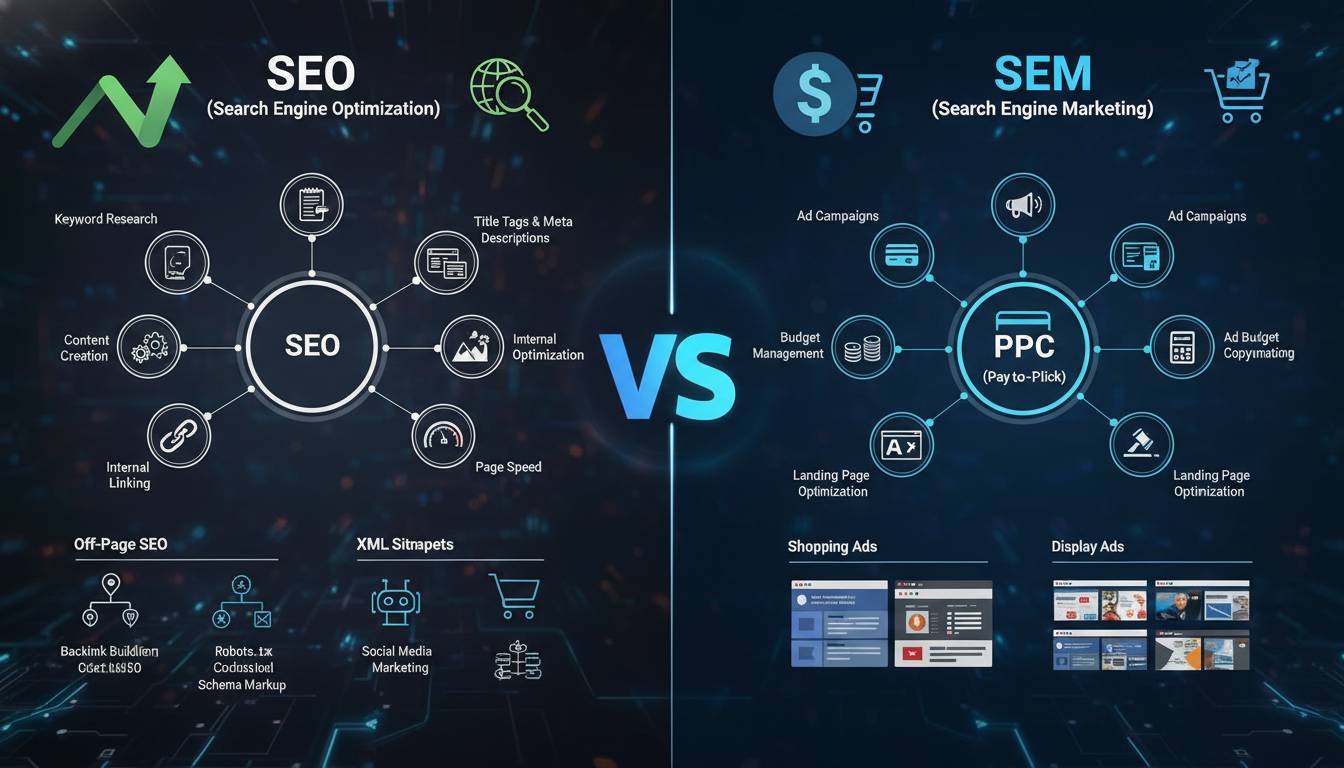
In the ever-evolving landscape of digital marketing, understanding the distinction between SEO and SEM is fundamental to building an effective online presence. While these terms are often used interchangeably, they represent distinct strategies with unique characteristics, timelines, and outcomes. This comprehensive guide breaks down everything you need to know about SEO versus SEM, helping you make informed decisions about your digital marketing investment.
Understanding the Fundamentals: What Are SEO and SEM?
SEO (Search Engine Optimization) refers to the practice of optimizing your website and content to rank higher in organic (unpaid) search engine results. This involves improving various elements including website structure, content quality, keyword usage, backlink profiles, and technical performance to increase visibility in search engines like Google, Bing, and Yahoo.
SEM (Search Engine Marketing) encompasses broader activities aimed at increasing visibility in search engines through paid advertising. While some definitions include organic SEO within SEM, the industry standard typically treats SEM as synonymous with PPC (Pay-Per-Click) advertising, particularly Google Ads.
The core distinction lies in payment: SEO generates organic traffic through optimization efforts, while SEM purchases visibility through paid ad placements. Both strategies aim to capture search engine users, but their approaches, costs, and timeframes differ substantially.
According to HubSpot’s State of Marketing Report (2024), 61% of marketers say improving SEO and growing their organic presence is their top marketing priority, while 58% invest in paid search advertising as part of their overall strategy.
Key Differences: SEO vs SEM at a Glance
| Aspect | SEO | SEM |
|---|---|---|
| Traffic Type | Organic (unpaid) | Paid advertising |
| Cost | Time and resources (no per-click cost) | Pay-per-click (PPC) model |
| Time to Results | 3-6 months for meaningful results | Immediate (within days) |
| Longevity | Long-lasting results | Stops when budget runs out |
| Click-Through Rate | Higher (users trust organic more) | Lower (users identify ads) |
| Scalability | Limited by content and optimization | Highly scalable with budget |
| Skill Requirements | Technical + content expertise | Campaign management skills |
| ROI Timeline | Longer-term investment | Short-term measurable returns |
How Search Engine Optimization Works
SEO operates through multiple interconnected strategies designed to signal relevance and authority to search engines. The primary pillars include on-page SEO, off-page SEO, and technical SEO.
On-page SEO involves optimizing individual web pages through strategic keyword placement, compelling











Leave a comment