

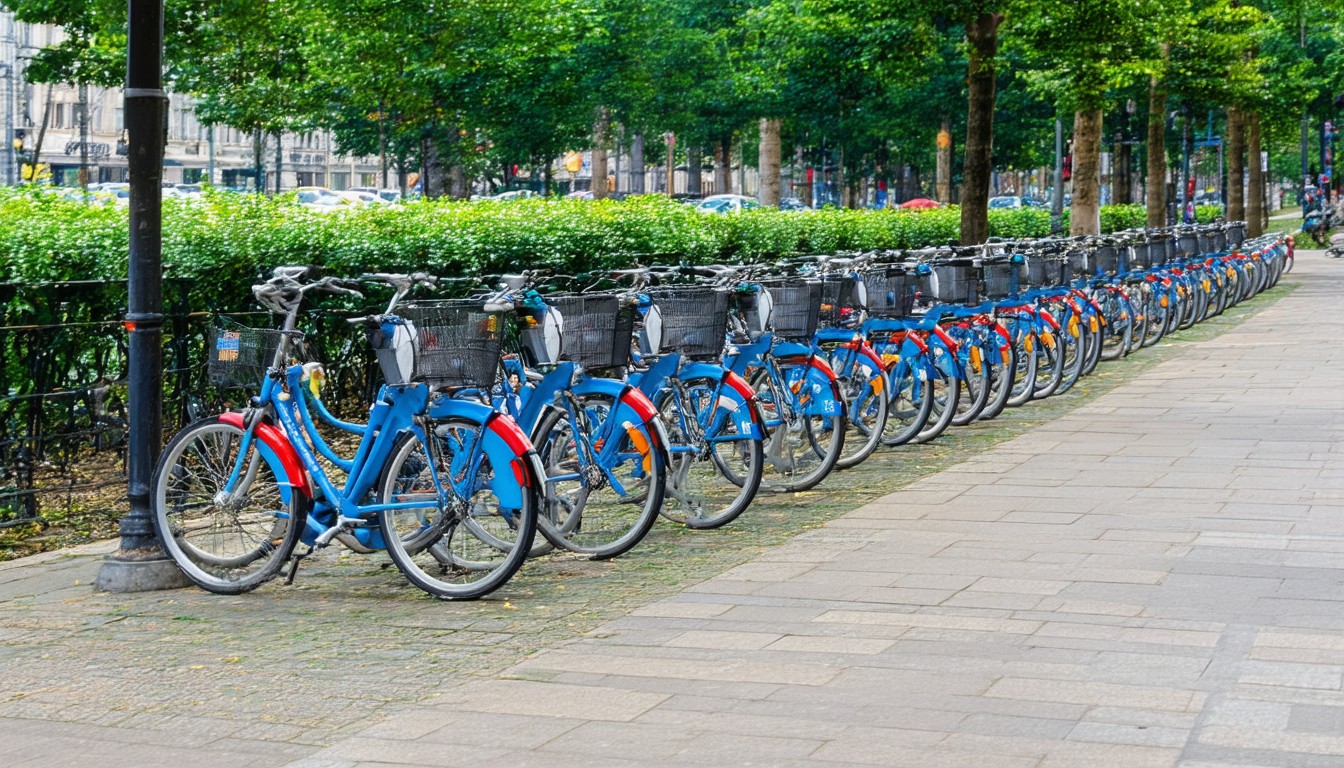
Public bike rental systems have transformed city cycling into one of the most accessible and affordable modes of urban transportation. Over the past decade, these schemes—ranging from established docked networks to flexible dockless fleets—have become synonymous with cities striving to reclaim streets for people, not just cars. As governments, businesses, and citizens grapple with congested roads, rising living costs, and the imperatives of sustainability, public bike rental offers a solution that is as practical as it is appealing.
Understanding the Public Bike Rental Model
At its core, a public bike rental program provides users with ready-to-ride bicycles for short trips, enabling them to pick up and drop off bikes at designated stations or, in some cases, almost anywhere within a defined urban zone.
The model is generally characterized by:
- Low-cost access, typically through pay-per-ride, daily, or membership options
- Wide coverage in densely populated areas with interconnected stations or geofenced drop points
- App- or card-based unlocking for seamless access
Systems like New York City’s Citi Bike, London’s Santander Cycles, and Paris’ Vélib’ have become urban icons, each integrating technology, design, and logistics tailored to local needs. Adoption of e-bikes in many fleets has further democratized cycling, bridging the gap for longer, hillier, or more physically challenging journeys.
How Public Bike Rental Improves Urban Mobility
In practice, public bike rental services:
- Address “first and last mile” gaps between transit stations and destinations
- Provide an alternative to crowded public transport during peak hours or crises (as seen during the COVID-19 pandemic)
- Reduce reliance on private vehicles, alleviating pressure on parking and road infrastructure
Beyond these logistical benefits, they foster a visible cycling culture. Regular rides normalize cycling in traffic, encourage infrastructural investment, and inspire behavioral shifts citywide.
Affordability and Access: Who Benefits Most?
The hallmark of successful public bike rental schemes is their affordability. Most city programs offer entry-level pricing that undercuts fares for buses and subways.
For instance, a typical 30-minute ride in London is capped at a nominal fee, while monthly passes in U.S. cities often cost less than a week’s public transit fare. Many schemes also collaborate with local authorities or NGOs to provide discounted access to low-income users.
This affordability extends cycling’s reach to:
- Commuters looking to save on daily transportation
- Students and young people with limited budgets
- Tourists seeking flexible, immersive city travel
However, equity remains a challenge. Studies have found that high-density bike station networks often favor affluent or tourist-centric neighborhoods, potentially limiting impact in underserved communities. Addressing this, some programs prioritize deployment in transport deserts, subsidize passes, and partner with social services.
Convenience Meets Technology: User Experience and Infrastructure
The convenience factor is arguably the prime driver of public bike rental’s success. Mobile apps today allow users to find, reserve, unlock, and pay for bikes in seconds. GPS integration enables real-time tracking and smarter redistribution of bikes.
“Technology has fundamentally lowered the barrier for urban cycling. With public bike rental, you don’t need to own, store, or maintain a bike to participate in city life on two wheels,” says urban mobility consultant Leah Schwartz.
Still, physical infrastructure underpins digital convenience. A distributed network of well-maintained stations ensures bike availability and smooth operation. Further, integration with city transit—bike docks at subway stops or transit hubs—multiplies utility and streamlines commuter journeys.
The Evolution: From Docked to Dockless
While traditional systems rely on fixed docking stations, a new wave of dockless models has swept through cities worldwide. Popularized by private companies such as Lime and Mobike, these schemes enable riders to pick up and drop off bikes anywhere within a designated area. The flexibility increases trip uptake, especially in areas not covered by fixed stations.
Yet, dockless models aren’t without controversy. Improperly parked bikes and street clutter have prompted some cities to restrict or regulate deployments. A hybrid approach, blending fixed stations with limited dockless zones, is emerging as a best practice.
Public Bike Rental and Urban Sustainability
Sustainability sits at the heart of the public bike rental movement. Cities adopting these systems see tangible reductions in car traffic, noise, and air pollution. In Paris, Vélib’ rides have supplanted millions of car journeys annually, contributing to a greener urban core.
Additionally, bicycles emit no direct greenhouse gases and require significantly less urban space than cars or even buses. According to studies by transport think tanks, cities with robust cycling infrastructure and active bike rental schemes report double-digit declines in per-capita carbon emissions linked to transportation.
Bike-sharing also catalyzes investment in safer streets. City officials often report that the presence of active bike rental users helps justify and spur the rollout of protected lanes, traffic calming measures, and other improvements that benefit all road users—including pedestrians and drivers.
Challenges and Future Directions
Despite their popularity, public bike rental programs face practical hurdles. Vandalism, theft, and maintenance costs can strain municipal budgets, especially with large fleets. Fluctuations in demand due to weather or seasonality complicate bike distribution and retention.
Moreover, integrating with other modes—buses, trains, shared scooters—requires open data, common payment platforms, and thoughtful urban planning. Some cities are piloting unified mobility apps that let users book and pay for multiple modes in a single journey.
Emerging trends shaping the future of public bike rental include:
- Expansion of e-bike offerings to reach new demographics
- Partnerships with universities, corporations, and social housing providers
- The adoption of AI-driven optimization for bike redistribution
- Increasing emphasis on equity, with targeted deployment in underserved communities
A continuous focus on durability, adaptability, and user-centric service will define the sector’s ongoing evolution.
Conclusion: Public Bike Rental as an Urban Essential
Public bike rental systems have moved from novel experiments to essential pillars of urban transportation. Affordability and convenience are their core strengths, leveling the playing field for daily commuters, occasional riders, and visitors alike.
“As cities rethink the role of roads and reclaim space for people, public bike rental stands out as a proven, scalable vehicle for healthier, greener, more equitable streets,” observes transit strategist Martina Pohl.
Strategic investment in technology, inclusive access, and thoughtful infrastructure will ensure that public bike rental continues riding at the forefront of city mobility, helping shape more sustainable and livable urban environments.
FAQs
How do public bike rental systems work?
Users typically unlock bikes using a mobile app or smart card, ride them for short trips, and return them to any designated station or, in the case of some systems, within a geofenced area. Payment is made per ride, daily, or via monthly membership.
Are public bike rental programs affordable compared to other transport?
Yes, most public bike rental programs are designed to be low-cost, often charging less than public transit fares for comparable journeys. Discounts or subsidies are sometimes offered for students, low-income residents, or frequent riders.
Do public bike rental schemes help reduce city congestion?
They can play a significant role in reducing road congestion by shifting short car journeys to bikes, promoting active transport, and easing demand on public transit systems during peak hours.
What are the main challenges these programs face?
Key challenges include theft and vandalism, ensuring even bike distribution, maintenance, seasonal demand fluctuations, and providing equitable service coverage across all neighborhoods.
Can tourists use public bike rental services?
Absolutely—tourists are a major user group. Most systems offer temporary access, such as day passes or pay-as-you-go plans, which can be easily activated with a smartphone and credit card.
What is the difference between docked and dockless bike rental models?
Docked systems require users to return bikes to fixed stations, enhancing order and predictability. Dockless models allow for flexible pick-up and drop-off within a pre-defined area, although they may require stricter management to prevent street clutter.












Leave a comment