

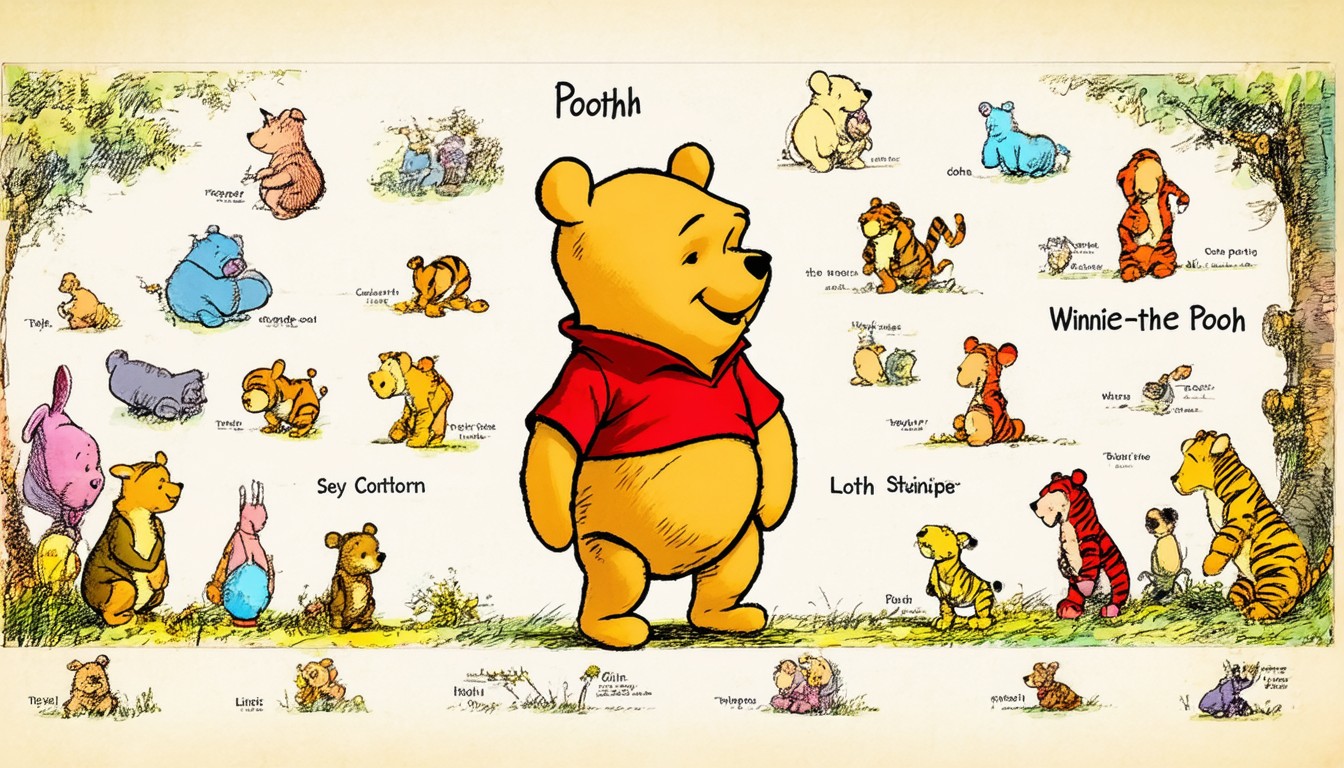
Winnie-the-Pooh, the honey-loving bear from A.A. Milne’s beloved stories, has delighted generations of readers with his gentle wisdom and playful friends in the Hundred Acre Wood. But beyond the nostalgia and charm, a modern internet phenomenon has recast Pooh and his friends as a tool for personality exploration—leading to the viral “Pooh Pathology Test.” Designed to match individuals with the psychological traits mirrored by each character, this test offers a whimsical but thought-provoking peek into human personality types, mental health discussions, and the enduring relevance of classic literature.
Origins of the Pooh Pathology Test
From Children’s Stories to Modern Psychology
The concept behind the Pooh Pathology Test is rooted in a tongue-in-cheek 2000 academic paper by Dr. Sarah E. Shea and colleagues, which analyzed the main characters of Winnie-the-Pooh in terms of classic psychiatric diagnoses. Shea’s work was intended partly in jest, using the familiar faces of Pooh, Piglet, and friends to highlight certain diagnostic criteria in a humorous way.
Nevertheless, the analysis resonated—especially as online quizzes began adopting these archetypes. These digital assessments assign users to “Pooh pathology” types, with results like “You are an Eeyore—thoughtful, melancholic, but deeply empathetic,” or “You are a Rabbit—organized and sometimes a touch anxious.”
The Test’s Structure and Popularity
Most versions of the Pooh Pathology Test ask a series of personality questions, then reveal which character (and corresponding psychological trend) you most resemble. The format echoes other viral personality quizzes but with an added layer—the blending of pop psychology with playful narrative.
According to data from online quiz platforms, tens of thousands of users have taken variations of the Pooh Pathology Test, reflecting both a collective curiosity about self-discovery and a broader societal trend toward normalizing mental health conversations.
Character Profiles: What Your Results Mean
Each Winnie-the-Pooh character in the test serves as an exaggerated mirror of certain mental health or personality traits. While not intended as clinical diagnoses, these profiles spark meaningful self-reflection.
Winnie-the-Pooh: The Distracted Optimist
Pooh embodies simplicity, impulsivity, and sometimes distractibility—traits lightly likened to symptoms of Attention Deficit Hyperactivity Disorder (ADHD). Yet, his positivity and loyalty are a reminder that every personality type brings unique strengths.
Piglet: The Worrier
Piglet’s anxious disposition mirrors generalized anxiety tendencies, but also shows the importance of courage in the face of fear. Many users identify with Piglet’s gentle nature and willingness to help friends despite personal worries.
Eeyore: The Melancholic Thinker
Eeyore is often cited as a representation of depressive symptoms, with his persistent gloom giving voice to those who’ve felt unnoticed or downcast. Studies in narrative psychology support the notion that such characters offer validation to people experiencing low moods.
Tigger: The Exuberant Dynamo
Bouncy and impulsive, Tigger’s high energy and lack of inhibition can be read as a parody of hyperactivity (or mania). However, his enthusiasm is infectious, illustrating the complexity of psychological labels.
Rabbit and Owl: The Organizers
Rabbit’s controlling tendencies and Owl’s verbose intellect are sometimes compared to obsessive-compulsive traits or know-it-all behaviors. Still, both characters contribute stability and wisdom to the group—demonstrating that every archetype sits on a broad spectrum.
“The utility of the Pooh Pathology Test is not clinical, but conversational; it invites participants to better understand themselves by reflecting on characters they already cherish,” notes Dr. Elena Morrison, clinical psychologist and mental health advocate.
Why Personality Quizzes and Pathology Tests Resonate
The Allure of Self-Discovery
Across generations, the desire to understand oneself remains universal. Online quizzes—particularly those with a playful or pop-culture angle—translate dense psychological concepts into accessible content. The Pooh Pathology Test distills mental health language into approachable, non-threatening metaphors, democratizing a conversation that can otherwise feel intimidating.
Destigmatizing Mental Health
One of the most powerful aspects of the Pooh Pathology Test is its ability to reduce stigma. By associating common emotional experiences with beloved childhood characters, users may feel less isolated or ashamed about their own struggles. Mental health awareness campaigns often highlight the role of storytelling in normalizing diverse psychological experiences.
The Virality Factor
Much of the test’s continued popularity is due to social sharing. As users post their results (“I’m an Eeyore—no surprise there!”), conversations open up among peers, friends, and even across generations. Social media analytics highlight that personality quizzes often double engagement metrics compared to standard posts—Pooh-related content being no exception.
Limitations and Criticisms of the Approach
Not a Substitute for Professional Assessment
While enjoyable and sometimes insightful, the Pooh Pathology Test is not a diagnostic tool. Reputable mental health professionals caution against using any quiz as a substitute for clinical assessment or therapy.
Oversimplification of Complex Issues
Reducing nuanced mental health topics to cartoon personalities can inadvertently trivialize real experiences. Critics argue that while such tests spark discussion, they may reinforce stereotypes if not contextualized appropriately.
Balancing Fun and Responsibility
Quiz creators and platforms carrying the Pooh Pathology Test increasingly add disclaimers clarifying that results are entertainment-focused. This transparent approach is encouraged by mental health organizations, ensuring users treat the quiz as an icebreaker, not a diagnosis.
How to Use the Pooh Pathology Test Responsibly
Self-Reflection and Dialogue
When approaching personality tests like this, consider results a starting point for self-reflection—not an endpoint. If you resonate with a character’s challenges, it may be worth discussing those feelings with a trusted friend or professional.
Leveraging Positive Traits
Every character in the Hundred Acre Wood displays resilience and adaptability. Embracing the positive attributes assigned to your result can boost self-esteem and encourage a more balanced view of personal growth.
Incorporating Lessons Beyond the Quiz
Readers often find that the test reminds them of the richness in both literature and psychological diversity. Teachers, counselors, and parents sometimes use these archetypes as gentle entry points for deeper conversations around emotions and well-being.
Conclusion: Insight, Not Diagnosis
The Pooh Pathology Test succeeds in blending nostalgia, self-discovery, and lighthearted psychology in a format accessible to all. While it does not—and should not—take the place of formal mental health evaluation, it opens valuable doors for self-reflection and shared understanding. Ultimately, its greatest value lies in fostering empathy, humor, and acceptance of psychological differences, reminding us that everyone in the Hundred Acre Wood—and beyond—has a unique story to tell.
FAQs
What is the Pooh Pathology Test?
The Pooh Pathology Test is an online quiz that matches internet users to Winnie-the-Pooh characters based on their answers to personality questions, loosely reflecting different psychological traits.
Is the Pooh Pathology Test scientifically valid?
No, it is not a scientific diagnostic tool. While inspired by psychological theories, the test is meant for entertainment and self-reflection, not for formal assessment.
Can children take the Pooh Pathology Test?
Children can enjoy the quiz for fun, especially with adult guidance to ensure the results are understood in a positive, non-clinical context.
What should I do if I relate strongly to a character’s mental health description?
If a character’s traits resonate on a deeper level or raise concerns, it may be helpful to discuss those feelings with a mental health professional or trusted individual.
Why are personality quizzes like this so popular?
People enjoy gaining new self-insight in accessible and playful formats. Quizzes based on beloved characters add an extra layer of engagement and emotional connection.
How can I use the Pooh Pathology Test in a productive way?
Use it as a starting point for self-awareness or group discussion, but remember to approach results with humor and perspective—seeing traits as part of a broader tapestry of personality, not rigid labels.










Leave a comment