

Precision in measurement transforms success in the kitchen, scientific labs, and manufacturing processes. Whether crafting a classic soup, developing pharmaceuticals, or tailoring beverages for a café, converting ounces to cups accurately is essential. Confusion often arises because “ounce” can mean either fluid ounces (for liquids) or ounces (for weight), each with its own context. In North American kitchens and beyond, mastering the ounces-to-cups conversion empowers consistent recipes, reduces waste, and contributes to quality outcomes.
“Accurate measurement is the backbone of reliable results—in cooking, baking, and any field requiring liquid handling. Misconverting ounces to cups is one of the most common errors experts see in both home and professional kitchens.”
— Chef Janet Zimmerman, culinary educator and author
Beyond the basics, understanding ounce-to-cup conversion also minimizes costly mistakes. A small miscalculation can alter a sauce’s texture, throw off a barista’s signature drink, or impact a chemical formulation. This guide delivers a clear, data-informed roadmap for ounces-to-cups conversion, practical tips, and insights drawn from real-world scenarios.
Standard Conversion: How Many Ounces in a Cup?
The foundational benchmark for U.S. cooking and baking is straightforward:
– 1 cup = 8 U.S. fluid ounces
This standard holds true across liquid measurements for water, milk, juice, and most everyday fluids. However, context matters—a U.S. cup is not the same as a UK/Imperial cup (which totals roughly 10 U.K. fluid ounces), highlighting the need for vigilance with international recipes.
Quick Reference Conversion Table
Here’s a practical guide for common conversions:
| Fluid Ounces (fl oz) | U.S. Cups |
|———————-|—————|
| 1 | 1/8 |
| 2 | 1/4 |
| 4 | 1/2 |
| 6 | 3/4 |
| 8 | 1 |
| 16 | 2 |
| 32 | 4 |
For bulk recipes or commercial environments, multiplying fluid ounces by 0.125 yields the cup equivalent. Conversely, multiply cups by 8 to return to ounces. This direct relationship streamlines scaling recipes or portioning drinks in busy settings.
Variations Across Systems and Ingredients
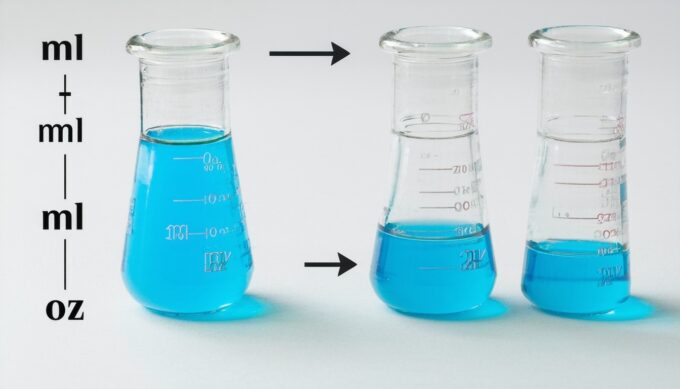
The U.S. system dominates most North American recipes, yet international travel or online resources can introduce the metric cup (250 ml), and the less common U.K. Imperial cup (284 ml). Each system features subtle differences that, though minor for many home cooks, can become significant in baking or scientific contexts. For instance, a single ounce discrepancy in cakes or chemical solutions can mean the difference between success and failure.
Ounces to Cups Calculator: Fast and Accurate Conversion
In today’s digital-first environment, online calculators bridge the knowledge gap. By inputting the ounce value, users instantly see the precise cup measurement. Many popular kitchen websites and mobile apps now integrate such features, reducing guesswork and enhancing reliability.
How Digital Ounce-to-Cup Calculators Work
- Users input the fluid ounce measurement.
- The calculator multiplies by the conversion factor (0.125).
- Results yield a decimal or fraction in cups, often rounded for convenience.
These calculators may also feature toggles for U.S., Imperial, and metric systems, recognizing the importance of international data consistency. Some brands even offer voice-activated tools for hands-free conversions in restaurant kitchens.
Practical Scenario: Busy Café Example
Consider a barista crafting a batch of cold brew concentrate. The recipe calls for 96 fluid ounces of water. By using a digital calculator, they quickly confirm that this is exactly 12 cups—a much simpler, error-free approach than manual math in a fast-paced setting.
Why Ounces to Cups Conversion Varies: Volume vs. Weight
A recurring source of confusion comes from the dual use of “ounce” in both volume (fluid ounces) and mass (weight ounces). For liquids, ounces almost always mean “fluid ounces.” For solids, such as flour or sugar, recipes may state ounces by weight.
Key Principles to Remember
- Fluid Ounces (fl oz): Measure volume, used for liquids.
- Ounces (oz): Measure weight, used for solids.
- Cups: Always measure volume.
Switching between weight and volume can lead to inaccuracies. For instance, 8 fluid ounces of honey and 8 ounces of honey by weight are not the same—honey’s density means its weight far exceeds its fluid volume for the same measure.
Example Differentiation: Baking Impact
In professional baking, substituting weight for fluid volume can yield drastically different textures. A cake calling for 4 fluid ounces of milk (0.5 cup) is precise, but if measured in weight ounces, it could create a dry, dense product. Scientific American food studies have often highlighted this as a root cause for recipe variability among amateur cooks.
Best Practices for Kitchen and Lab Success
Meticulous measurement fosters consistent results. Professionals recommend high-quality liquid measuring cups for accuracy, resisting the temptation to repurpose dry measuring cups for liquids and vice versa. For commercial settings, scales calibrated for fluid ounces provide further reliability.
Pro Tips for Reliable Ounce-to-Cup Conversion
- Always check the recipe’s origin: U.S., U.K., or metric cups can differ subtly.
- Use clear liquid measuring cups: Read at eye level for liquid accuracy.
- Favor calculators or conversion apps: Especially for scaling or adapting recipes.
- Beware of ingredient densities: Only use ounce-to-cup conversions for liquids, not dry ingredients unless explicitly stated.
Industry Application: Food Service & Healthcare
Food service brands, hospital kitchens, and chemists alike rely on accurate conversions to comply with regulations and ensure safety. In healthcare, for example, converting a patient’s fluid intake incorrectly can impact treatment outcomes. Training sessions often underscore the high stakes of casual measurement mistakes.
Common Mistakes to Avoid When Converting Ounces to Cups
Despite the relative simplicity, a few pitfalls regularly trip up even experienced cooks and lab techs:
- Mixing up weight and fluid ounces
- Assuming all cups are created equal internationally
- Overlooking the meniscus (curved surface) when measuring liquids
- Relying on old or unclear measuring tools
Developing a consistent measurement routine—always double-checking units, standardizing tools, and leveraging digital calculators—tackles these errors before they impact your final product.
Conclusion: Getting Ounces to Cups Right—Consistency Is Key
Accurate ounce-to-cup conversion is a cornerstone for consistent cooking, baking, beverage mixing, and scientific experiments. Understanding the difference between weight and fluid ounces, using the correct tools, and leveraging digital resources prevent common mishaps. As the world’s recipes, lab protocols, and consumer products grow ever more globalized, a keen grasp of measurement conversions ensures success—whether you’re pouring a cup of coffee or mixing a critical solution.
FAQs
What is the difference between fluid ounces and ounces?
Fluid ounces measure volume (typically for liquids), while ounces measure weight. Always check whether a recipe specifies “fl oz” (liquid) or “oz” (solid/weight).
Is 8 oz the same as 1 cup?
In U.S. measurements, 8 fluid ounces equals 1 cup for liquids. For solids, 8 ounces by weight does not always equal 1 cup due to varying ingredient densities.
How do I convert ounces to cups without a calculator?
Divide the number of fluid ounces by 8 to get the equivalent in U.S. cups. For example, 16 fluid ounces is 2 cups (16 ÷ 8 = 2).
Are U.S. and U.K. cup measurements the same?
No, a U.S. cup is 8 fluid ounces, while a U.K. (Imperial) cup is about 10 Imperial fluid ounces. The metric cup (common in Australia, Canada) is 250 milliliters.
Can I use a dry measuring cup for liquids?
For best results, use a liquid measuring cup for fluids and a dry cup for solids, as shapes and measurements are designed for their specific purposes.
Why does my recipe turn out differently when I convert ounces to cups?
Common issues include confusing weight ounces with fluid ounces or using the wrong type of cup. Accurate measurements and an understanding of ingredient type are vital for consistent results.
















Leave a comment