

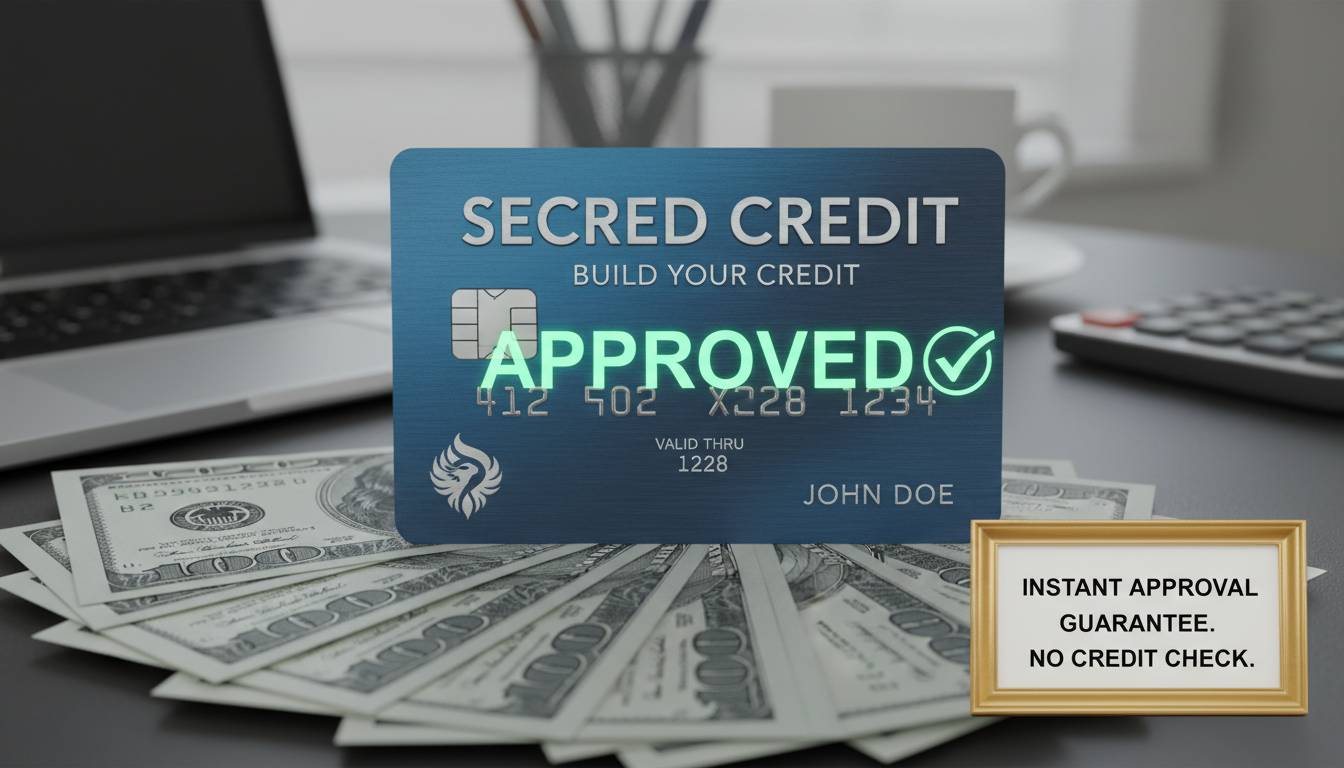
Finding a credit card without a credit check feels like discovering a financial loophole. If you’ve been denied traditional cards due to poor credit history or want to avoid hard inquiries altogether, the promise of “no credit check” cards appears in search results constantly. But understanding what these products actually offer—and their true costs—requires digging beyond the marketing headlines.
The reality is more nuanced than “instant approval guaranteed” suggests. Most cards marketed as “no credit check” still perform some form of financial review, just using alternative data rather than traditional credit scores. Understanding this distinction could save you from expensive mistakes or disappointing applications.
What “No Credit Check” Credit Cards Actually Mean
The term “no credit check” creates confusion because it implies no financial review whatsoever. In practice, the credit card industry uses this phrase to describe products with significantly different approval requirements than traditional cards.
Preapproved credit cards with no hard credit pull typically fall into three categories:
| Type | How It Works | Typical Use Case |
|---|---|---|
| Secured Cards | Cash deposit required as collateral | Building credit from scratch |
| Alternative Data Cards | Review income, employment, bank transactions | Thin-file or recovering credit |
| Retail Store Cards | Soft pull for pre-qualification | Limited spending, high fees |
True “no credit check” cards—meaning absolutely no financial review—barely exist in the mainstream market. What you’ll find are products marketed with this phrase but requiring income verification, bank account linking, or alternative soft-pull assessments.
The Federal Trade Commission (FTC) requires lenders to disclose how they evaluate applications, meaning even “no credit check” cards must assess your ability to repay. The difference lies in what data they examine and how they weigh it.
How No Credit Check Cards Differ From Traditional Options
Traditional credit card issuers evaluate applicants primarily through FICO or VantageScore credit reports. They review payment history, credit utilization, account age, and credit mix—factors compiled into your three-digit score. A score below 620 typically triggers denial or unfavorable terms.
No credit check alternatives shift this evaluation framework:
Secured credit cards require a deposit (usually $200-$500) that becomes your credit limit. The issuer technically has collateral, reducing their risk. Examples include the OpenSky Secured Visa and Capital One Secured Mastercard. These report to all three major credit bureaus, making them effective for building credit history.
Alternative data cards like the credit cards with instant approval from issuers such as Avant or Upgrade examine banking behavior, income stability, and educational background rather than traditional credit scores. They often advertise “guaranteed approval” but still evaluate financial capacity.
Retail store cards from retailers like Walmart, Amazon, or Target frequently offer easier approval but restrict usage to that specific store. These often carry higher interest rates and annual fees.
The practical difference: traditional cards may deny you within seconds based on credit score algorithms. Alternative options may approve you within minutes based on different criteria—but frequently charge significantly higher fees to compensate for increased risk.
Top No Credit Check Card Options Available
Based on current market offerings, several products fit the “no hard credit pull” or “alternative approval” category:
Secured Cards (Require Deposit)
OpenSky Secured Visa
– Deposit: $200-$3,000
– Annual Fee: $35
– No credit check (soft pull only)
– Reports to all three bureaus
– Best for: Those wanting to avoid any credit inquiry
Capital One Secured Mastercard
– Deposit: $200-$1,000 (may be refundable)
– Annual Fee: $0-$10 depending on credit
– May allow partial deposit
– Reports to all three bureaus
– Best for: Building credit with lower upfront costs
Unsecured Alternative Options
Avant Personal Loan or Credit Card
– Soft pull for pre-qualification
– Credit limits: $1,000-$20,000
– APR: 24.99%-34.99%
– Best for: Those needing larger credit lines with poor credit
Indigo Platinum Mastercard
– Designed for people recovering from bankruptcy or poor credit
– Annual fees: $0-$75 depending on creditworthiness
– Soft pull for pre-qualification
– Best for: Those with significant credit challenges
Retail Cards (Limited Use)
Walmart Credit Card
– Pre-qualification available online
– No annual fee for use outside Walmart
– 5% back on Walmart purchases
– Best for: Regular Walmart shoppers building credit
The Real Costs: Fees, Interest Rates, and Hidden Charges
Comparing no credit check cards requires examining the complete cost structure, not just whether approval is guaranteed. These products carry meaningfully higher costs than traditional credit cards:
| Fee Type | Traditional Cards | No Credit Check Cards |
|---|---|---|
| Annual Fee | $0-$95 | $0-$99 (often higher) |
| Monthly Maintenance | Rare | $0-$10 |
| Transaction Fees | Standard | Often elevated |
| APR | 15%-25% | 25%-36% |
| Foreign Transaction | 0%-3% | Often 3%+ |
The average APR on secured cards for bad credit runs 24.99%, compared to 20% for prime borrowers. This 5 percentage point difference means carrying a $1,000 balance costs approximately $50 more annually in interest.
Annual fees on no credit check cards frequently exceed $50. The Indigo Platinum Mastercard charges up to $75 annual fee for the first year, decreasing afterward. The Tomo Credit Card charges $0 annual fee but imposes 3% foreign transaction fees.
Critical consideration: These higher costs exist because issuers accept higher risk. Avoiding credit checks doesn’t eliminate risk—it shifts who bears it—you through higher fees.
How to Apply and What to Expect
The application process differs substantially from traditional cards:
Step 1: Research Before Applying
Before submitting any application, check if the issuer performs hard or soft pulls. Pre-qualification tools (typically on issuer websites) perform soft pulls that don’t affect your credit score. Applying without pre-qualification triggers hard inquiries.
Step 2: Gather Required Documentation
Even without traditional credit checks, you’ll need:
– Valid government-issued ID
– Proof of income (pay stubs, bank statements)
– Social Security number
– Active bank account
Step 3: Understand Deposit Requirements
For secured cards, the deposit must be available. The deposit is refundable when you close the account in good standing, but approval depends on demonstrating ability to pay the deposit.
Step 4: Wait for Decision
Instant approval isn’t always instant. Some applications require 24-72 hours for review, especially if manual underwriting is required.
Step 5: Activate and Use Responsibly
Most cards require activation upon receipt. Begin with small purchases and pay balances in full monthly to avoid interest charges while building credit history.
Common Mistakes to Avoid
Many applicants approach no credit check cards with incorrect assumptions that lead to poor outcomes:
Mistake #1: Assuming No Responsibility
“No credit check” doesn’t mean “no consequences.” Late payments still get reported, and default can trigger collection actions. The credit card agreement remains legally binding regardless of approval criteria.
Mistake #2: Ignoring Annual Fees
Some applicants focus only on approval guarantees while accepting $100+ annual fees. A card charging $75 annually costs $75 before you make any purchase—far more expensive than cards requiring better credit.
Mistake #3: Carrying Balances
High APRs make carrying balances expensive. Someone carrying $500 at 35% APR pays approximately $175 annually in interest. Prioritizing cards with lower rates or promotional 0% offers makes financial sense.
Mistake #4: Not Checking Credit Reporting
Not all secured cards report to all three bureaus. Before applying, verify the card reports to Equifax, Experian, and TransUnion. Without reporting, you’re building invisible credit that doesn’t improve your traditional score.
Mistake #5: Applying to Multiple Cards Simultaneously
Each application—even soft pulls in some cases—creates inquiries. Multiple applications signal desperation to lenders and can reduce approval odds for subsequent applications.
Building Credit With These Cards
Successfully using no credit check cards requires strategy:
Pay balances in full monthly. Interest charges negate any credit-building benefit. If you can’t pay the full balance, keep utilization below 30% of your limit.
Request credit limit increases after 6-12 months. Most issuers review account holders for increases after demonstrating payment consistency. Higher limits improve credit utilization ratios.
Monitor credit reports. After 3-6 months, check whether your score has improved and whether the account appears correctly on all three bureau reports.
Graduate to better cards. Once your credit score reaches 640-660, apply for traditional unsecured cards with lower fees and rates. Many issuers offer products specifically designed for “fair credit” (scores 580-669).
Alternatives Worth Considering
If no credit check cards carry costs that concern you, alternatives exist:
Credit-builder loans from credit unions or online lenders report payments to bureaus without requiring credit history. These work differently than cards—borrowing a small amount ($500-$1,000) held in savings while making monthly payments.
Authorized user accounts add you to someone else’s credit card as an authorized user. Their payment history appears on your credit report, potentially boosting your score without requiring your own approval.
Secured loans at credit unions often have more flexible approval criteria than credit cards and can help build credit history while establishing banking relationships.
Payday alternative loans (PALs) from federal credit unions offer small loans with more reasonable terms than predatory payday lenders, though these don’t build credit the same way cards do.
Frequently Asked Questions
Do no credit check credit cards actually exist?
True “no credit check” cards are extremely rare. Most products marketed this way perform alternative evaluations—reviewing income, employment history, or banking data rather than traditional credit scores. Secured cards require deposits but don’t check traditional credit. Alternative data cards use soft pulls that don’t impact your credit score.
Can I get a credit card with instant approval and no deposit?
Some issuers like Avant, Upgrade, or Indigo offer pre-qualification with soft pulls and may provide instant decisions. However, truly no-debit cards typically carry higher fees and interest rates to offset risk. Options like the Tomo Credit Card or Credit One cards may approve without deposits but evaluate alternative data.
Will applying hurt my credit score?
It depends on the type of inquiry. Hard credit pulls (used by most traditional card applications) temporarily reduce your score by 5-10 points and remain on reports for 24 months. Soft pulls (used for pre-qualification) don’t affect your score. Always verify whether an application triggers a hard or soft pull before applying.
Can I build credit with these cards?
Yes, but with caveats. Secured cards from major issuers (Capital One, Discover) report to all three credit bureaus and function identically to regular cards once you deposit funds. Many alternative data cards also report payment history. However, some retail cards and niche issuers may not report comprehensively—verify reporting practices before applying.
What’s the catch with guaranteed approval cards?
“Guaranteed approval” marketing typically means the issuer uses alternative criteria rather than traditional credit scores. The catch involves higher costs: annual fees of $25-$99, APRs reaching 25%-36%, and potential monthly maintenance fees. You’re paying for the issuer’s willingness to accept higher-risk applicants.
How long does it take to get approved?
Many issuers provide instant decisions for qualified applicants, particularly for pre-qualified offers. Secured cards may take 7-14 days for deposit processing and card delivery. Alternative data cards sometimes require 24-72 hours for manual review if the automated system can’t make an immediate decision.
Conclusion
No credit check credit cards serve a legitimate purpose for people rebuilding credit or establishing it for the first time. The key is understanding what you’re actually getting: products with easier approval but higher costs, or secured cards requiring deposits but reporting to credit bureaus.
Before applying, determine your primary goal. Building credit? Focus on secured cards from issuers reporting to all three bureaus. Needing credit temporarily? Compare total costs including annual fees and interest. Avoiding any inquiry? Look for pre-qualification options with soft pulls only.
Remember that “instant approval guaranteed” marketing rarely means no strings attached. Read the terms carefully, calculate total costs, and have a plan for paying balances in full. Used strategically, these cards can help you build credit history and eventually qualify for traditional cards with better terms. Used carelessly, they become expensive debt traps that worsen your financial situation.
Your credit score doesn’t define your financial worth—but choosing the right credit-building strategy does affect your financial future.














Leave a comment