

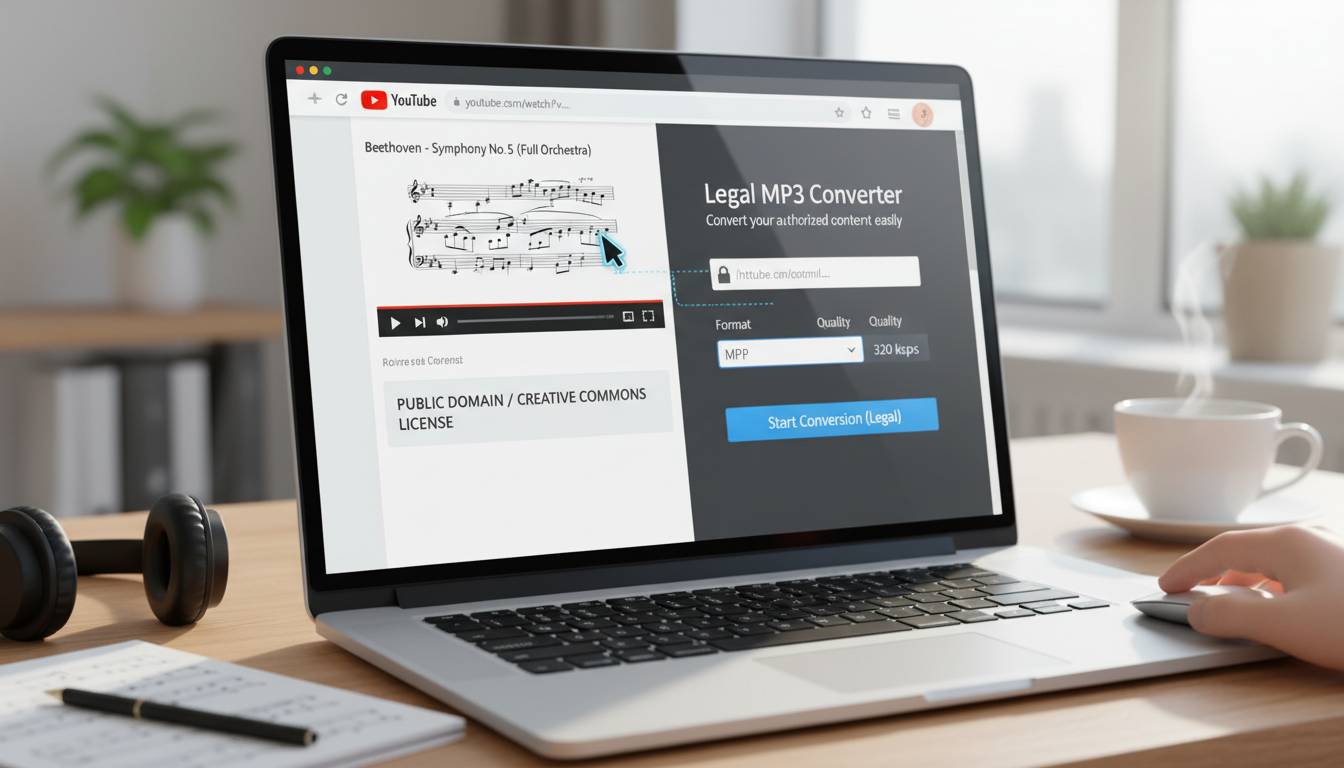
In an era where digital music consumption dominates how we experience audio content, the ability to convert YouTube videos to MP3 format has become a frequently searched topic worldwide. Whether you want to create a personal playlist of ambient sounds for studying, save a spoken-word lecture for offline listening during your commute, or preserve a live performance recording that may eventually disappear from the platform, understanding the legal boundaries surrounding this practice is essential. This guide provides a comprehensive examination of how to convert YouTube content to MP3 while remaining fully compliant with copyright law and YouTube’s Terms of Service. By the end of this article, you will possess a clear understanding of the legal methods available, the risks associated with unauthorized conversion, and the best practices that protect both you and content creators.
Understanding the Legal Framework Surrounding YouTube Content
Before exploring any methods for converting YouTube videos to audio files, it is imperative to understand why the legal landscape matters and how copyright law applies to digital media. YouTube hosts billions of videos, the vast majority of which are protected by copyright. This protection extends to the audio portion of those videos, meaning that the music, spoken word, sound effects, and any other audio elements are intellectual property belonging to their creators or rights holders.
Copyright law varies by country, but the fundamental principle remains consistent across most jurisdictions: the copyright holder possesses the exclusive right to reproduce, distribute, perform, display, or create derivative works based on their original creation. When you convert a YouTube video to an MP3 file, you are creating a derivative work—a new file format containing the copyrighted audio. Without permission from the rights holder, this action typically constitutes copyright infringement.
The Digital Millennium Copyright Act (DMCA) in the United States, along with similar legislation in the European Union (the Copyright Directive), Canada (the Copyright Act), and other countries, provides legal frameworks for addressing online copyright violations. YouTube’s Terms of Service explicitly prohibit the downloading of content from the platform unless you see a “download” or similar link displayed by YouTube. This means that using third-party tools or software to extract audio from YouTube videos generally violates these terms.
However, copyright law also recognizes exceptions, most notably the doctrine of fair use in the United States and similar concepts in other jurisdictions. Fair use allows limited use of copyrighted material without permission for purposes such as criticism, comment, news reporting, teaching, scholarship, or research. Whether a particular use qualifies as fair use depends on several factors, including the purpose and character of the use, the nature of the copyrighted work, the amount and substantiality of the portion used, and the effect on the potential market for the original work.
For individual users converting YouTube content for personal use, the fair use defense is rarely straightforward. While some court cases have established precedents favoring personal use in certain contexts, downloading copyrighted music without authorization generally does not qualify as fair use. The distinction becomes clearer when dealing with content specifically licensed for such use, content in the public domain, or content where you yourself created the original video.
Official and Legal Methods for Accessing YouTube Audio
The most straightforward approach to obtaining audio from YouTube legally is to use the features and services that YouTube itself provides. Understanding these options eliminates any legal ambiguity while still allowing you to enjoy YouTube content in audio format.
YouTube Premium and YouTube Music Premium
YouTube Premium, formerly known as YouTube Red, represents the company’s official subscription service that addresses many user needs for offline and background playback. With a YouTube Premium subscription, you can download videos for offline viewing on mobile devices. While this feature is designed primarily for video consumption, it effectively allows you to access content without an internet connection. The downloaded content remains within YouTube’s official app, maintaining proper licensing compliance.
YouTube Music Premium functions as a dedicated music streaming service that operates alongside YouTube. This service allows subscribers to stream music offline, create playlists, and access background play—meaning the audio continues playing when you switch to other apps or when your phone screen is off. While YouTube Music Premium does not provide direct MP3 file downloads, it offers a comprehensive solution for legal, offline music access that supports artists and rights holders.
The subscription model directly benefits content creators through YouTube’s revenue-sharing system. When you subscribe to YouTube Premium, a portion of your subscription fee goes to compensate the creators whose content you watch, making this a socially responsible choice that sustains the platform’s ecosystem.
YouTube’s Built-in Download Features
For users with YouTube Premium, the platform offers a legitimate download option within its mobile applications. To access this feature, open the YouTube app on your iOS or Android device, find the video you wish to download, and tap the download button beneath the video player. Select your preferred quality setting, and the video will save to your device for offline viewing.
While these downloads are video files rather than standalone audio files, you can achieve an audio-focused experience by using the YouTube Music app instead. The YouTube Music app allows Premium subscribers to download songs and albums specifically for audio playback, creating a more traditional music library experience.
It is worth noting that these official downloads come with limitations. The downloaded content remains accessible only within YouTube’s applications, expires after a specified period if you do not connect to the internet, and cannot be transferred to other devices or converted to different file formats. These restrictions exist precisely to protect the rights of content creators and maintain the integrity of YouTube’s licensing agreements.
Understanding Fair Use and Personal Exceptions
The question of when converting YouTube to MP3 might be legally permissible requires a nuanced understanding of fair use and personal use exceptions. While this article cannot provide legal advice, understanding the general principles can help you make informed decisions.
Content that falls under fair use typically includes materials used for criticism, commentary, news reporting, teaching, or research. For example, if you are a music reviewer who needs to analyze a specific portion of a song for a published review, converting that segment to audio for analytical purposes might potentially qualify as fair use. Similarly, educators using video content as part of a formal curriculum may have certain allowances for reproducing limited portions for instructional purposes.
However, personal use exemptions—which exist in some form in many countries—do not necessarily make unauthorized downloading legal. Some jurisdictions, such as Germany, have specifically ruled that personal use exemptions do not apply to circumvention of technological protection measures, meaning that using tools to bypass YouTube’s restrictions could be illegal regardless of your intended purpose.
The safest approach is to assume that unless you have explicit permission from the rights holder or are using content specifically made available for such use, converting YouTube videos to MP3 files is not legally permitted. When in doubt, err on the side of caution and use official methods or obtain proper authorization.
Identifying Illegal Methods and Their Consequences
Understanding which methods to avoid is equally important as knowing the legal alternatives. Numerous websites, software applications, and browser extensions claim to offer free YouTube to MP3 conversion, but the vast majority of these operate in legal gray areas or outright violate copyright law.
Third-Party Conversion Websites and Software
Websites that offer to convert YouTube videos to MP3 files typically work by accessing YouTube’s servers, extracting the audio stream, and converting it to a downloadable file. This process violates YouTube’s Terms of Service, which explicitly prohibit “downloading any Content unless you see a ‘download’ or similar link displayed by YouTube.” By using these services, you are not only violating YouTube’s terms but potentially infringing on the copyrights held by the content’s creators.
The legal consequences for users of such services vary by jurisdiction and are generally less severe than those facing the operators of these websites. However, you may receive copyright infringement notices, and in some cases, repeated violations can result in your YouTube account being terminated. Additionally, using these services may expose your device to malware, as many conversion websites are laden with advertising software, tracking cookies, and other security risks.
Browser Extensions and Apps
Similarly, browser extensions and mobile applications that offer YouTube to MP3 conversion functionality operate outside legal boundaries. These tools typically require you to log into YouTube and use your account to access content, which constitutes a breach of the platform’s terms. Several popular extensions have been removed from browser extension stores following legal pressure from YouTube and rights holders.
Beyond the legal concerns, these unofficial tools present significant privacy and security risks. They often require extensive permissions to function, potentially giving developers access to your browsing history, cookies, and other sensitive data. The revenue models of many free conversion tools rely on advertising, and some have been found to inject unwanted ads or redirect users to malicious websites.
Best Practices for Legal Audio Consumption
Adopting best practices for consuming audio content legally protects you from potential legal issues while supporting the creative ecosystem. Here are the recommended approaches for obtaining the audio content you want through legitimate means.
Purchasing or Licensing Content Directly
The most unambiguous legal approach is to purchase music and audio content directly from authorized retailers. Services like iTunes, Amazon Music, Google Play Store, and Bandcamp allow you to buy individual songs or albums in MP3 or other audio formats. This gives you permanent, transferable files that you can use as you wish within the terms of the license you purchased.
Many content creators also sell merchandise that includes digital downloads of their music. Purchasing directly from artists not only provides you with legal, high-quality audio files but also ensures that a greater portion of your money goes to the creators themselves rather than through intermediary platforms.
Using Licensed Streaming Services
If your goal is to access a broad library of audio content legally, subscribing to a licensed streaming service is often the best solution. Services like Spotify, Apple Music, Tidal, and Amazon Music Unlimited offer extensive catalogs of music, podcasts, and other audio content for a monthly subscription fee. These services compensate rights holders through licensing agreements, ensuring that artists and creators receive payment for their work.
For content that is primarily available on YouTube, checking whether it is also available on these streaming platforms can provide a legal alternative. Many musicians, podcasters, and spoken-word artists maintain presence on multiple platforms specifically to accommodate different listener preferences.
Exploring Creative Commons and Public Domain Content
YouTube hosts a significant amount of content licensed under Creative Commons or released into the public domain. Creative Commons licenses allow creators to grant specific permissions for others to use their work, including permissions to download and convert content under certain conditions. YouTube’s search filters include a Creative Commons option that can help you find content you can legally use and convert.
Content in the public domain—works whose copyrights have expired or been forfeited—can be used freely without permission. Historical recordings, classic literature readings, and certain other categories of content may fall into this category. However, simply finding content on YouTube does not guarantee it is in the public domain; you should verify the work’s copyright status independently before assuming you can convert it.
Troubleshooting Common Concerns
Even with a clear understanding of legal boundaries, users often encounter specific situations where the rules seem unclear or where practical solutions are needed. Addressing these common concerns can help you navigate the landscape more effectively.
What If I Need Audio for Educational Purposes
If you are an educator or student needing audio from YouTube for educational purposes, several options exist. YouTube’s own educational features include the ability to create and share unlisted videos within specific groups, which can be useful for classroom settings. Additionally, many educational institutions maintain licenses with content providers that allow for broader use of materials.
For genuine educational use, some institutions have established processes for requesting permissions from content creators or accessing content through licensed educational platforms. Contact your school’s library or media services department to learn what resources are available through your institutional subscriptions.
Handling Content That Will Be Removed
Concern about losing access to content is a common reason people seek to download or convert YouTube videos. While this concern is understandable, using unauthorized methods to preserve content creates legal risks. Instead, consider reaching out directly to the content creator to request permission or to inquire about alternative ways to access their content legally.
Some creators actively encourage their audiences to preserve and share their work, and they may provide direct links to download or purchase their content. Others may have accounts on multiple platforms where their content remains available. Taking the time to explore these options often yields better results than resorting to questionable conversion methods.
Understanding Geographic Restrictions
Content that is unavailable in your region due to licensing restrictions can be frustrating. Rather than using tools to bypass geographic restrictions—which typically violates both YouTube’s terms and potential licensing agreements—consider whether the content is available through other legitimate means in your area.
Many content creators and labels release their work through multiple platforms precisely to accommodate international audiences. Checking services like Spotify, Apple Music, or regional streaming platforms may reveal that content is legally available through channels you had not considered.
Conclusion
Converting YouTube to MP3 legally requires understanding and respecting copyright law, YouTube’s Terms of Service, and the rights of content creators. While the desire to access audio content offline is entirely reasonable, the methods used to achieve this goal matter significantly. By utilizing official YouTube services like YouTube Premium and YouTube Music, purchasing content from authorized retailers, exploring Creative Commons-licensed materials, and subscribing to licensed streaming services, you can enjoy the audio content you want while remaining fully compliant with the law.
The digital media landscape continues to evolve, with legitimate options for audio consumption becoming increasingly diverse and accessible. Supporting these legal channels ensures that creators receive fair compensation for their work, enabling them to continue producing the content you enjoy. Making informed, ethical choices about how you access and use digital media not only protects you from potential legal consequences but also contributes to a sustainable creative ecosystem where artists and audiences alike can thrive.













Leave a comment