

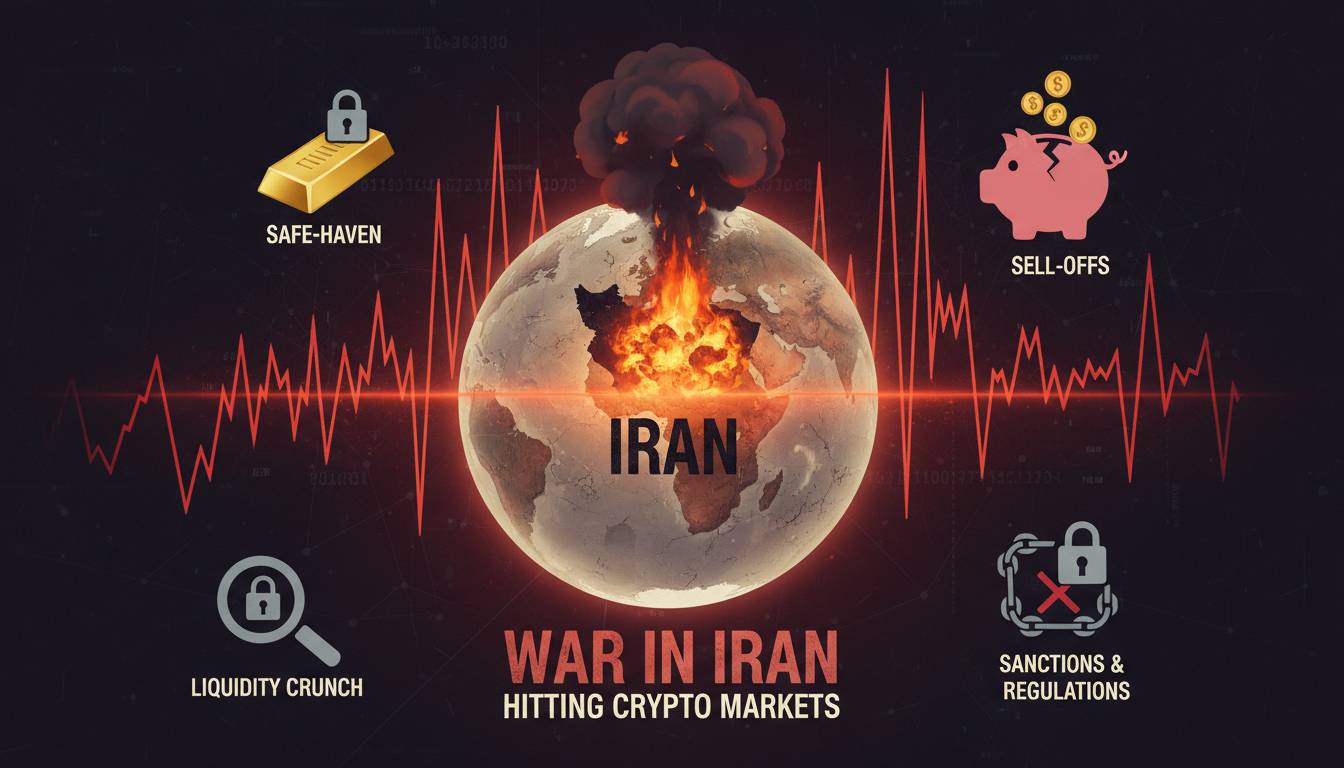
The conflict in the Middle East is moving cryptocurrency prices again. Bitcoin and other digital assets have shown significant volatility as traders weigh geopolitical risks against their portfolios. Here’s what’s happening and what it means for investors.
The Immediate Market Response
When news of escalating Middle East tensions broke, cryptocurrency markets moved quickly. Bitcoin’s price swung sharply within hours, sometimes moving 5% or more in a single trading session. Trading volume on major exchanges like Coinbase and Binance jumped noticeably as investors repositioned.
Ethereum followed a similar pattern, and smaller altcoins like Solana and Cardano saw even bigger swings—this is typical during uncertain times, when traders bail out of riskier positions first.
Gold rallied too, and some buyers turned to Bitcoin as a potential hedge, though whether crypto actually works as a safe-haven asset is still debated.
Exchange volumes spiked during breaking news. Institutional desks reported increased activity as big players adjusted their exposure. Derivatives markets got busy too—futures and options trading volumes climbed as traders hedged or speculated on further volatility.
How Investors Are Responding
Family offices and hedge funds are split. Some are buying more crypto, viewing it as protection against inflation and global instability. Others are cutting positions to preserve capital.
Experienced crypto holders have mostly stayed the course. But shorter-term traders are more reactive, jumping in and out based on headlines. On-chain data shows wallet activity picking up during major news events.
What Analysts Are Saying
Analysts have looked at previous Middle East conflicts for clues. Some periods saw increased crypto adoption as people looked for alternatives to unstable traditional banking systems. Other periods saw broad selloffs as risk assets got dumped.
The current consensus: crypto remains correlated with stocks when geopolitical risk spikes. If tensions keep rising, digital assets could stay under pressure.
Traders are watching exchange volumes, stablecoin flows, and how Bitcoin trades relative to tech stocks—all signals of where sentiment might be heading.
What to Watch
Key indicators: exchange trading volumes, stablecoin reserves on exchanges, realized volatility indices, and Bitcoin’s correlation with equities.
Potential scenarios: If tensions ease, risk assets could bounce. If they escalate, expect more downside.
Regulatory developments in the US could compound the geopolitical effects.
Conclusion
The Middle East situation is adding another layer of uncertainty to crypto markets. Investors should stay diversified, track the indicators, and avoid panic decisions based on short-term headlines. The relationship between global conflicts and crypto prices is complicated, and reacting emotionally usually costs money.
FAQ
How is the Middle East conflict affecting crypto?
The conflict is creating volatility. Bitcoin and altcoins have swung sharply as traders react to news. Risk aversion is up, affecting digital assets alongside stocks.
What’s the relationship between geopolitical tensions and crypto prices?
Geopolitical uncertainty increases volatility. Crypto tends to move with other risk assets during tense periods.
Are investors moving to crypto during the Iran conflict?
Some are—viewing Bitcoin as a potential safe-haven. Others are reducing exposure due to broader risk-off sentiment. Stablecoin flows suggest some are positioning for opportunities.
How does geopolitical risk impact crypto long-term?
Uncertain. Historical data is mixed—some conflicts correlated with increased adoption, others with selloffs. It depends on how monetary policy and regulation respond.
Should I sell my crypto during Middle East tension?
That’s a personal decision based on your strategy, not headlines. Panic selling usually underperforms.
What crypto performs best during geopolitical crises?
Bitcoin and stablecoins like USDC tend to attract attention. No guarantees though—all crypto carries major risk.














Leave a comment