

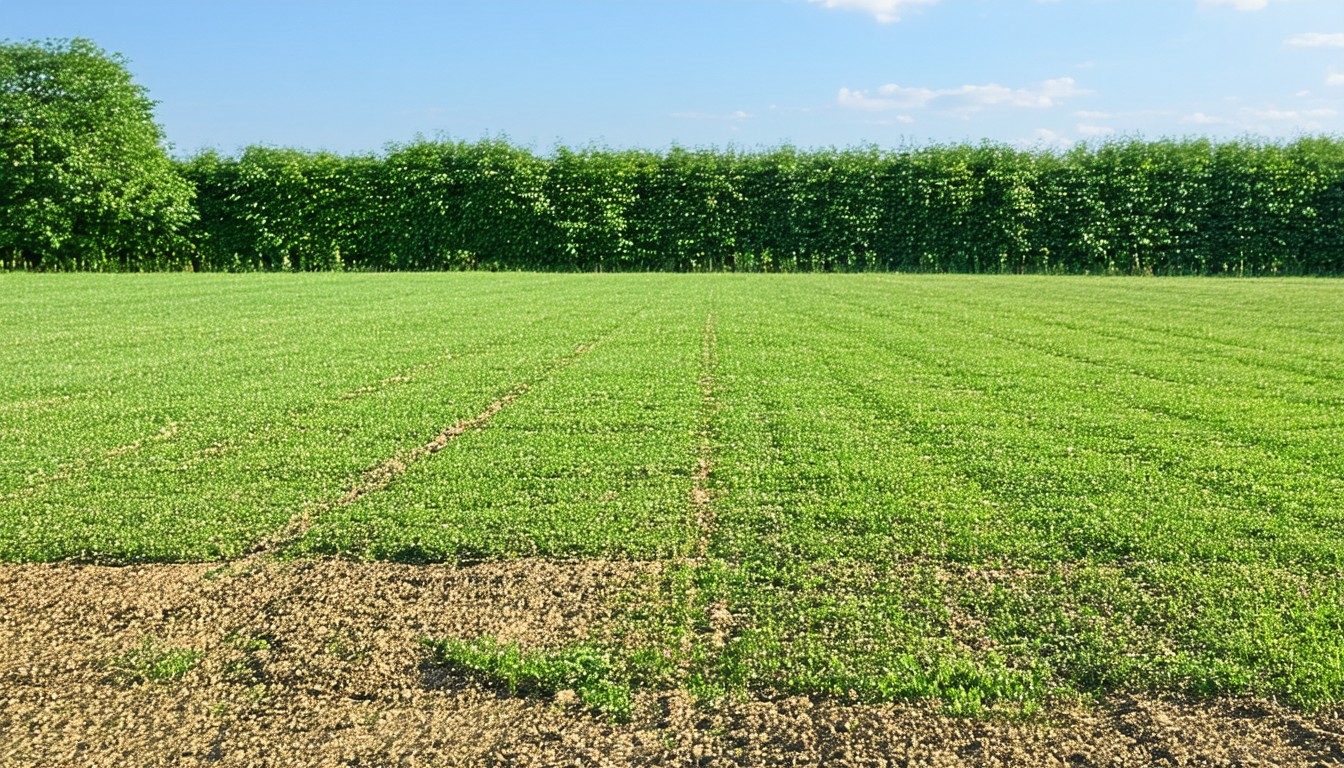
Measuring land has always played a vital role in society—determining property value, zoning, agriculture, and even shaping historical boundaries. Among all units, the acre stands out in both tradition and practical use, especially in the United States, United Kingdom, and several other countries with roots in English law. For anyone dealing with real estate, farming, or land development, a concrete grasp of how many square feet are in an acre is fundamental.
Yet for many, the acre remains surprisingly abstract. While square feet are a familiar unit for indoor spaces, acres are typically reserved for larger plots, making direct comparison less intuitive. Bridging this conceptual gap can simplify decision-making for buyers, sellers, and anyone tasked with evaluating land.
How Many Square Feet Are in an Acre? The Definitive Answer
The most widely accepted value is clear and standardized:
“One acre is exactly 43,560 square feet. This measurement has held constant since the 14th century and remains the standard for land transactions in much of the English-speaking world.”
— U.S. National Geodetic Survey
The figure—43,560—might seem odd, but it stems from an old English system based on furlongs and chains. In practical terms, this means that if you have a rectangular plot of land that’s one furlong (660 feet) long and one chain (66 feet) wide, the product (660 x 66) yields precisely one acre, or 43,560 square feet.
Historical Roots: Why 43,560?
Dating back to medieval England, the acre originated as the amount of land tillable by one man behind an ox in a single day. Eventually, standardization led to the mathematical definition we use today:
- 1 chain = 66 feet
- 1 furlong = 660 feet
- 1 acre = 1 chain × 1 furlong = 43,560 square feet
While methods of land measurement have evolved, the legacy of these units persists, deeply embedded in real estate documents, agricultural planning, and municipal zoning.
Acre-to-Square Feet Conversion: Calculations and Practical Examples
Knowing the numerical relationship is helpful, but seeing it in action brings the concept to life.
Common Acreage Conversions
| Acres | Square Feet |
|——-|————–|
| 0.25 | 10,890 |
| 0.5 | 21,780 |
| 1 | 43,560 |
| 2 | 87,120 |
| 5 | 217,800 |
| 10 | 435,600 |
For quick reference:
– Half an acre: 21,780 square feet
– Quarter acre: 10,890 square feet
Real-World Visualization
To put 43,560 square feet in perspective, consider everyday settings:
- Football field: Slightly more than an acre (an American football field, including end zones, is about 57,600 sq ft)
- Standard home lot: Often ranges from 5,000 to 10,000 sq ft—thus, one acre can hold about 4-8 average home lots
- City block: In many North American cities, a single block is about 2-3 acres
These comparisons help clarify just how substantial an acre truly is, especially in urban or suburban contexts where parcels are typically much smaller.
Why Acre-to-Square Feet Conversion Matters
In Real Estate
Acreage serves as a cornerstone for land valuation and comparisons between rural, suburban, and urban sites. Buyers often ask, “How many homes could fit on this parcel?” or “Is this farm large enough for expansion?” Developers assess how much infrastructure (roads, parks, water lines) can be included in a certain area only by understanding its exact size.
In Agriculture
Farmers, ranchers, and vineyard owners depend on acreage to plan crops, rotations, and resource allocation. For example, the number of vines in a vineyard or the scale of a cornfield planting often relies on precise conversion between acres and square feet.
In Urban Planning
Planners and zoning boards use acres and square feet interchangeably to set density limits, green space proportions, and development benchmarks. This helps maintain balance between growth and livability in burgeoning communities.
Converting Between Acres and Other Units
The acre exists alongside both metric and imperial units. Here’s how the conversions stack up:
- 1 acre ≈ 4,047 square meters
- 1 acre ≈ 0.4047 hectares
- 1 hectare = 2.471 acres
- 1 acre ≈ 0.0015625 square miles
Practical Conversion Formula
To convert acres to square feet:
Square Feet = Acres × 43,560
To go the other way:
Acres = Square Feet ÷ 43,560
For digital convenience, modern calculators and mobile apps allow instant conversions, making it easy to jump between systems regardless of location or required precision.
Acreage in Context: Trends in Land Use and Property
The utility of the acre extends beyond math into dynamic areas of society. Over the past few decades, the average lot size for new homes in the U.S. has tended toward smaller parcels, especially near urban centers. Meanwhile, large agricultural holdings are increasingly managed based on dozens, hundreds, or thousands of acres, with square foot precision during planting or irrigation operations.
Despite growing use of the metric system globally, the acre remains prevalent in certain regions and industries. In the UK, land sales continue to list properties in acres, bolstered by tradition and commercial familiarity.
One land surveyor notes:
“While the move to metric units is ongoing in most scientific realms, the acre’s persistent use in property and agriculture reflects deep cultural roots and the practical needs of buyers and sellers.”
Key Takeaways and Next Steps
Knowing that there are 43,560 square feet in an acre is more than a trivia answer—it’s a critical fact underpinning real estate deals, land management, and civic planning. Understanding how to visualize, convert, and apply this measurement empowers individuals and professionals to make informed decisions.
For those actively working with land, leveraging digital tools and clear conversion charts can streamline everything from purchase negotiations to field management. The acre may be centuries old, but its role in modern life remains as relevant as ever.
FAQs
How can I quickly estimate the size of one acre?
One acre is about 208.7 feet by 208.7 feet in a square shape, roughly the area of three-quarters of a football field. Use this for visual estimates when walking a property.
Why is the acre still used instead of metric units like square meters?
The acre is embedded in land records, property law, and real estate practices in several countries, making it both a legal standard and a cultural habit. This persistence is strongest in the United States and the UK.
Can you convert square feet to acres manually?
Yes: simply divide the number of square feet by 43,560. For example, 87,120 square feet is exactly 2 acres.
What does a “half-acre lot” mean in square feet?
A half-acre lot is 21,780 square feet. This size is common in many suburban developments.
Is an acre a standard size for all lots?
No, lot sizes vary widely depending on local zoning, land availability, and intended use. Urban lots are often much smaller than an acre, while rural properties can span several acres or more.
Where is the acre mostly used today?
It remains prevalent in property sales, agriculture, and land planning throughout the United States, Canada, portions of the UK, and other countries influenced by English land measurement traditions.










Leave a comment