

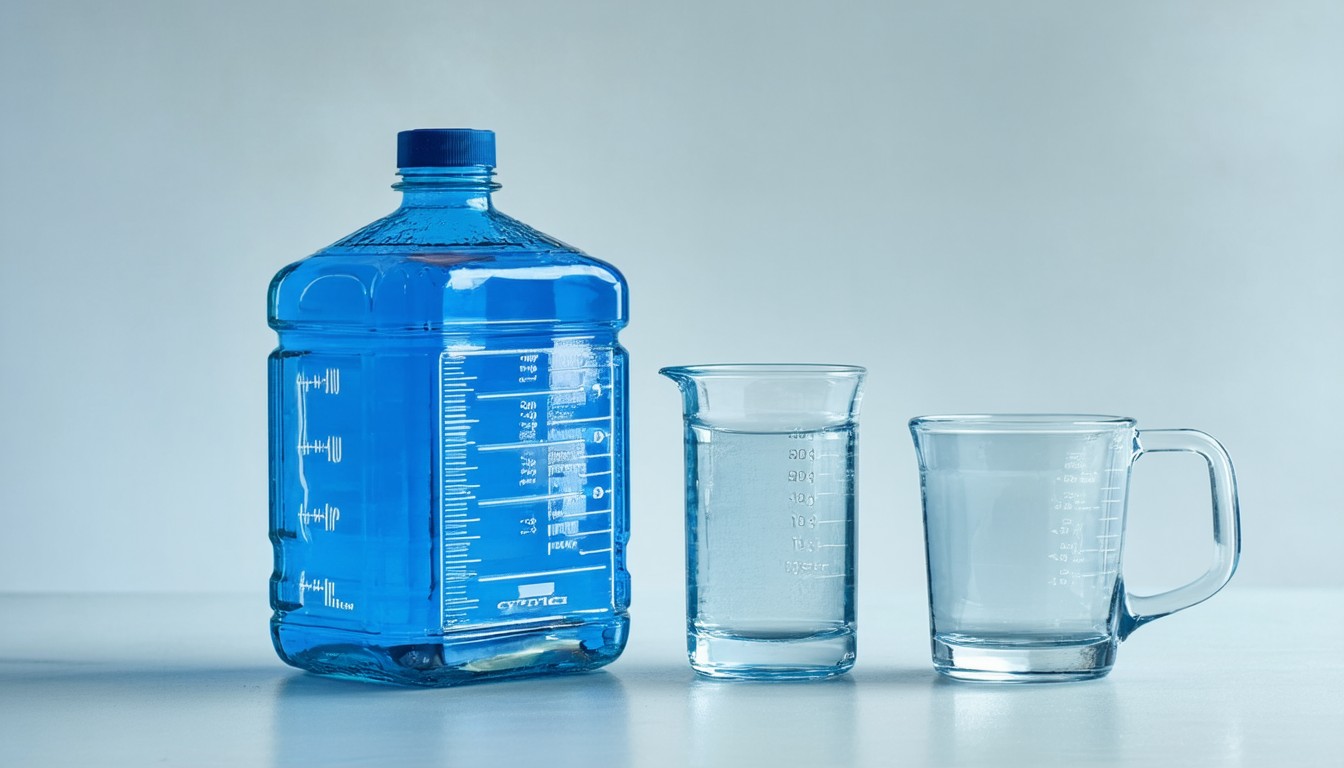
Accurate liquid measurement is more than a matter of curiosity—it’s critical for everything from scientific research to coffee brewing and cocktail mixing. The question, “how many ounces in a liter,” emerges frequently in kitchens, laboratories, and industrial settings where metric and imperial systems collide. With globalization driving cross-border commerce and multicultural lifestyles, precision in conversions between ounces and liters can determine the success of a recipe, the safety of a chemical mixture, or even the outcome of an international trade agreement.
Modern manufacturing, food service, and medical sectors rely heavily on consistent measurement standards. Even small discrepancies can have significant knock-on effects, whether you’re diluting a pharmaceutical solution or scaling up a craft beverage recipe. Understanding how many ounces fit into a liter—and which type of ounce is being referenced—helps bridge gaps between systems and cultures.
Liter to Ounce: The Core Conversion Explained
The process of converting liters to ounces depends on two variables: the liquid measurement system in use and the distinction between US fluid ounces and Imperial (UK) fluid ounces.
The Key Figures
- 1 liter = 33.814 US fluid ounces
- 1 liter = 35.195 Imperial (UK) fluid ounces
While metric measurements like the liter are used worldwide, the ounce prevails in nations with deep imperial roots. This slight variance between fluid ounce definitions means conversions can differ noticeably depending on context.
Breakdown by Region
United States
American recipes and packaging usually refer to US fluid ounces. With 33.814 fluid ounces in a liter, this conversion is common on nutrition labels for beverages, water bottles, and medical products.
United Kingdom & Commonwealth
The UK and many Commonwealth countries use the Imperial fluid ounce. Here, 1 liter equals slightly more: 35.195 ounces. This can trip up anyone baking British recipes in an American kitchen, or vice versa.
“A clear understanding of which ounce is being referenced is crucial, especially in scientific or culinary contexts where precision affects outcomes,” says Dr. Allison Carter, food scientist and standards expert.
Quick Reference Table: Liters to Ounces
| Liters | US Fluid Ounces | Imperial Fluid Ounces |
|——–|—————–|———————-|
| 0.25 | 8.45 | 8.80 |
| 0.5 | 16.91 | 17.60 |
| 1 | 33.81 | 35.20 |
| 2 | 67.63 | 70.40 |
| 5 | 169.07 | 176.00 |
The diversity in ounce values illustrates why context is key.
Why It Matters: Real-Life Scenarios for Liter-to-Ounce Conversion
For many, conversions may seem academic, but real-world stakes are high. Here’s where precision pays off:
Culinary Applications
Home cooks regularly toggle between metric and US measurements—especially with the rise of international recipes. A French soup may require “1 liter of broth,” while an American adaptation calls for “34 ounces.” Even a one-ounce difference can alter the outcome of delicate dishes or craft beverages.
Bartending and Mixology
Modern craft bartenders often reference both unit systems. Signature cocktails designed overseas may need exact translations for US customers. Consistency in ratios directly impacts the customer experience, especially in chains or franchises.
Commercial and Medical Usage
In medical dosing, even a slight error in converting between liters and ounces can have health consequences. Hospitals and pharmacies in the US and Europe routinely convert liter-based prescriptions to fluid ounces for patient instructions.
Scientific Contexts
Laboratories working across borders need to harmonize measurements. International research collaborations often require raw data in both metric and imperial units, ensuring findings are comparable regardless of lab location.
How to Convert Liters to Ounces: Step-by-Step
Converting between liters and ounces is a matter of multiplication. Here’s how to do it quickly and accurately:
- Identify your ounce type: US or Imperial?
- Use the right conversion factor:
- For US fluid ounces: multiply liters by 33.814.
- For Imperial fluid ounces: multiply liters by 35.195.
- Complete the calculation:
- Example: 2 liters × 33.814 = 67.628 US fluid ounces
Handy Conversion Formulae
- Liters to US ounces:
Ounces = Liters × 33.814 - Liters to UK ounces:
Ounces = Liters × 35.195
On the other hand, for casual contexts, approximation works—just remember which system you’re using.
Technology and Trends: Digital Tools for Accurate Conversions
With the ubiquity of smartphones, manual conversion is becoming rare. Popular apps like ConvertPad and platforms like Google Assistant or Alexa allow instant, accurate conversions—minimizing risk and simplifying work in busy environments.
Food bloggers, for instance, have integrated conversion widgets into their websites, so international readers can effortlessly switch between metric and imperial systems. Likewise, recipe management software often comes with built-in converters, reflecting the demand for global, user-friendly culinary information.
Common Pitfalls and How to Avoid Them
In practice, the most common mistakes stem from:
– Confusing US and Imperial ounces, resulting in recipes that don’t turn out as expected.
– Relying on rounded or approximate figures for scientific or medical tasks, leading to inconsistent results.
– Neglecting to check package labeling, as beverage sizes may differ between regions (e.g., a “liter bottle” may actually be 33.8 oz in the US or almost 35.2 oz in the UK).
Industry standardization, education, and digital tools continue to reduce these errors, but vigilance remains essential in professional settings.
Conclusion: Bringing Clarity to Everyday Measurement Challenges
The answer to “how many ounces in a liter” is straightforward once you know your context: 33.814 for US fluid ounces and 35.195 for Imperial. This knowledge bridges culinary cultures, streamlines international business, and ensures scientific reproducibility. As digital solutions become more sophisticated, instant and precise conversions are within everyone’s reach—but awareness and understanding remain irreplaceable. The next time you come across a recipe, dosage, or data sheet, remember: knowing your ounces can make all the difference.
FAQs
How many US ounces are there in a liter?
One liter is equal to 33.814 US fluid ounces. Make sure you’re using US fluid ounces—not dry or weight ounces—for accurate measurement.
Is an Imperial ounce the same as a US ounce?
No, an Imperial (UK) fluid ounce is slightly larger than a US fluid ounce. This means a liter holds about 35.195 Imperial ounces, compared to 33.814 US ounces.
Why are conversions between liters and ounces important?
Accurate conversions matter in cooking, science, medicine, and industry where misunderstanding measurements could impact outcomes, safety, or quality. Many global recipes and products provide both metric and imperial information for this reason.
How do I convert liters to ounces quickly?
Multiply the number of liters by 33.814 for US fluid ounces, or by 35.195 for Imperial fluid ounces. Handy apps and online tools can perform this calculation instantly.
Can ounces ever refer to weight instead of volume?
Yes, in some contexts, particularly dry ingredients, an “ounce” may refer to weight (28.35 grams), not fluid volume. Always check whether the context is for liquids (fluid ounces) or solids (weight ounces) to avoid confusion.












Leave a comment