

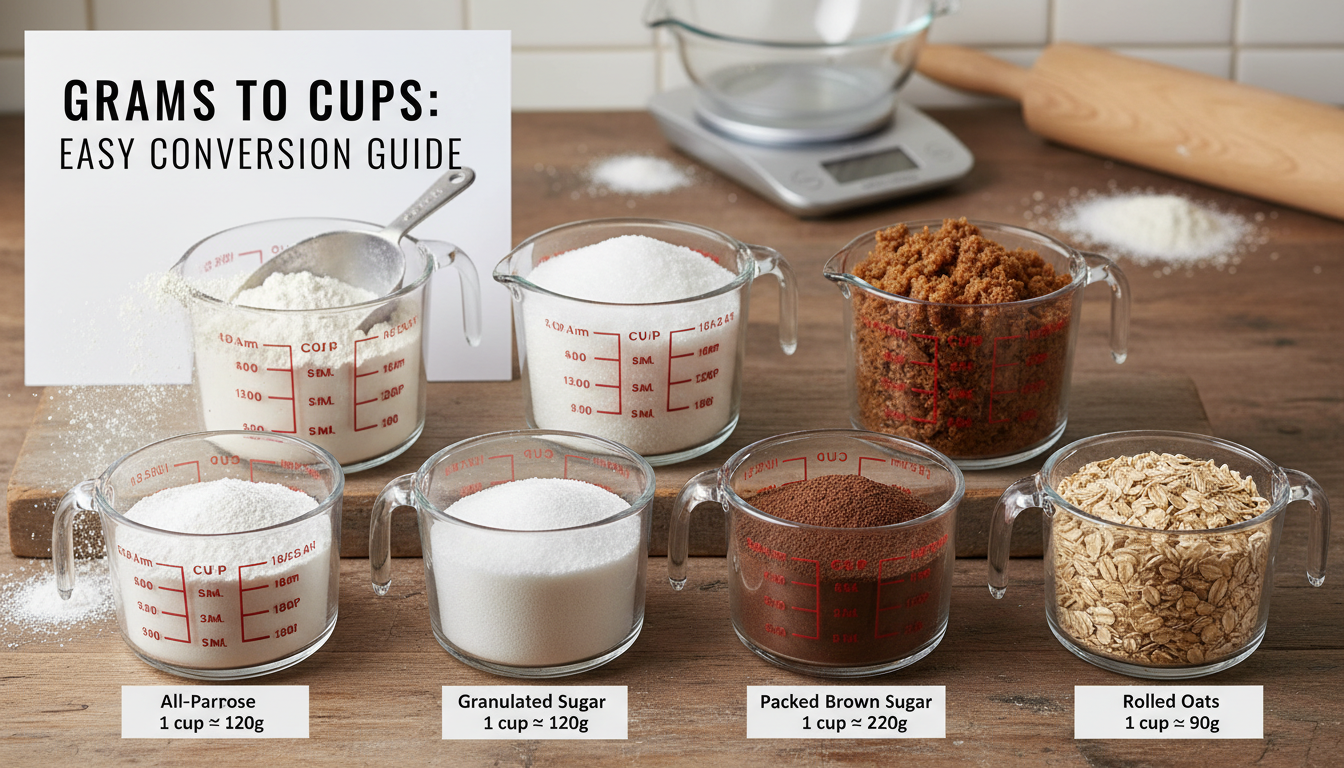
Making the leap from grams to cups can feel like navigating a maze—especially when you’re halfway through baking and realize the recipe uses a completely different measurement system. It’s one of those moments that makes even experienced cooks pause: “Wait, is that 200 grams the same as one cup?” The answer isn’t straightforward, because a gram measures weight while a cup measures volume—and every ingredient sits differently in that cup depending on its density, texture, how it’s packed, and even humidity in your kitchen.
Understanding these nuances can help sidestep soggy cakes, overly dense cookies, or too-runny batters—and yes, even frustrate a few home bakers along the way. This guide unpacks the why behind the numbers, walks through common conversions, and shares what’s worked in real kitchens (along with a human slip or two for good measure). Let’s jump in—because the difference between a floppy pancake and a perfect flip might just be knowing that the right ingredient doesn’t fit neatly into one-size-fits-all numbers.
Why Grams and Cups Don’t Always Match
Grams and cups are fundamentally different units: grams measure mass, while cups measure volume. This distinction matters because ingredients have varied densities—what fills a cup with flour weighs far less than what fills the same cup with sugar or honey .
On top of that, measurement technique plays a huge role. For example, one chef notes the difference in flour weight depending on scooping technique:
“I always aerate the flour bin, then scoop and sweep [or level it off]. My cup of flour is 136g. King Arthur Baking makes it 120g. Some others go as high as 150g.”
When you’re scaling recipes up—say four times—even a few grams off per cup can make a huge difference to texture or moisture. Measuring by weight offers consistency, while volume invites variation.
Common Ingredient Conversions—A Practical List
To make conversions more intuitive, here’s a quick reference of typical weights per 1 US cup for widely used ingredients:
- All-purpose flour: ~120–125g
- Bread flour: ~127g
- Granulated sugar: ~200g
- Brown sugar (packed): ~220g
- Powdered sugar: ~120g
- Butter: ~227g (or 1 cup = 2 sticks)
- Milk: ~240g
- Honey: ~336–340g
- Rolled oats: ~90g
- Cocoa powder: ~85–100g
These numbers pivot from general averages—real-life results may vary. Still, using these as a starting place can help you eyeball conversions in a pinch.
How to Convert When You Only Have Grams (The Simple Formula)
If you need a quick conversion, here’s a reliable formula:
Cups = grams ÷ (grams per cup for your ingredient)
So if you’ve got 240g of flour and assume flour is 120g per cup, you’re looking at roughly 2 cups . Notice how simple math can bridge the gap between grams and cups—provided you pick the right “grams-per-cup” number for your ingredient.
Real-World Tips from Everyday Kitchens
In practice, people mix and match specifics, with real-world constraints shaping their approach:
- Rely on digital scales whenever possible. Scales offer precision and consistency, especially important in baking .
- Measure ingredients individually. Taring a bowl between each ingredient improves accuracy over cumulative measurements .
- Choose proper measuring tools. Use spoon-and-level for flour, firmly packed for brown sugar, eye-level reads for liquids .
- Adjust for environment. Humidity can add weight to flour by several percent; consider storing ingredients airtight and leveling them consistently .
- Know your cup standard. A US cup is about 237ml, but the metric cup is often 250ml—and UK cups differ too. Adjust when referencing global recipes .
Even experienced bakers say there’s more nuance than meets the eye: scooping vs spooning flour can cause a 25% volume difference, which is no small margin .
Mistakes to Watch For
Here’s a short, human-paced accountability check—no baking disasters intended:
- Assuming uniform density. A cup of sugar is much heavier than a cup of flour—that’s a recipe for imbalance.
- Ignoring texture or packing. Lightly scooped oats vs. tightly packed brown sugar can ruin texture if misconverted.
- Using vague averages for all ingredients—just don’t. Think beyond “100 grams per cup” unless dealing with water-like liquids.
- Not accounting for cup standards. Using a 250ml metric cup instead of US standard (237ml) multiplies error across ingredients.
Catch these pitfalls early, and your final bake will feel more like a success than an oops-fire.
A Small Sidebar: Why Volume Still Persists in US Kitchens
Despite the growing precision of scales, cups remain rooted in many homes. They’re fast, familiar, and often tied to tradition passed down through generations . Many cookbooks—even modern ones—still offer cup measurements for comfort and seasonal utility. Still, leading bakers often recommend using weight as the standard for the best consistency .
Conclusion
Converting grams to cups doesn’t need to be intimidating, but it does demand awareness. Weight vs. volume, ingredient density, measurement methods, and environmental quirks all play a role. Keep a reliable chart handy, invest in—or at least borrow—a digital scale, and, where precision matters, trust grams.
When you do convert, double-chart popular ingredients:
– Flour ~ 120g/cup
– Granulated sugar ~ 200g/cup
– Butter ~ 227g/cup
– Milk ~ 240g/cup
– Honey ~ 336–340g/cup
Think of it like a language you’re learning: clunky initially, but with practice, those conversions feel natural. Your cakes will rise better, cookies will bake evenly, and your kitchen math will feel surprisingly human—and that’s the sweet spot.
FAQs
How accurate is converting grams to cups using a generic formula?
It’s only as accurate as your assumption for grams per cup. The formula (grams ÷ density) works well when you know the typical grams per cup for that ingredient. For best results, verify with a trusted chart or use weight directly.
Why does the same recipe give different results when I use cups?
Measurement variations often come down to how ingredients are packed or measured—like scooping versus spooning flour. Humidity, ingredient type, and cup size (US vs. metric) also affect outcomes. Consistency is key.
Can I measure liquids and dry ingredients the same way?
Liquids (like water or milk) convert more reliably since density is close to 1g per ml. Dry goods vary widely. Use ingredient-specific conversions for solid items to avoid texture mishaps.
Is weighing ingredients always better than measuring by volume?
Yes, particularly in baking. Weight gives precision and consistency. Volume invites variation, but still has value for quick, home-style cooking—especially when a scale isn’t handy.
Which standard cup should I use for recipes?
In the US, assume about 237 ml per cup. Many charts round to 240 ml for simplicity. International recipes might use a 250 ml metric cup or UK standards—check the recipe context.
How do environmental factors like humidity affect conversions?
Ingredients like flour absorb moisture differently, making them heavier by volume. This can skew conversions by several percent. Storing items airtight and leveling them helps reduce error.











Leave a comment