

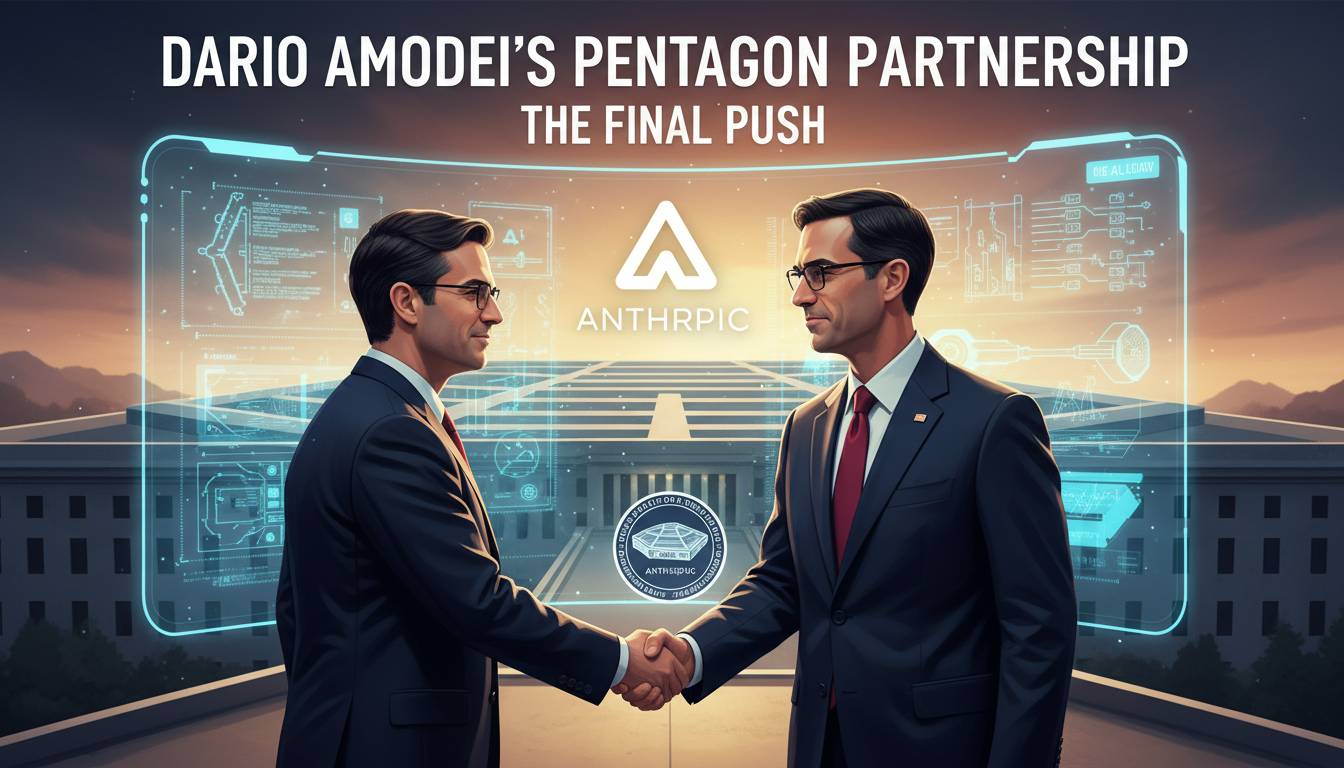
Anthropic CEO Dario Amodei is making a serious push for a formal Pentagon partnership, according to people familiar with the matter. This marks what those sources call an accelerated phase in negotiations that could fundamentally change how leading AI labs work with the U.S. military.
The timing matters. Multiple AI laboratories are competing for defense contracts, each arguing their systems can help with national security. This creates real pressure on Anthropic, which has historically been more cautious about military work than competitors OpenAI and Google DeepMind.
What’s on the Table
The proposed deal would give the Pentagon access to Claude, Anthropic’s flagship AI assistant, for a range of potential uses: analyzing intelligence data, processing foreign language materials, helping military planners model different scenarios, and strengthening defensive cybersecurity operations.
Defense officials have shown particular interest in Claude’s ability to work through complex datasets and reason through ambiguous information—capabilities that have improved dramatically in recent years.
Both sides are still working through difficult details. Classification requirements could force Anthropic to modify how its models work. Data handling protocols need to satisfy intelligence community standards. There’s also the question of what happens to Anthropic’s proprietary technology if it gets integrated into classified systems.
How We Got Here
Anthropic’s government work has grown steadily since Dario and Daniela Amodei founded the company in 2021. They already have contracts with the U.S. Army and have worked with intelligence agencies on AI safety evaluation frameworks. Those smaller projects established relationships that made this larger partnership possible.
Amodei has spoken publicly about the tension between contributing to national security and maintaining ethical guardrails. These comments will face a real test if a Pentagon deal moves forward.
The serious conversations started roughly eighteen months ago, around early 2024, when the Pentagon began actively seeking partnerships with AI labs following the public release of large language models that demonstrated new capabilities.
Both sides now appear eager to finalize terms before year-end budget discussions and political transitions potentially complicate things. Amodei has personally met with senior Pentagon leadership in recent weeks, indicating this is a priority at the highest levels.
What This Means for the Industry
If Anthropic signs on with the Pentagon, it will reshape expectations across the AI sector. OpenAI and Meta already have defense contracts, and each has faced criticism. Anthropic’s entry—the safety-focused company, no less—could accelerate the broader trend of AI labs working with military agencies.
Some AI safety researchers worry about what this means for their field. Will defense work pull resources away from fundamental safety research? Will companies feel pressure to prioritize capability gains over careful evaluation? These concerns aren’t new, but they’ll intensify if Anthropic formalizes this relationship.
Where Things Stand
The next few weeks will determine whether negotiations produce a formal agreement or stall over unresolved issues. A phased rollout seems most likely—limited pilot programs first, expanding based on what works and what doesn’t.
Amodei faces a genuine challenge here. Anthropic built its reputation on careful, safety-conscious development. A deep defense partnership risks that brand, especially with commercial customers who specifically want AI providers with clear boundaries around military applications.
The outcome will likely influence how policymakers think about AI companies’ role in national security more broadly. As the technology advances, these questions won’t go away.














Leave a comment