

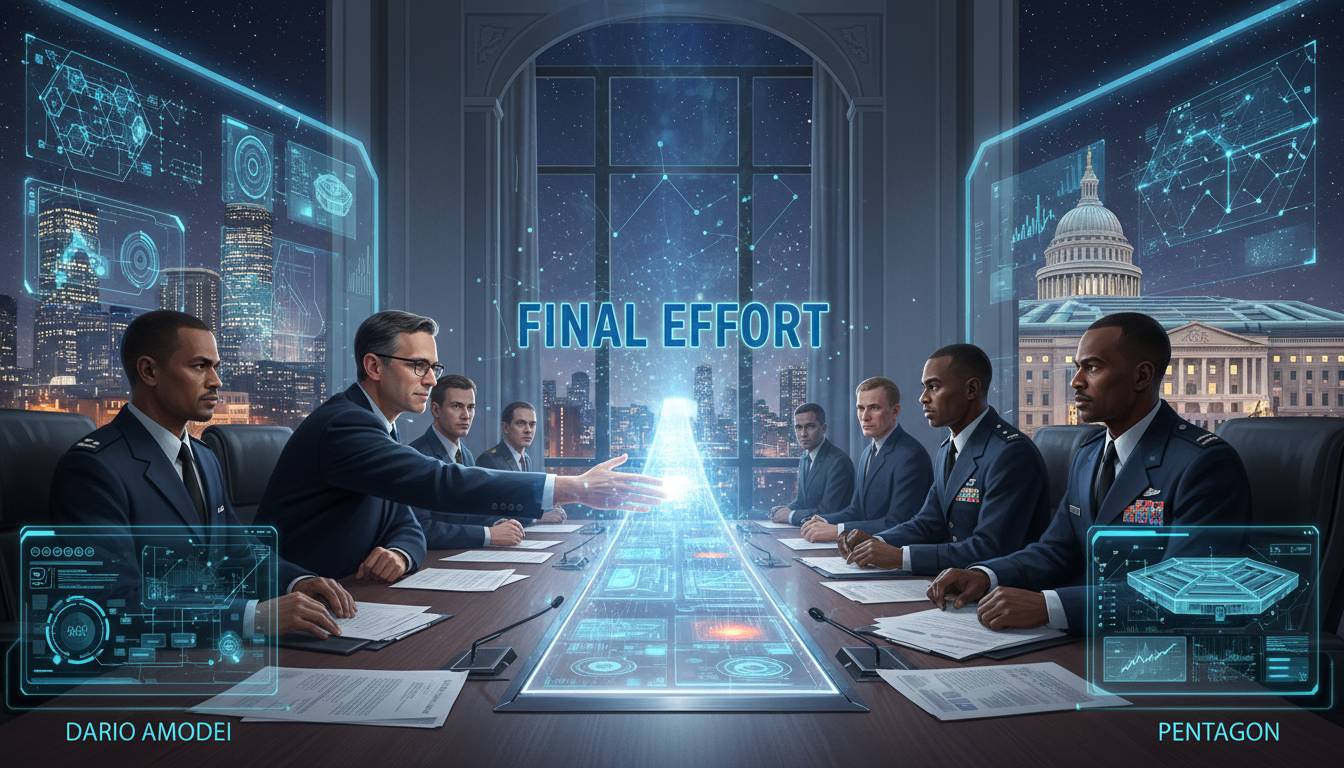
Artificial intelligence companies and defense agencies have become one of the most contentious topics in tech policy. As AI capabilities advance, questions about how these systems should integrate into national security have moved from academic papers to congressional hearings. Dario Amodei, CEO of Anthropic, sits at the center of this debate—his company has tried to walk a line between AI innovation and government collaboration that emphasizes safety and responsible development.
The Current State of AI-Government Collaboration
The landscape of AI companies working with the Pentagon has changed significantly over the past few years. Microsoft, Google, and Amazon have established substantial contracts with military and intelligence agencies, providing cloud computing, machine learning tools, and specialized AI systems. These partnerships have generated billions in revenue—and plenty of controversy.
Anthropic, founded in 2021 by Dario Amodei and others who left OpenAI, has taken a different path. The company has staked its reputation on AI safety and responsible development, positioning itself as a leader in building AI systems that are capable but also aligned with human values. This stance creates awkward moments when the question of defense work comes up.
The tension is straightforward: defense agencies are massive customers with serious resources and pressing needs. But involvement in military applications raises ethical questions that directly conflict with commitments to safe, beneficial AI. Every AI company wrestles with this, but companies like Anthropic that have built their brand on safety face extra scrutiny.
Understanding Anthropic’s Approach to Defense Engagement
Anthropic has articulated a careful approach to potential government collaboration. The company says it will consider partnerships that align with its mission of developing AI systems that are helpful, harmless, and honest. This framework has led to a measured approach—each potential collaboration gets evaluated against core principles.
Amodei has spoken publicly about how difficult this balance is. He’s acknowledged that government agencies have legitimate national security interests while maintaining that AI companies have a responsibility to ensure their technologies get deployed responsibly. This nuanced position has set Anthropic apart from competitors who’ve moved more aggressively into defense contracting.
The company’s constitution—a foundational document guiding AI development—includes provisions specifically addressing military applications. It doesn’t categorically prohibit defense work, but it establishes criteria any such engagement must meet to remain consistent with Anthropic’s stated values. This has meant ongoing internal debates about where lines should be drawn.
The Pentagon’s Interest in Advanced AI Systems
The Department of Defense has made no secret of its interest in advanced AI. Military leaders have called artificial intelligence a transformative technology with potential to affect virtually every aspect of modern warfare—from logistics and maintenance to strategic planning and autonomous systems. This recognition has driven substantial investment in AI research, along with efforts to attract talent and technology from the private sector.
Defense officials have emphasized the strategic importance of maintaining AI leadership, particularly given competition with China. Chinese investments in AI have prompted warnings from U.S. military leaders that American competitiveness depends partly on leveraging private sector innovations. This pressure has created complicated dynamics for AI companies whose stated values may conflict with how the military wants to use their technology.
The Pentagon has established various programs to facilitate collaboration—research grants, contract opportunities, partnership programs. But the defense establishment has also run into challenges working with AI companies whose values may not align neatly with military applications.
Implications for the AI Industry
The broader AI industry has been watching these developments closely. Decisions made by leading companies like Anthropic may set precedents for the entire sector. The tension between commercial opportunities in defense markets and commitments to ethical AI development represents a genuine challenge. Companies have to navigate these waters while maintaining credibility with users, investors, and the public.
Some argue AI companies have a responsibility to engage constructively with government on national security. They contend that refusing to work with defense establishments could leave the country less secure. Others raise concerns about the ethical implications of contributing to military AI, particularly systems used in autonomous weapons or other harmful applications.
For companies like Anthropic that have positioned themselves as safety leaders, the scrutiny is even sharper. Any perceived inconsistency between stated values and business activities could undermine trust they’ve built with users and the public.
Future Prospects and Industry Trajectory
The relationship between AI companies and defense agencies will probably continue evolving. The strategic importance of AI ensures government interest won’t fade. At the same time, concerns about safety and ethical use aren’t going away either. Companies that navigate this landscape successfully may establish sustainable positions in both commercial and government markets.
For Anthropic, the question of defense collaboration remains ongoing rather than settled. The company continues evaluating potential engagements against its mission and values, with leadership maintaining that any collaboration must meet rigorous standards. This measured approach reflects both commitment to founding principles and genuine complexity in the issues involved.
The implications extend beyond any single company or partnership. How leading AI firms approach government collaboration will shape public perception of the industry, influence regulatory discussions, and potentially determine the trajectory of AI development for years to come.
Conclusion
How advanced AI companies should engage with defense and intelligence agencies is one of the most consequential policy questions of our time. Dario Amodei and Anthropic have taken a thoughtful approach that prioritizes careful evaluation against clear principles. While specifics of any engagement may remain confidential, the company’s stated commitment to responsible development provides a framework for navigating these issues.
As AI capabilities continue advancing and government interest grows, the tension between commercial opportunities and ethical considerations will likely intensify. Companies that maintain consistency between their stated values and actual activities will be best positioned to build sustainable businesses while contributing to legitimate national interests.
Frequently Asked Questions
What is Anthropic’s official position on working with the Pentagon?
Anthropic says it considers potential government collaborations case-by-case, evaluating each against its mission of developing helpful, harmless, and honest AI systems. The company hasn’t established categorical prohibitions against defense work but has indicated any engagement must align with core values.
Has Anthropic already signed any contracts with the Department of Defense?
There have been no confirmed announcements of specific contracts between Anthropic and the Pentagon. The company has participated in general discussions about AI policy and potential future collaborations but hasn’t publicly disclosed specific defense contracts.
Why is Dario Amodei’s approach to government collaboration significant?
Anthropic has positioned itself as a leader in AI safety and responsible development. How the company balances commercial interests with stated commitments provides important signals about whether ethical principles can survive in a competitive technology market.
What are the main concerns about AI companies working with the Pentagon?
Primary concerns include potential for AI systems to be used in harmful applications, questions about accountability and oversight, and the risk that military applications could accelerate an arms race in AI technology. Some also worry that close government relationships could compromise the independence of AI companies.
How does Anthropic’s approach compare to other AI companies like OpenAI or Google?
Anthropic has generally been more cautious. OpenAI has established partnerships with Microsoft that include defense-related applications, while Google has had both contracts and controversies related to defense work. Anthropic’s emphasis on explicit constitutional principles distinguishes its approach.
What could influence Anthropic’s future decisions about Pentagon collaboration?
Key factors likely include the specific nature of any proposed collaboration, potential for harm or benefit, alignment with company values, and broader considerations of national interest. The company has also indicated it will consider stakeholder input and evolving understanding of AI risks.
















Leave a comment