

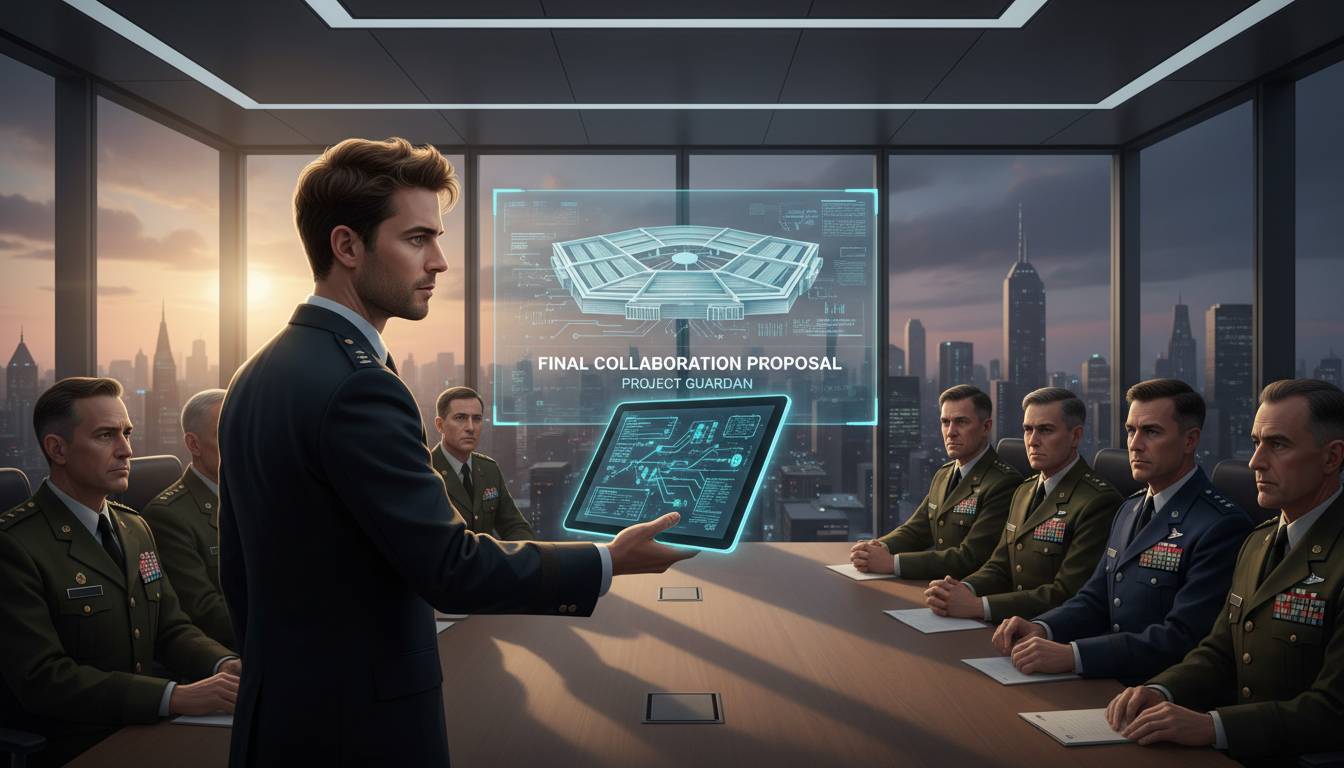
Dario Amodei, CEO of Anthropic, is making his most serious push yet to work with the U.S. Department of Defense. The attempt raises difficult questions about how cutting-edge AI should fit into military applications—what’s safe, who oversees it, and what role AI should play in national security.
The intersection of AI research and defense has grown more prominent as nations compete to leverage the technology strategically. Amodei’s effort signals a potential shift in how one leading AI lab approaches government partnerships, setting it apart from competitors already involved with defense agencies.
Background: Anthropic’s Position on Defense Partnerships
Anthropic was founded in 2021 by former OpenAI researchers including Dario Amodei and his sister Daniela. The company built its reputation on AI safety and alignment research. Its approach to defense partnerships has been more cautious than some industry peers—a careful balance between technological progress and ethical concerns.
Leadership has maintained a nuanced position on military AI. While acknowledging national security importance, Anthropic has emphasized the need for robust safeguards and responsible deployment. This comes from the company’s founding principle: building AI systems that are beneficial and aligned with human values.
The context for Amodei’s outreach is an increasingly competitive AI landscape where companies navigate complex questions about government relationships. Several major AI developers have already established some form of defense collaboration, creating a dynamic environment where each company’s approach carries weight for industry norms and regulations.
Details of the Pentagon Collaboration Initiative
Amodei’s latest approach involves multiple facets aimed at establishing a structured, responsible partnership. The initiative focuses on potential areas of mutual interest: AI safety research, defensive applications, and ethical deployment guidelines.
Key elements reportedly include:
- Research partnerships to advance AI safety and robustness in defense-relevant contexts
- Technical consultations on responsible AI development practices
- Policy development for frameworks governing AI use in national security
- Evaluation programs for assessing AI systems before sensitive deployment
This approach shows a sophisticated understanding of both opportunities and risks in defense-related AI. Amodei’s team has emphasized transparency and accountability as central principles—distinguishing this from conventional defense contracting.
The timing comes amid heightened congressional attention to AI and national security. Lawmakers are examining how emerging technologies affect defense capabilities and risks. This regulatory environment has created both opportunities and constraints for companies seeking government partnerships, making Amodei’s approach potentially significant as a model for responsible engagement.
Industry Reactions and Expert Perspectives
Responses to Amodei’s initiative have varied. Supporters argue that responsible collaboration between AI developers and defense agencies is essential for ensuring advanced technologies serve national security while maintaining safeguards.
Technology policy analysts see the approach as thoughtful navigation of the AI and defense landscape. Rather than pursuing unrestricted military applications, this initiative focuses on ethical boundaries and safety protocols that could become industry standards.
“The involvement of leading AI researchers like Amodei in defense discussions could significantly improve the quality of AI deployment in sensitive contexts,” said Dr. Sarah Chen, a fellow at the Center for Strategic and International Studies. “Their expertise in AI safety brings crucial perspectives that have been missing from some previous defense technology initiatives.”
Critics, however, question whether advanced AI belongs in military applications at all. They emphasize that even well-intentioned defense partnerships could normalize AI integration where human oversight should remain paramount—potentially setting problematic precedents.
AI ethics researchers stress the importance of clear boundaries between commercial AI development and defense applications. The two domains carry fundamentally different risk profiles and ethical considerations. Their concerns focus on keeping safety research independent and ensuring commercial pressures don’t compromise rigorous evaluation standards.
Implications for the AI Industry and National Security
The outcome of Amodei’s outreach carries significant implications for multiple stakeholders. For AI companies considering similar partnerships, this could establish important precedents for structure, scope, and ethical boundaries of government collaboration.
From a national security perspective, potential benefits of increased AI expertise in defense—cybersecurity, logistics, threat detection—must be weighed against risks of accelerating technological militarization. Defense analysts emphasize that sophisticated AI capabilities could provide meaningful advantages while requiring careful consideration of escalation dynamics and international stability.
The broader geopolitical context shapes these considerations significantly. As nations increasingly incorporate AI into defense strategies, American leadership in establishing responsible norms becomes more critical. Companies like Anthropic that prioritize safety while engaging with defense agencies could play important roles in shaping international standards for responsible AI use in military contexts.
Amodei’s approach also reflects evolving thinking within the AI research community about appropriate government engagement. Many AI researchers traditionally maintained distance from defense applications, but the strategic importance of AI has prompted reconsideration of these positions—with careful attention to maintaining ethical standards.
Future Outlook and Potential Developments
The trajectory of Anthropic’s Pentagon collaboration will likely depend on regulatory developments, technical progress in AI capabilities, and broader geopolitical dynamics. The company’s stated commitment to safety suggests a cautious, incremental approach rather than rapid expansion of defense involvement.
Industry observers anticipate continued evolution in how leading AI companies navigate government relationships, with Amodei’s initiative serving as a potential template for responsible engagement. This could influence both regulatory frameworks and industry practices, potentially establishing new norms for AI and defense partnerships.
The coming months will reveal whether Amodei’s outreach results in concrete collaboration frameworks or encounters obstacles preventing significant partnership development. Regardless of the immediate outcome, this initiative represents a significant moment in the ongoing negotiation over AI’s role in national security—highlighting the complex intersection of technological advancement, ethical consideration, and strategic interest.
Frequently Asked Questions
What is Dario Amodei’s connection to the Pentagon?
Dario Amodei is the CEO and co-founder of Anthropic, an AI research company. He has recently made efforts to establish a collaborative relationship with the U.S. Department of Defense, focusing on areas like AI safety research and ethical deployment guidelines rather than direct weapons development.
Why is this collaboration attempt significant?
This initiative is significant because it represents one of the most deliberate efforts by a leading AI safety-focused company to engage with defense agencies. It highlights the evolving relationship between cutting-edge AI research and national security applications, potentially setting precedents for how the AI industry approaches government partnerships.
What are the potential benefits of AI-Pentagon collaboration?
Potential benefits include improved AI safety in defense contexts, knowledge sharing about responsible AI development, contributions to defensive cybersecurity capabilities, and influence over ethical standards for AI use in national security. Critics, however, raise concerns about normalizing military AI applications and potential risks.
What safeguards are being proposed for this collaboration?
Reports indicate that the proposed framework emphasizes transparency, accountability, safety research partnerships, and ethical deployment guidelines. Amodei has publicly stated commitment to maintaining rigorous safety standards and avoiding applications that could cause harm.
How have other AI companies approached Pentagon relationships?
Other major AI companies have taken varying approaches, with some establishing direct defense contracts while others maintain more limited engagement. Anthropic’s approach appears notably cautious, emphasizing safety research and ethical frameworks over direct weapons development.
What are the criticisms of AI defense partnerships?
Critics argue that such partnerships could accelerate militarization of AI, reduce emphasis on safety research, create conflicts between commercial and ethical priorities, and set problematic precedents for international AI competition. Supporters counter that responsible engagement is necessary for national security and can improve safety outcomes.














Leave a comment