

In a digital era defined by information overload, news aggregators like Citizen Free Press have carved out a niche by offering concise, real-time updates on breaking news, politics, and viral headlines. Emerging as an alternative to mainstream media, Citizen Free Press has become a mainstay for readers seeking direct access to trending stories—often with a particular focus on political developments and cultural flashpoints. But what exactly sets this outlet apart, and how does it fit into the broader landscape of digital journalism?
The Origins and Mission of Citizen Free Press
Founded in the late 2010s, Citizen Free Press was designed as a minimalistic, fast-loading news aggregator, reminiscent of the early days of the Drudge Report. Its creator, operating under the pseudonym “Kane,” sought to provide a streamlined feed of news and opinion pieces, emphasizing speed, accessibility, and direct links to source material.
Unlike traditional newsrooms, Citizen Free Press does not produce original reporting. Instead, it curates headlines and snippets—often sourced from a variety of outlets—delivering them in a simple, text-driven layout. This approach caters to readers fatigued by ad-heavy, image-laden pages and algorithm-driven feeds.
“Citizen Free Press taps into the audience’s hunger for unfiltered news delivery. By stripping away distractions and emphasizing immediacy, it has cultivated a loyal base,” notes media analyst Jennifer Shaffer.
This focus on curation over creation distinguishes Citizen Free Press, making it both a lightning rod for debates over bias and a case study in the evolution of news dissemination.
Navigating the Politics of Aggregation
A Platform for Conservative Voices
Citizen Free Press is often compared to conservative-leaning aggregators like the Drudge Report, and its audience generally skews right-of-center. Featuring stories that may be underrepresented in traditional media, the site appeals to readers seeking news angles that align with their perspectives. It routinely highlights political controversies, government decisions, social movements, and culture war topics that resonate with its user base.
However, the simplicity of its model—aggregating links with limited editorializing—means that readers must critically assess the context and source of each headline. Stories are chosen and presented with brief commentary or headlines, which can emphasize certain narratives without offering broader context or counterpoints.
Transparency and Editorial Process
One of the ongoing challenges for news aggregators, including Citizen Free Press, is striking a balance between transparency and expediency. The platform’s editorial process is largely opaque; selections are determined by the site’s anonymous curator, without a publicly stated methodology or explicit ethical guidelines.
This approach fosters both agility and criticism. On one hand, the site’s rapid updating enables readers to stay ahead of breaking stories. On the other, the lack of transparency can raise questions about potential selective bias, particularly given the site’s strong following among politically engaged communities.
Audience Growth and Engagement Trends
User Demographics and Motivations
Citizen Free Press has experienced remarkable growth, frequently ranking among the most visited conservative news aggregators in the US. Its core audience consists of politically active readers who value speed, directness, and a perceived counterbalance to mainstream media narratives. Many visit multiple times a day, seeking updates that might not be immediately covered by large outlets.
The site’s simple design is part of its appeal, enabling quick navigation with minimal friction. Unlike social media platforms that rely on algorithms to determine content placement, Citizen Free Press presents most headlines in a straightforward, chronological order.
Viral Headlines and Social Sharing
Stories featured on Citizen Free Press often achieve high visibility in social media conversations, particularly on platforms like X (formerly Twitter) and Telegram. Viral headlines concerning U.S. elections, governmental investigations, and cultural debates routinely make their way onto prominent discussion threads.
In an era where trust in media is fragmented—according to several studies, a significant portion of the U.S. public expresses skepticism about traditional outlets—aggregators like Citizen Free Press capitalize on the desire for alternative news sources.
Implications for the News Ecosystem
The Aggregator’s Double-Edged Sword
The rise of sites like Citizen Free Press reflects a broader transformation in how audiences seek out news. Aggregators play a vital role in amplifying stories that might be missed by larger outlets, while also contributing to the fast-paced, headline-driven news cycle that can sometimes favor speed over nuance.
Media scholars point out that this model can both democratize information access and fragment public discourse:
“News aggregation consolidates headlines but can erode shared narratives unless users cross-reference sources and seek context,” says Dr. Lara Higgins, professor of media studies.
Influence on Mainstream Journalism
The viral potential of aggregated headlines sometimes leads mainstream newsrooms to revisit stories gaining traction on platforms like Citizen Free Press. While this dynamic fosters a diversity of viewpoints, it can also create feedback loops where certain political or cultural issues are amplified disproportionately.
Additionally, the curation choices of aggregators can shape reader perceptions by consistently foregrounding particular story types—whether focused on political scandals, legal battles, or high-impact cultural debates.
Comparing Citizen Free Press to Other Aggregators
Drudge Report, The Liberty Daily, and Emerging Competitors
When analyzing Citizen Free Press, it’s helpful to compare it with platforms like Drudge Report or The Liberty Daily. Both sites employ minimalist designs and curate content for audiences interested in conservative viewpoints. However, while Drudge Report’s editorial voice has shifted and diversified over the years, Citizen Free Press remains closely tied to its original curator and editorial approach.
Other sites like RealClearPolitics and the Bongino Report occupy similar territory but may integrate more original analysis or offer branded content—a departure from Citizen Free Press’s singular focus on aggregation and headline curation.
Distinctive Features and User Experience
- Minimal Design: Fast load times, no extraneous graphics or scripts.
- Chronological Curation: Headlines update rapidly with a focus on immediacy.
- Direct Linking: Almost all stories direct users to source sites, promoting transparency in content origination.
- Community Engagement: Active comment sections foster discussion among frequent visitors.
Challenges and Criticisms
Assessing Bias and Editorial Responsibility
Critics of Citizen Free Press often point to a perceived lack of editorial accountability. Since the site’s content is curated by a single, largely anonymous figure, the risk of unchecked bias is higher compared to established newsrooms with public editors and formal policies.
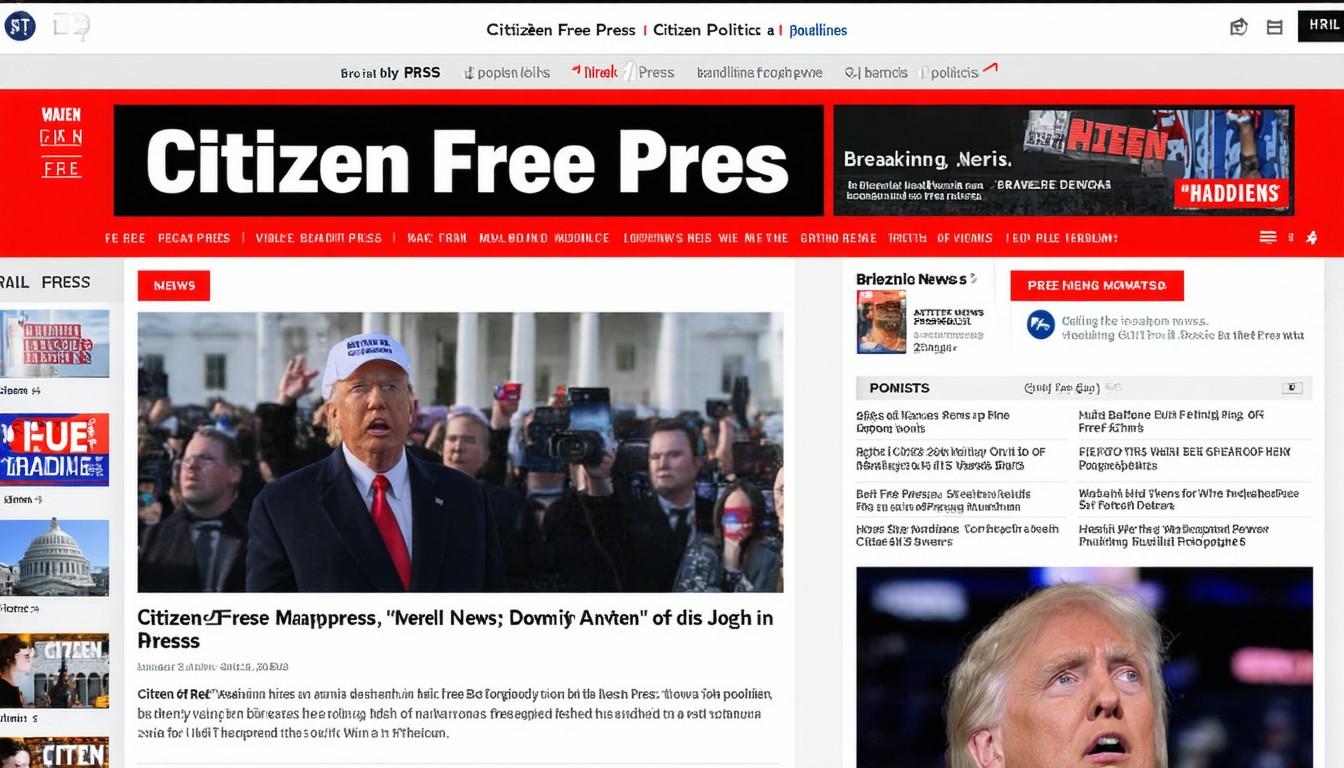
Misinformation is a potential hazard, particularly in the absence of fact-checking or competing viewpoints. While headlines link out to external sources, there is little context provided about the credibility of those outlets.
Copyright and Traffic Concerns
Aggregators have at times faced legal scrutiny regarding the use of copyrighted headlines and summaries. However, Citizen Free Press’s practice of linking directly to original sources lessens, but does not eliminate, potential issues around content appropriation. In some cases, publishers have reported traffic increases thanks to these aggregators—while others question the value of such traffic if it is not accompanied by deep engagement or brand loyalty.
Conclusion
Citizen Free Press exemplifies the shifting habits of news consumption in the digital age: readers demand speed, curation, and alternative perspectives, while eschewing the clutter often seen in traditional media interfaces. Its success highlights both the opportunities and uncertainties of news aggregation—from rapid audience growth to ongoing debates over transparency and bias.
For readers and industry observers alike, platforms like Citizen Free Press serve as both a resource and a reminder: the responsibility for critical thinking and context lies not just with publishers, but with every user who consumes and shares headlines in an increasingly fragmented information ecosystem.
FAQs
What is Citizen Free Press?
Citizen Free Press is a news aggregator website that curates breaking news, political headlines, and viral stories, primarily catering to a conservative-leaning audience.
Who runs Citizen Free Press?
The site is curated by an individual known publicly as “Kane,” who remains largely anonymous and serves as the sole editor and decision-maker.
How does Citizen Free Press differ from Drudge Report?
While both sites feature minimalist design and focus on political news, Citizen Free Press has maintained a consistent editorial voice, while Drudge Report’s focus has shifted over time and incorporates a broader range of stories.
Is Citizen Free Press considered biased?
Its headline selection and emphasis often reflect right-of-center viewpoints, though it does not engage in original reporting; the potential for bias stems from the curation process.
Do mainstream news sites benefit from being featured on Citizen Free Press?
Some publishers report increased traffic when their articles are linked, but results vary depending on the story and outlet.
Can readers comment or interact on Citizen Free Press?
Yes, Citizen Free Press features an active comment section where users discuss news stories and share opinions.












Leave a comment