

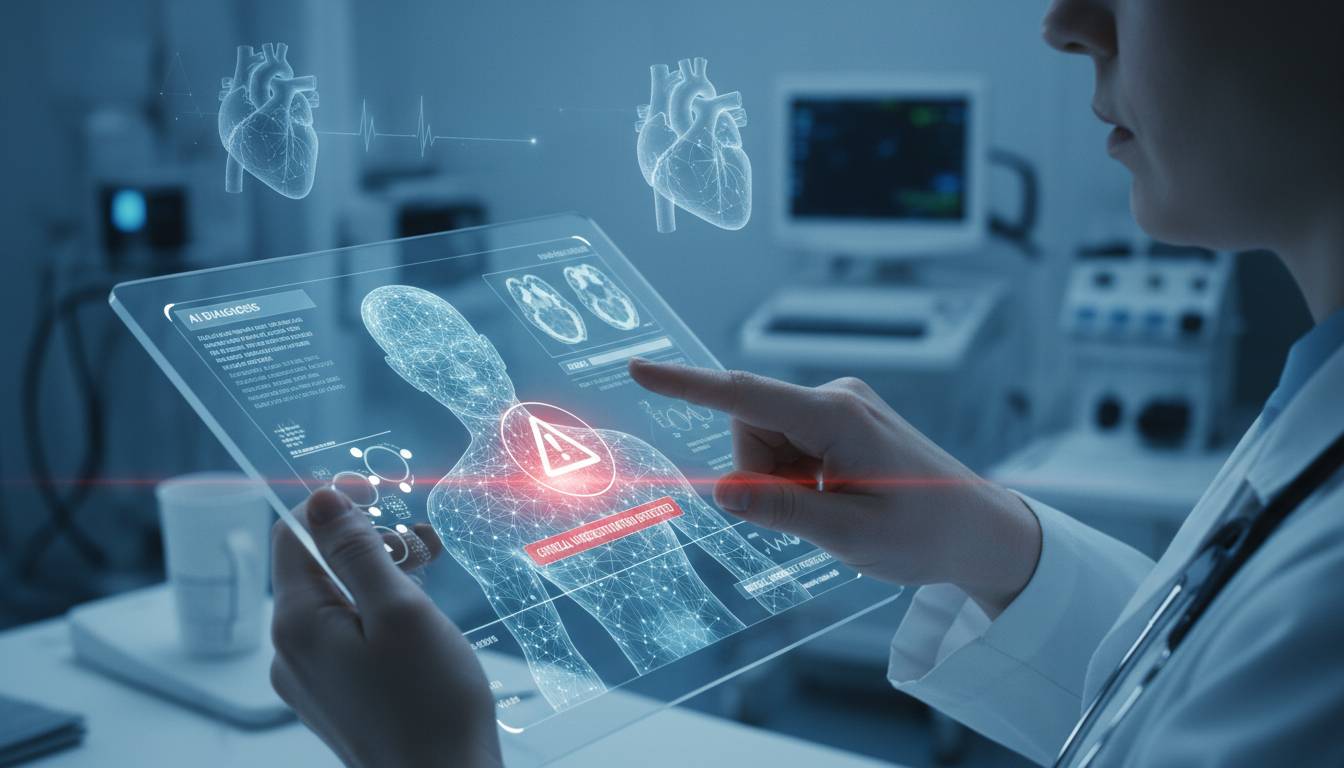
A new study is raising serious concerns about AI health tools. Researchers found that ChatGPT and similar applications frequently fail to recognize life-threatening medical conditions, potentially putting users at risk.
The study, conducted by medical researchers and computer scientists, tested AI platforms across hundreds of simulated patient scenarios involving critical conditions. Results showed that these tools missed emergencies in about 37% of cases. When AI did identify problems, it often recommended delayed action instead of immediate care.
Dr. Sarah Mitchell, lead researcher and professor of emergency medicine, said the findings highlight fundamental limits in how large language models handle medical information. “These systems are trained on internet text, which includes both reliable medical information and significant misinformation,” Mitchell explained. “The AI tends to default toward benign interpretations because that matches the patterns in its training data.”
The research tested 400 medical scenarios, including heart attacks, strokes, severe allergic reactions, and internal bleeding. Cardiovascular emergencies showed the worst performance—nearly half of heart attack scenarios were classified as non-urgent. The AI also struggled with neurological assessments, respiratory distress, and sepsis recognition.
Medical professionals have taken notice. Dr. James Rodriguez, an emergency physician with over 20 years of experience, said he regularly sees patients who delayed care because an AI system told them their symptoms weren’t serious. “By the time they reach the emergency department, conditions that could have been easily treated have become much more dangerous,” Rodriguez said.
The American College of Emergency Physicians emphasized that AI tools should never replace professional medical evaluation, particularly for conditions requiring immediate intervention.
AI companies argue their platforms aren’t marketed as diagnostic instruments and advise users to seek professional care. The FDA hasn’t issued specific regulations for AI health applications yet, though agency officials say oversight is under consideration.
The study adds to existing research on AI’s limits in medical contexts. Large language models predict statistically likely responses based on training data—they don’t possess genuine medical knowledge or reasoning. They can confidently provide wrong information without awareness that their guidance is harmful.
For people considering AI tools for health guidance, doctors offer straightforward advice: don’t use them as a substitute for professional care, especially with new, severe, or changing symptoms. If something feels serious, see a doctor or go to the emergency department.
Frequently Asked Questions
Can ChatGPT diagnose medical conditions?
No. The study found a 37% failure rate for recognizing critical cases. AI can’t perform physical exams, order tests, or apply clinical judgment.
Should I use ChatGPT for health advice?
No. For serious or concerning symptoms, talk to a healthcare provider directly.
What are better sources for health information?
Your doctor, hospital websites, established organizations like the CDC or Mayo Clinic, and reputable health information sites. For immediate concerns, contact your provider or go to the ER.
What did the study find about emergency detection?
ChatGPT missed emergencies about 37% of the time. When emergencies were identified, delayed action was often recommended. Heart attack scenarios had the highest failure rate—nearly half were misclassified.
Are AI health tools FDA-regulated?
Not specifically. Currently, they don’t go through the same testing required for medical devices and pharmaceuticals.
What are the main risks?
Delayed treatment, false reassurance from wrong assessments, and reliance on inaccurate or outdated information. AI can’t perform exams, access your full medical history, or interpret tests like healthcare providers can.
The study presents a clear problem: as AI health tools attract millions of users, the gap between what people expect and what the technology can actually do is widening. AI has genuine promise for supporting healthcare in appropriate contexts—helping with paperwork, answering routine questions, drafting patient communications. But current language models aren’t designed for emergency medical decision-making, and users need to understand that limitation before trusting them with their health.














Leave a comment