

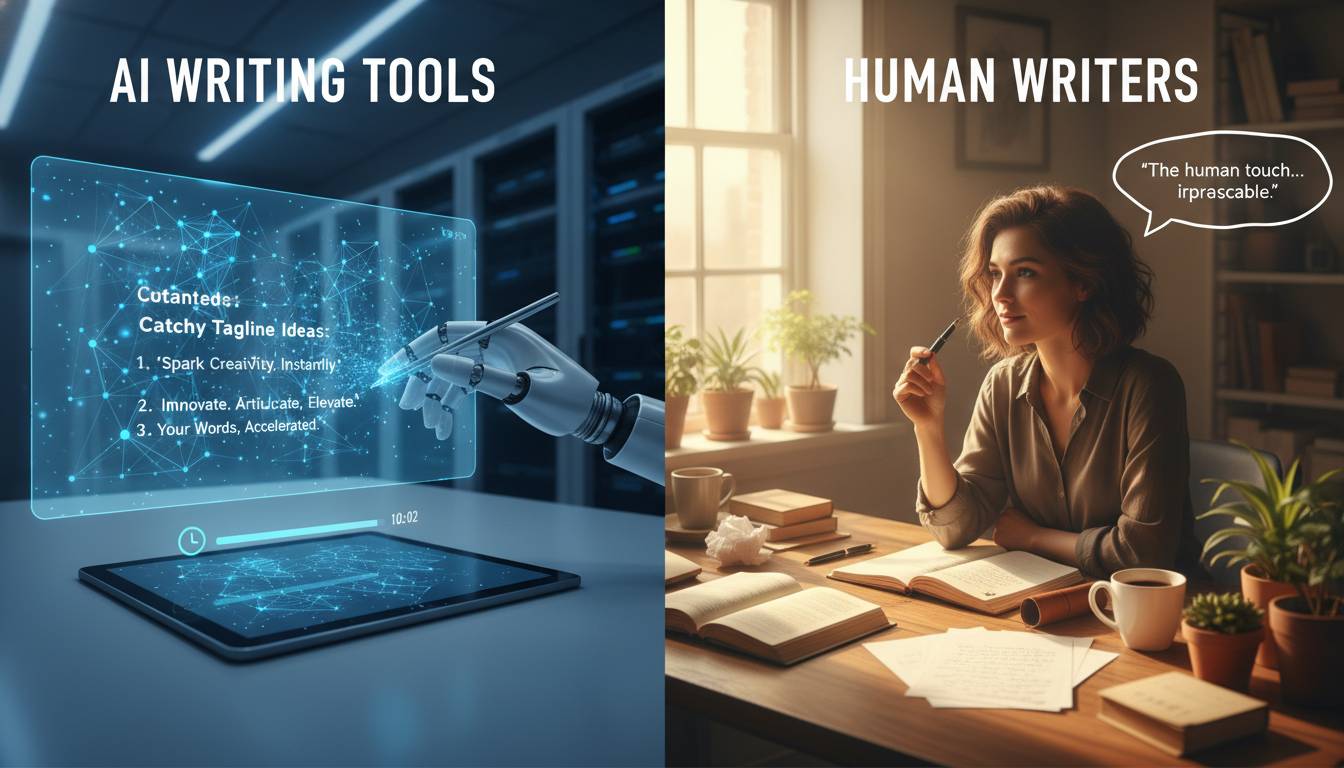
The landscape of content creation has shifted dramatically in recent years, with artificial intelligence writing tools emerging as formidable competitors to human writers. From marketing copy to technical documentation, businesses and individuals now face a critical question: should they invest in AI writing tools or stick with traditional human writers? This comprehensive analysis examines the strengths and limitations of both approaches, helping you make informed decisions about your content strategy.
Understanding AI Writing Tools and Their Capabilities
AI writing tools are software applications powered by large language models (LLMs) that can generate, edit, and refine written content. These tools use machine learning algorithms trained on vast datasets of text, enabling them to understand context, mimic writing styles, and produce coherent content across various formats. The most advanced systems can generate everything from blog posts and social media updates to code snippets and creative fiction.
The technology behind these tools has evolved significantly since the introduction of GPT models in 2020. Modern AI writing assistants can understand nuance, maintain consistency across long documents, and adapt their output based on user feedback. Companies like OpenAI, Anthropic, and Google have developed increasingly sophisticated models that form the backbone of popular writing tools.
Key capabilities of AI writing tools include rapid content generation, multi-language support, plagiarism-free output, and the ability to maintain consistent tone and style. These tools excel at producing structured content such as product descriptions, meta tags, and data-driven reports where formulas and templates dominate the writing process.
The Strengths of AI Writing Tools
Speed and Efficiency
AI writing tools produce content at speeds impossible for human writers. While an experienced writer might take 2-4 hours to create a 1,500-word article, AI can generate comparable content in seconds. This acceleration proves particularly valuable for businesses needing high-volume content, such as e-commerce platforms requiring thousands of product descriptions or news outlets covering breaking stories.
A 2024 survey by Content Marketing Institute found that 73% of marketers using AI tools reported significant time savings in content production, with average time reductions of 40-60% for first drafts. This efficiency allows organizations to scale their content operations without proportionally increasing their workforce.
Cost-Effectiveness at Scale
For organizations producing large volumes of content, AI tools offer substantial cost advantages. While subscription costs range from free tiers to $100+ monthly for premium services, these expenses often prove fraction of hiring full-time writers. A single AI subscription can produce content that would require multiple full-time writers to match in volume.
Consistency and Availability
AI writing tools maintain consistent quality and tone across unlimited content pieces without experiencing fatigue or variations in productivity. They operate 24/7, eliminating scheduling constraints and enabling rapid turnaround for time-sensitive projects. This consistency proves especially valuable for brand messaging where uniform voice across all content matters.
The Distinctive Strengths of Human Writers
Creativity and Original Thought
Human writers bring genuine creativity to content creation—generating original ideas, crafting compelling narratives, and developing unique perspectives that AI cannot replicate. While AI excels at reorganizing and presenting existing information creatively, humans possess the ability to make intuitive leaps, draw from personal experiences, and create content that resonates emotionally with audiences.
Creative writing, opinion pieces, and thought leadership content particularly benefit from human input. Readers consistently report higher engagement with content that demonstrates authentic human perspective and original thinking. A 2023 study by Nielsen found that reader engagement rates for human-written content exceeded AI-generated content by 34% in opinion and analysis categories.
Nuance and Contextual Understanding
Human writers possess deep contextual understanding that AI struggles to match. They understand cultural nuances, can interpret subtle implications, and navigate complex topics requiring sensitivity and judgment. Human writers recognize when information might be harmful, offensive, or inappropriate—contexts where AI sometimes produces problematic output.
Research and investigative journalism demand human judgment to verify information, interview sources, and piece together complex narratives. These applications require ethical reasoning, persistence, and the ability to navigate ambiguity—areas where human capabilities remain superior.
Emotional Connection and Brand Voice
Building authentic brand voice requires understanding a company’s values, culture, and audience at levels AI cannot fully grasp. Human writers translate brand personality into consistent messaging, creating emotional connections with readers that drive loyalty and conversion. They understand when to challenge conventions, when to empathize, and how to craft messages that inspire action.
Comparative Analysis: Speed, Quality, and Cost
| Factor | AI Writing Tools | Human Writers |
|---|---|---|
| Speed | Seconds to minutes for drafts | Hours to days for completion |
| Cost per Piece | $0.01-$0.50 (subscription prorated) | $50-$500+ per article |
| Originality | Recombines existing patterns | Generates genuinely new ideas |
| Accuracy | Can produce factual errors | Requires verification but less hallucination |
| Consistency | Highly consistent tone/style | May vary between pieces |
| Scalability | Unlimited with subscription | Limited by available writers |
| Complex Topics | Struggles with specialized subjects | Excels with expertise-required content |
Quality Considerations
While AI tools have improved dramatically, quality gaps persist in several areas. Research published in Nature (2024) found that AI-generated scientific abstracts contained factual inaccuracies 15% more frequently than human-written counterparts. Similarly, marketing content produced by AI often lacks the strategic positioning that experienced human writers naturally incorporate.
However, AI excels at generating first drafts that human writers can then refine, edit, and enhance. This hybrid approach often produces superior results while reducing overall production time significantly.
When to Use AI Writing Tools vs Human Writers
Best Use Cases for AI Writing Tools
- Product descriptions and catalog content
- Social media posts and scheduled content
- First drafts for human refinement
- Data-heavy reports and summaries
- SEO metadata and technical documentation
- High-volume content needs
- Multilingual content generation
Best Use Cases for Human Writers
- Thought leadership and opinion content
- Creative writing and storytelling
- Research-intensive articles
- Brand strategy and messaging
- Content requiring emotional depth
- Technical writing requiring expertise
- Content requiring fact-checking and verification
A hybrid approach often yields optimal results. Organizations increasingly use AI for initial drafts and research assistance while employing human writers for strategic content, final editing, and creative direction. This combination leverages the strengths of both while mitigating their respective limitations.
The Future of Writing: Collaboration Over Competition
The relationship between AI tools and human writers is evolving toward collaboration rather than replacement. Professional writers increasingly incorporate AI into their workflows, using it for research assistance, initial drafting, and editing support. This augmentation allows human writers to focus on higher-value creative and strategic work.
Industry projections suggest the writing profession will shift rather than disappear. Demand is growing for “AI prompt engineers” and content strategists who can effectively direct AI tools while applying human judgment to refine and improve output. Writers who adapt to work alongside AI tools will likely find increased opportunities rather than displacement.
However, the human elements of writing—creativity, emotional intelligence, ethical judgment, and original thought—will remain essential. The most successful content strategies recognize that AI and human writers serve complementary roles, with each contributing unique strengths to the content creation process.
Frequently Asked Questions
Can AI writing tools completely replace human writers?
No, AI writing tools cannot completely replace human writers. While AI excels at generating structured content quickly, it lacks genuine creativity, emotional intelligence, and the ability to produce truly original ideas. Human writers remain essential for content requiring strategic thinking, emotional resonance, nuanced understanding, and brand voice development. The most effective approach combines AI efficiency with human creativity and judgment.
Are AI-generated articles SEO-friendly?
AI-generated content can be SEO-friendly when properly optimized, but search engines prioritize content that demonstrates expertise, experience, authoritativeness, and trustworthiness (E-E-A-T). AI tools can produce well-structured, keyword-optimized content, but human oversight ensures accuracy, originality, and quality that satisfies both search algorithms and readers. Google’s guidelines indicate that AI-generated content isn’t automatically penalized, but low-quality content that doesn’t provide value to users will underperform.
How much cost savings can AI writing tools provide?
Cost savings vary significantly based on content volume and quality requirements. Organizations typically see savings of 50-70% compared to outsourcing content creation, and 30-50% compared to in-house writer costs when producing high volumes. However, these savings must be balanced against the need for human editing, strategy, and quality control. For businesses producing thousands of content pieces monthly, AI tools can represent substantial cost reductions while maintaining acceptable quality levels.
What are the main limitations of AI writing tools?
AI writing tools have several notable limitations. They can produce factual inaccuracies (hallucinations), struggle with very recent events or specialized technical knowledge, lack understanding of cultural nuances, and cannot genuinely understand context or audience needs. They also risk producing generic content that lacks distinctive voice. Additionally, AI tools may inadvertently reproduce biases present in their training data and sometimes fail to recognize when content could be harmful or inappropriate.
How do I choose between AI writing tools and human writers for my business?
Consider your content type, volume, budget, and quality requirements. Use AI tools for high-volume, structured content like product descriptions, SEO metadata, and routine updates. Invest in human writers for strategic content, brand messaging, creative pieces, and materials requiring expertise or emotional appeal. Most businesses benefit from a hybrid approach—using AI for efficiency while maintaining human oversight for quality and strategic alignment.
Will AI writing tools improve in the future?
AI writing tools will certainly continue improving, with each generation showing significant advances in capability, accuracy, and nuance. However, fundamental limitations around genuine creativity, original thought, and contextual understanding may persist regardless of technical improvements. The evolution will likely see AI becoming more capable of assisting human writers rather than fully replacing them, with the human elements of writing becoming even more valuable as AI-generated content becomes more prevalent.
Conclusion
The question of AI writing tools versus human writers ultimately isn’t about determining a winner—it’s about understanding how each can contribute to your content strategy. AI writing tools offer unmatched speed, consistency, and cost-effectiveness for high-volume, structured content creation. Human writers provide creativity, emotional connection, and strategic thinking that AI cannot replicate.
The most effective content strategies embrace both, using AI for efficiency while leveraging human expertise for quality, creativity, and strategic direction. As the technology continues evolving, organizations that learn to effectively collaborate with AI tools while maintaining human oversight will likely achieve the best results. The future of writing belongs to those who recognize that AI and human writers serve complementary roles rather than viewing them as competing alternatives.












Leave a comment