

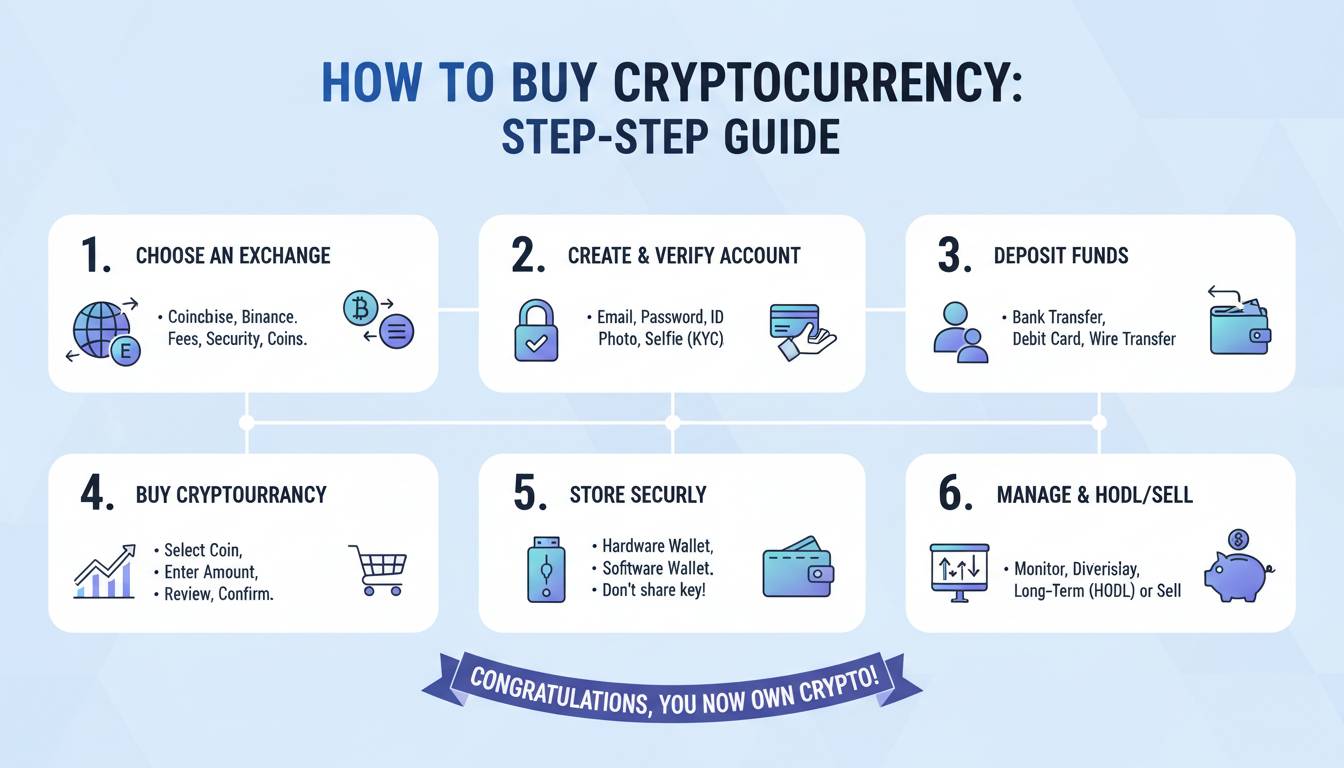
Buying cryptocurrency has evolved from a niche activity into a mainstream financial option, with millions of Americans now holding digital assets. Whether you’re looking to invest in Bitcoin, Ethereum, or explore other cryptocurrencies, understanding the process thoroughly is essential before committing your money. This guide walks you through everything you need to know—from selecting an exchange to securing your first purchase—while highlighting the risks and decisions you’ll face along the way.
Understanding Cryptocurrency Before You Buy
Cryptocurrency is a digital or virtual currency that uses cryptography for security and operates on decentralized networks, typically blockchain technology. Unlike traditional currencies issued by governments (like the US Dollar), cryptocurrencies are not controlled by any central authority, making them resistant to inflation and government interference in certain respects.
Bitcoin, created in 2009, remains the largest and most well-known cryptocurrency by market capitalization. Ethereum, launched in 2015, introduced smart contracts and powers a vast ecosystem of decentralized applications. Beyond these leaders, thousands of alternative cryptocurrencies (often called “altcoins”) exist, each with different use cases, price points, and risk profiles.
Before buying, you should understand that cryptocurrency investments are highly volatile. Prices can swing dramatically within hours or days. According to industry data, Bitcoin has experienced single-day drops of 10% or more numerous times in its history, and many smaller cryptocurrencies have lost over 90% of their value. Only invest money you can afford to lose, and never invest more than you’re comfortable losing entirely.
Additionally, you need to understand that cryptocurrency transactions are irreversible. Unlike credit card charges, once you send cryptocurrency to another wallet, you cannot reverse the transaction. This makes understanding wallet addresses, network confirmation, and transaction verification absolutely critical.
Choosing the Right Cryptocurrency Exchange
A cryptocurrency exchange is a platform where you can buy, sell, and trade cryptocurrencies using traditional currency like US dollars. Selecting the right exchange is one of the most important decisions you’ll make, as it affects fees, security, available cryptocurrencies, and your overall experience.
Major US-Based Exchanges
| Exchange | Founded | Trading Fees | US Customers | cryptocurrencies Available |
|---|---|---|---|---|
| Coinbase | 2012 | 0.60% – 0.80% | Yes | 250+ |
| Kraken | 2011 | 0.16% – 0.26% | Yes | 350+ |
| Gemini | 2014 | 0.35% – 0.40% | Yes | 100+ |
| Binance US | 2019 | 0.10% – 0.50% | Yes | 150+ |
| Robinhood | 2013 | 0% | Yes | 15+ |
Coinbase is the largest US-based exchange and is known for its user-friendly interface, making it particularly suitable for beginners. The platform went public on NASDAQ in April 2021, adding a layer of regulatory compliance and transparency. However, its trading fees tend to be higher than competitors, especially for smaller transactions.
Kraken offers lower fees and a broader range of cryptocurrencies, though its interface can be slightly more complex. The exchange has built a strong reputation for security and was one of the first major platforms to provide proof-of-reserves verification.
Binance US offers very competitive fees and the largest selection of tradable assets among US-focused exchanges, though it has faced regulatory scrutiny that potential users should be aware of.
What to Look for in an Exchange
When evaluating exchanges, consider these key factors:
Security features should be your top priority. Look for exchanges that offer two-factor authentication (2FA), cold storage for the majority of customer funds, insurance protection for hot wallet holdings, and regular security audits. Major exchanges have all suffered security breaches historically—the difference is how they responded and protected customers.
Fee structures vary significantly. Most exchanges charge a percentage of each trade (maker and taker fees), but some also charge deposit or withdrawal fees. For US bank transfers, ACH transfers are typically free while wire transfers might cost $10-25. Calculate your expected trading frequency to understand which fee structure benefits you most.
Supported cryptocurrencies matter if you plan to buy anything beyond Bitcoin. Some exchanges only offer a handful of the most popular cryptocurrencies, while others offer hundreds. If you have specific coins in mind, verify they’re available before signing up.
Payment methods determine how you can fund your account. Most US exchanges support bank ACH transfers, wire transfers, and debit cards. Credit cards are less commonly accepted due to higher fraud risk. Processing times vary—ACH transfers typically take 1-5 business days, while debit card purchases are instant but may have higher fees.
Setting Up Your Account
Once you’ve chosen an exchange, the account creation process typically takes 15-30 minutes to complete. Here’s what to expect:
Step 1: Create Your Account
Visit your chosen exchange’s website or download their mobile app (available on both iOS and Android). Click “Sign Up” and provide your email address and a strong password. Most exchanges require passwords to be at least 8-12 characters with a mix of letters, numbers, and symbols.
Step 2: Verify Your Email
Check your inbox for a verification email and click the confirmation link. This step confirms you own the email address provided.
Step 3: Complete Identity Verification (KYC)
All reputable US exchanges require Know Your Customer (KYC) verification to comply with anti-money laundering laws. You’ll need to provide:
- Full legal name
- Date of birth
- Social Security Number (last four digits initially)
- Physical address
- Government-issued ID (driver’s license, passport, or state ID)
The verification process typically uses automated systems that verify your identity within minutes, though manual review can occasionally take 1-3 business days. Have your ID ready and ensure good lighting when photographing it.
Step 4: Enable Security Features
Before funding your account, set up additional security measures:
Two-factor authentication (2FA) is mandatory on reputable exchanges. Use an authenticator app (like Google Authenticator or Authy) rather than SMS text messages, as phone numbers can be hijacked through SIM-swapping attacks. Hardware security keys provide the highest level of protection for advanced users.
Withdrawal whitelist allows you to specify approved wallet addresses for outgoing transfers. Once enabled, cryptocurrency can only be sent to pre-approved addresses, providing protection even if your account is compromised.
Login alerts notify you of new logins via email or push notification, helping you detect unauthorized access quickly.
Funding Your Account
With your account verified and secured, you’re ready to add US dollars. Navigate to the “Deposit” or “Add Funds” section of your exchange.
Payment Methods Comparison
| Method | Processing Time | Fees | Minimum Deposit |
|---|---|---|---|
| ACH Bank Transfer | 1-5 business days | Usually Free | $10 – $25 |
| Wire Transfer | 1-2 business days | $10 – $25 | $100 – $1,000 |
| Debit Card | Instant | 0% – 3.99% | $10 – $25 |
| Credit Card | Instant | 3% – 5% | $10 – $25 |
For most beginners, ACH transfers offer the best combination of low cost and reasonable timing. Simply link your bank account by providing your routing and account numbers, or log in through your bank’s online portal. The first ACH deposit may take longer (up to 5 business days) while the exchange verifies the bank relationship.
Debit cards offer instant funding but often come with convenience fees of 1-3%. This works for smaller purchases but becomes expensive for larger amounts.
Wire transfers are useful for larger deposits but incur fees from both your bank and the exchange, and the minimums are typically higher.
Important Funding Notes
Pending transaction holds are common on first-time deposits. Exchanges may hold funds for 5-10 business days until the transfer clears, even after the money shows in your bank account. This is a fraud prevention measure.
Minimum deposits vary by exchange and payment method. Most require $10-$25 for ACH and debit card deposits, while wire transfers often require $100 or more.
Making Your First Purchase
With funds in your account, you’re ready to buy cryptocurrency. For your first purchase, Bitcoin or Ethereum are recommended choices due to their liquidity, acceptance, and relative stability compared to smaller coins.
Executing Your First Order
-
Navigate to the trading interface and search for your desired cryptocurrency (BTC for Bitcoin, ETH for Ethereum).
-
Select your order type. For beginners, market orders are simplest—they execute immediately at the best available price. Limit orders let you specify a price you’re willing to pay, which is useful in volatile markets but may not execute if prices move away.
-
Enter the amount. You can specify the dollar amount (e.g., “$100 of Bitcoin”) or the exact cryptocurrency amount (e.g., “0.01 Bitcoin”).
-
Review the order. Check the total cost including any fees. Most exchanges display a fee breakdown before confirmation.
-
Confirm your purchase. Once confirmed, the cryptocurrency will appear in your exchange wallet.
Understanding Order Types
| Order Type | Description | Best For |
|---|---|---|
| Market Order | Executes immediately at current market price | Quick purchases, liquid markets |
| Limit Order | Executes only when price reaches your specified level | Buying at lower prices, volatile markets |
| Stop-Loss Order | Sells when price drops to specified level | Limiting losses |
| Stop-Limit Order | Combines stop-loss with limit order parameters | Advanced risk management |
Storing Your Cryptocurrency Securely
After purchasing cryptocurrency, you have two primary storage options: keeping it on the exchange or transferring it to a personal wallet.
Exchange Wallets
When you buy cryptocurrency on an exchange, it initially sits in an exchange-hosted wallet. This is convenient but carries risk—if the exchange is hacked or goes bankrupt, you could lose your funds. Several exchange bankruptcies (most notably FTX in 2022) have resulted in customers losing access to their funds.
Exchange wallets are best for active traders who need quick access to their funds. For holdings you plan to keep long-term, personal wallets provide better security.
Personal Wallets
Personal wallets come in two forms:
Software wallets (hot wallets) are applications that run on your computer or phone. They’re convenient but vulnerable to malware and hacking. Examples include Exodus, Electrum, and MetaMask.
Hardware wallets (cold storage) are physical devices that store your private keys offline. They’re considered the gold standard for security and are essential for holding significant cryptocurrency values. Leading options include Ledger and Trezor devices, which typically cost $50-200.
Private Keys and Recovery Phrases
Every cryptocurrency wallet has a private key—a secret password that allows access to your funds. Never share your private key with anyone. Hardware and software wallets provide a recovery phrase (usually 12 or 24 words) that can restore your wallet if you lose access. Write this down on paper and store it securely—never digitally, as computers can be hacked.
If you lose both your device and recovery phrase, your cryptocurrency is gone forever. There is no customer support to call, no password reset, no recovery option.
Common Mistakes to Avoid
As a beginner, awareness of common pitfalls can save you significant money and frustration:
Mistake #1: Buying Without Understanding Network Fees
Every cryptocurrency transaction incurs network fees (called “gas” on Ethereum). These fees can be minimal (cents) during low-traffic periods or substantial ($10-50) during network congestion. Buying small amounts of cryptocurrency can result in fees that disproportionately eat into your investment.
How to avoid: For purchases under $200, be aware that fees may represent 5%+ of your investment. Consider accumulating larger amounts before transferring between wallets.
Mistake #2: Sending to Wrong Addresses
Cryptocurrency addresses are long strings of letters and numbers. Sending Bitcoin to an Ethereum address, or even sending to a slightly incorrect address, results in permanent loss of funds.
How to avoid: Always copy and paste addresses rather than typing them manually. When sending, start with a small test transaction before moving larger amounts. Most wallets support QR codes for accurate address entry.
Mistake #3: Falling for Scams
The cryptocurrency space has numerous scams, including phishing websites that mimic legitimate exchanges, Ponzi schemes promising guaranteed returns, fake apps in app stores, and social media giveaways that are actually theft attempts.
How to avoid: Always verify website URLs carefully—scammers use similar-looking domains. Never share your private keys or recovery phrases. Be skeptical of any investment promising guaranteed returns or asking you to send cryptocurrency to receive more back.
Mistake #4: Ignoring Tax Implications
The IRS treats cryptocurrency as property, meaning every sale, trade, or transaction can trigger capital gains taxes. Failing to track transactions can result in penalties when you file your taxes.
How to avoid: Use cryptocurrency tax software or maintain detailed records of every transaction, including date, amount, value in USD at the time, and purpose. Consult a tax professional familiar with cryptocurrency.
Frequently Asked Questions
Is it legal to buy cryptocurrency in the United States?
Yes, buying cryptocurrency is legal in the United States. The Commodity Futures Trading Commission (CFTC) classifies Bitcoin and Ethereum as commodities, while the Securities and Exchange Commission (SEC) has taken the position that some tokens may be securities. You must be 18 or older (21 in some states) and pass identity verification on regulated exchanges. States may have additional regulations, and some states like New York require specific BitLicense compliance.
How much money do I need to start buying cryptocurrency?
You can start with very little—some exchanges allow purchases of just $1-10. However, most exchanges have minimum deposit requirements of $10-$25. Remember to account for transaction fees, which can be significant for small purchases. A practical minimum for your first purchase would be $50-$100 to ensure fees don’t overly impact your investment.
What is the best cryptocurrency to buy first?
For most beginners, Bitcoin (BTC) or Ethereum (ETH) are recommended as first purchases. They are the most liquid, widely accepted, and have the longest track records. Bitcoin is often called “digital gold” and serves as a store of value, while Ethereum powers applications and has evolving utility. Avoid the temptation to buy “cheap” coins marketed as the “next Bitcoin”—these typically carry much higher risk.
Is cryptocurrency safe to buy?
Cryptocurrency itself uses cryptographic security, but the ecosystem has significant risks. Exchange hacks, fraud, extreme volatility, and regulatory uncertainty all pose threats. To minimize risk: use reputable exchanges, enable all security features, consider hardware wallets for significant holdings, only invest money you can afford to lose, and never share private keys. There is no FDIC insurance protecting cryptocurrency holdings.
Can I lose all my money in cryptocurrency?
Yes, you can lose all your money in cryptocurrency. Prices are extremely volatile, and many cryptocurrencies have become worthless after being launched. Beyond price risk, you can lose access to your funds through lost passwords, hardware failures, sending to wrong addresses, or scams. Never invest more than you can afford to lose entirely, and treat cryptocurrency as high-risk speculation rather than a reliable investment.
How do I know when to sell my cryptocurrency?
Timing the market is extremely difficult, even for professionals. Some strategies include setting price targets when you buy (like “sell if it doubles”), using trailing stop-loss orders to protect gains, or simply holding long-term regardless of short-term fluctuations (called “HODLing” in cryptocurrency culture). Never make decisions based on social media hype or fear of missing out. Consider consulting a financial advisor for personalized advice.
Conclusion
Buying cryptocurrency is a straightforward process when you understand the steps: choose a reputable exchange, complete verification, fund your account, and execute your purchase. The technical aspects—wallets, private keys, network fees—require careful attention but become intuitive with practice.
Security should always come first. Enable two-factor authentication, use hardware wallets for significant holdings, and never share your private keys. Remember that cryptocurrency transactions are irreversible, so double-check every address before sending funds.
Start small, learn as you go, and never invest more than you can afford to lose entirely. The cryptocurrency market offers opportunities but demands responsibility. With this foundation, you’re equipped to make informed decisions as you begin your cryptocurrency journey.












Leave a comment