

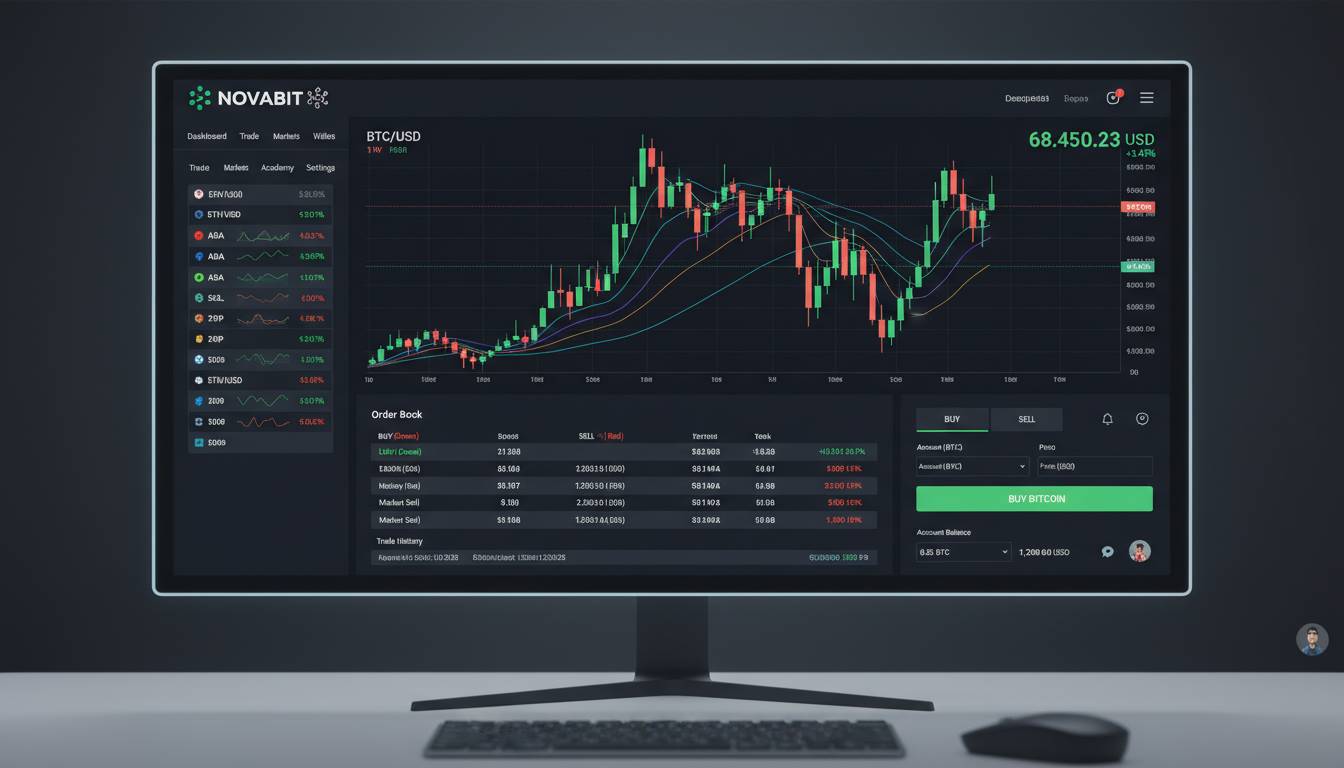
Cryptocurrency has transformed from a niche technology experiment into a legitimate asset class worth over $2 trillion in total market capitalization. For beginners looking to enter this space, understanding how to invest safely and effectively is essential. This guide walks you through everything you need to know to start investing in cryptocurrency with confidence.
What Is Cryptocurrency and Why Invest in It?
Cryptocurrency is a digital or virtual currency that uses cryptography for security and operates on decentralized networks, typically built on blockchain technology. Unlike traditional currencies issued by governments (fiat currencies), cryptocurrencies are not controlled by any central authority like a bank or government.
The most well-known cryptocurrency, Bitcoin, was created in 2009 and remains the largest by market capitalization. Since then, thousands of alternative cryptocurrencies (often called “altcoins”) have emerged, including Ethereum, Solana, Cardano, and many others.
People invest in cryptocurrency for several reasons:
- Potential for high returns: Bitcoin has delivered significant returns for early investors, though past performance does not guarantee future results.
- Portfolio diversification: Crypto assets often behave differently from traditional stocks and bonds, potentially reducing overall portfolio risk.
- Access to innovative technology: Blockchain technology powers decentralized finance (DeFi), non-fungible tokens (NFTs), and other emerging applications.
- Financial inclusion: Cryptocurrency can provide access to financial services for people without traditional banking access.
Important Disclaimer: Cryptocurrency investments carry substantial risk. The crypto market is highly volatile, and prices can fluctuate dramatically in short periods. You should only invest money you can afford to lose, and this article is for educational purposes only—not financial advice.
Understanding the Basics Before You Start
Before investing your first dollar, you need to understand several key concepts that form the foundation of cryptocurrency investing.
Blockchain Technology Explained
A blockchain is a distributed digital ledger that records transactions across many computers. This decentralization makes the system resistant to manipulation and single points of failure. Each “block” contains a group of transactions, and these blocks are linked together in a “chain” — hence the name blockchain.
When you send cryptocurrency, your transaction is broadcast to the network, verified by multiple participants (called nodes or miners/validators), and added to the blockchain. This process ensures transparency and security without requiring a trusted intermediary.
Wallets and Private Keys
To own cryptocurrency, you need a cryptocurrency wallet. Wallets come in two main types:
Hot Wallets are connected to the internet and include mobile apps, desktop software, and exchange wallets. They offer convenience for frequent trading but are more vulnerable to hacking.
Cold Wallets (hardware wallets) are physical devices that store your private keys offline. They provide the highest security for long-term storage but are less convenient for frequent trading.
Your private key is essentially your password — a sophisticated mathematical code that proves you own your cryptocurrency and allows you to transfer it. Never share your private key with anyone, and never lose it. If you lose your private key, your cryptocurrency is gone forever with no recovery option.
Market Capitalization
Market capitalization (or “market cap”) represents the total value of a cryptocurrency. You calculate it by multiplying the current price by the number of coins in circulation. For example, if Bitcoin costs $50,000 and there are 19 million Bitcoin in circulation, its market cap is approximately $950 billion.
Market cap helps you understand a cryptocurrency’s relative size and stability. Larger market cap cryptocurrencies like Bitcoin and Ethereum tend to be less volatile than smaller ones, though all cryptocurrencies are considered high-risk investments.
How to Start Investing in Cryptocurrency
Now that you understand the fundamentals, here’s a step-by-step guide to actually start investing.
Step 1: Choose a Reputable Exchange
A cryptocurrency exchange is a platform where you can buy, sell, and trade cryptocurrencies. For beginners, choosing a reputable US-based exchange is crucial. Look for platforms that:
- Are registered with FinCEN (Financial Crimes Enforcement Network)
- Have strong security features including two-factor authentication (2FA)
- Offer FDIC insurance for US dollar deposits (note: crypto holdings themselves are typically not insured)
- Have responsive customer support
- Charge reasonable fees
Popular US-based exchanges include Coinbase, Kraken, Gemini, and Binance US. Coinbase is particularly beginner-friendly, while Kraken and Gemini offer more advanced trading features.
To get started, visit your chosen exchange’s website or download their app, then create an account. You’ll need to verify your identity by providing personal information and documentation as required by US regulations (KYC/AML requirements).
Step 2: Fund Your Account
Once your account is verified, you can deposit funds. Most exchanges accept:
- Bank transfers (ACH in the US) — usually free but can take several business days
- Wire transfers — faster but may incur fees
- Debit/credit cards — convenient but often come with higher fees (3-5%)
For beginners, bank transfers via ACH are typically the most cost-effective option, though you’ll need to wait for the funds to clear before trading.
Step 3: Make Your First Purchase
With funds in your account, you’re ready to buy cryptocurrency. Start with Bitcoin or Ethereum — these are the most established cryptocurrencies and are widely available on every major exchange.
When making your first purchase:
- Navigate to the “Buy” section of your exchange
- Select the cryptocurrency you want to buy
- Enter the amount (you can buy fractional coins — you don’t need to buy a whole Bitcoin)
- Review the transaction details including fees
- Confirm your purchase
Most exchanges will charge a transaction fee, which is typically a percentage of the trade value or a flat fee depending on the size of your transaction.
Step 4: Secure Your Investment
After purchasing cryptocurrency, you need to consider where you’ll store it. For small amounts you’re planning to trade soon, keeping your crypto on the exchange (hot wallet) is convenient. However, for larger amounts or long-term holding, transferring your crypto to a personal wallet is significantly safer.
If you decide to use a personal wallet:
- Hardware wallets like Ledger or Trezor are the gold standard for security. They cost $50-$200 but provide excellent protection.
- Software wallets (mobile or desktop) are free but less secure than hardware wallets.
To transfer your crypto, you’ll need your wallet’s public address (like an account number) and enter it in the “Withdraw” or “Send” section of your exchange.
Popular Cryptocurrencies to Consider
The cryptocurrency market contains thousands of options, but beginners should focus on the most established and liquid assets.
Bitcoin (BTC)
As the first and largest cryptocurrency by market cap, Bitcoin is often considered the “gold” of the crypto world. It has the longest track record, highest liquidity, and widest institutional adoption. Bitcoin is primarily seen as a store of value and “digital gold.”
Ethereum (ETH)
Ethereum is the second-largest cryptocurrency and powers the largest ecosystem of decentralized applications (dApps), DeFi protocols, and NFTs. Its blockchain supports smart contracts, which enable automated agreements without intermediaries.
Other Notable Cryptocurrencies
- Solana (SOL): Known for fast transaction speeds and low fees
- Cardano (ADA): Focuses on academic research and academic peer-reviewed development
- Polkadot (DOT): Enables interoperability between different blockchains
Important Note: While these cryptocurrencies are among the most established, all crypto investments carry significant risk. Diversification does not guarantee profits or protect against losses.
Risk Management Strategies
Successful cryptocurrency investing requires understanding and managing risk.
Only Invest What You Can Afford to Lose
This is the most critical rule. Cryptocurrency is highly speculative and volatile. Prices can drop 50% or more in a matter of weeks. Never invest money you need for essentials like rent, groceries, or emergency expenses.
Start Small
Begin with a small amount — perhaps 1-5% of your total investment portfolio. This allows you to learn the ropes without risking significant capital.
Diversify Your Investments
Don’t put all your money into one cryptocurrency. Spread your investment across multiple assets to reduce your exposure to any single failure.
Dollar-Cost Averaging (DCA)
Instead of trying to time the market, consider investing a fixed amount at regular intervals (weekly or monthly). This strategy, called dollar-cost averaging, reduces the impact of volatility by spreading your purchases over time.
Research Before Investing
Before buying any cryptocurrency, research the project thoroughly. Understand:
- What problem the cryptocurrency solves
- Who the founders and developers are
- How the cryptocurrency achieves its goals
- The total supply and inflation rate
- Community size and activity
Be wary of “meme coins” or cryptocurrencies with no real utility — these are often highly speculative and can become worthless.
Common Mistakes to Avoid
Many beginner investors make avoidable mistakes that can cost them money.
FOMO Buying
“Fear of Missing Out” leads people to buy at the top of a price surge, often just before a correction. Avoid making impulsive decisions based on social media hype or rapidly rising prices.
Ignoring Security
Failing to enable two-factor authentication, using weak passwords, or not securing your private keys can lead to theft. Always prioritize security.
Not Understanding Fees
Transaction fees can significantly impact your returns, especially for small trades. Understand the fee structure of your exchange and consider these costs in your investment decisions.
Chasing Quick Profits
Cryptocurrency is not a get-rich-quick scheme. Sustainable investing requires patience and realistic expectations.
Putting All Money in One Asset
Concentrating all your crypto investment in a single cryptocurrency exposes you to complete loss if that asset fails.
Tax Implications
The IRS treats cryptocurrency as property for federal tax purposes. This means:
- Selling cryptocurrency at a profit triggers capital gains tax
- Trading one cryptocurrency for another is considered a taxable event
- Using cryptocurrency to purchase goods or services is also taxable
Keep detailed records of all your cryptocurrency transactions, including dates, amounts, and values at the time of each transaction. Consider consulting a tax professional who specializes in cryptocurrency for guidance on your specific situation.
Frequently Asked Questions
Is cryptocurrency safe to invest in?
Cryptocurrency investments carry significant risk due to extreme price volatility. While the underlying blockchain technology is generally secure, individual cryptocurrency projects can fail, exchanges can be hacked, and regulatory changes can impact the market. Only invest money you can afford to lose, and always use strong security practices like two-factor authentication and hardware wallets for large holdings.
How much money do I need to start investing in cryptocurrency?
You can start investing in cryptocurrency with very little money. Most exchanges allow you to buy fractional coins, meaning you don’t need to purchase a whole Bitcoin (which costs tens of thousands of dollars). Some platforms allow minimum purchases of just $1 or $5. However, remember to factor in transaction fees, which can be significant for small trades.
Do I need a wallet to buy cryptocurrency?
You don’t necessarily need a personal wallet to buy cryptocurrency — you can keep your holdings on the exchange where you make your purchase. However, for security reasons, especially for larger amounts, transferring your crypto to a personal wallet (hardware or software wallet) is recommended. This gives you full control over your private keys and reduces exposure to exchange hacks or failures.
Can you lose all your money in cryptocurrency?
Yes, you can lose all your money in cryptocurrency. Unlike bank accounts, cryptocurrency investments are not FDIC insured. Prices can drop to zero if a cryptocurrency fails or loses market acceptance. Additionally, if you lose your private keys or fall victim to scams, you can lose your entire investment with no recourse.
How do I know when to sell my cryptocurrency?
Determining when to sell is challenging and depends on your investment goals and risk tolerance. Some investors set specific price targets or percentage gains at which they’ll take profits. Others hold for the long term regardless of short-term volatility. It’s wise to have an exit strategy before you invest and to avoid making emotional decisions based on short-term price movements.
Conclusion
Investing in cryptocurrency can be a rewarding but risky endeavor. As a beginner, focus on education before investment. Understand how blockchain works, choose reputable exchanges, prioritize security, and start with small amounts you can afford to lose.
Remember these key principles: only invest what you can afford to risk, diversify your holdings, use dollar-cost averaging to navigate volatility, and keep detailed records for tax purposes. Cryptocurrency remains an emerging asset class with significant potential, but it’s essential to approach it with caution and realistic expectations.
The best time to start learning was yesterday. The second-best time is today. Take your time, do your research, and when you’re ready to invest, start small and build your knowledge alongside your portfolio.













Leave a comment