

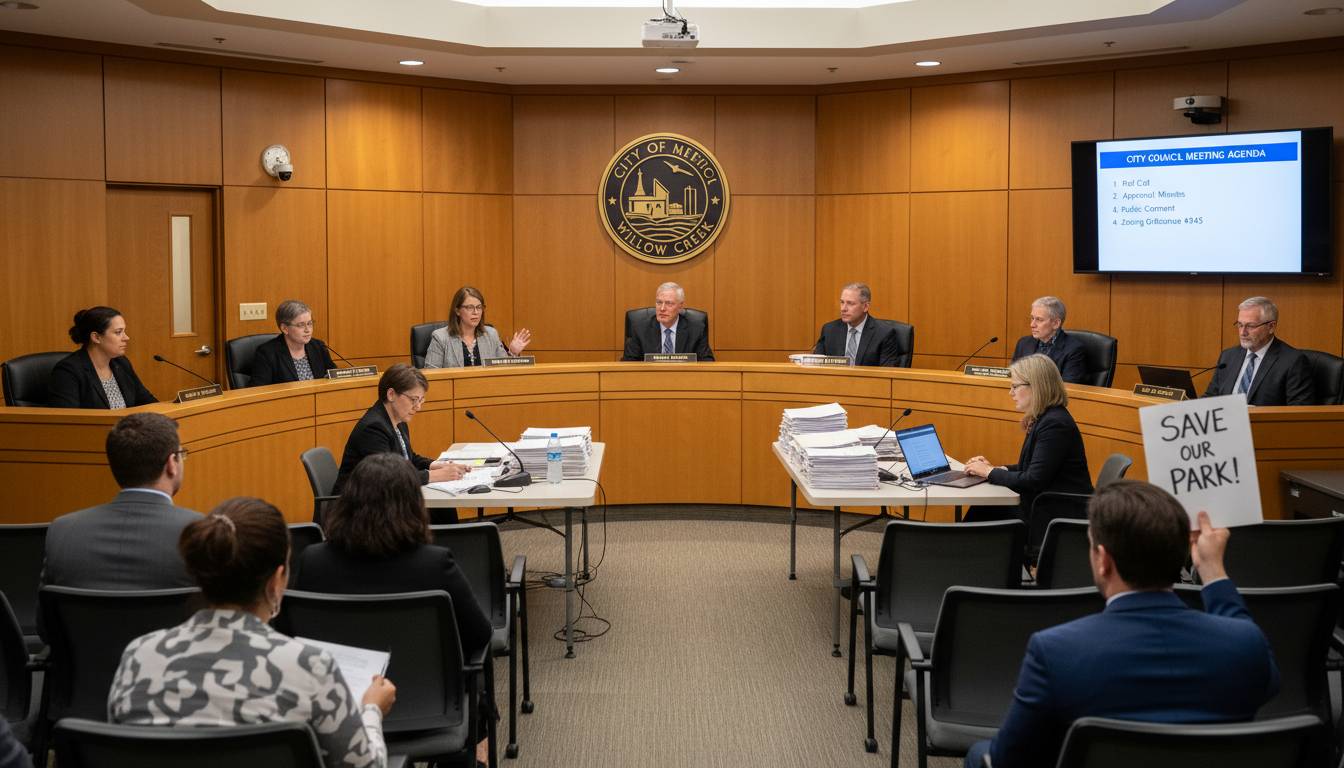
City council meetings are where your local government makes decisions that shape your neighborhood—from approving budgets and zoning changes to funding local projects and setting policy priorities. Understanding how these meetings work, when they happen, and how you can participate is worth knowing whether you want to influence decisions or just stay informed.
This guide covers everything you need to attend, participate in, or follow local council meetings—in person or online.
When Are City Council Meetings Held?
Meeting schedules differ across cities, but most follow patterns that residents can learn.
Weekly and Biweekly Meetings
Many medium and larger cities hold weekly or biweekly council meetings on the same day each week. Phoenix and San Antonio meet weekly, for example, while smaller municipalities may meet biweekly or monthly.
Weekly meetings usually happen in the evening, between 6:00 PM and 8:00 PM, so working residents can attend. Some councils also schedule morning or afternoon sessions, especially for workshops or work sessions on specific issues.
Monthly Meetings
Smaller towns often meet once a month. These gatherings handle most official council business—votes on ordinances, approval of expenditures, and discussions of community priorities.
The specific day varies by city. Many councils meet on Tuesday or Wednesday evenings, though Thursday is also common. Some cities publish annual calendars online, so you can plan ahead.
Special and Emergency Sessions
Councils also hold special or emergency meetings for urgent matters—natural disaster responses, unexpected budget shortfalls, or critical infrastructure emergencies. These must be announced publicly in advance, usually 24 to 48 hours ahead, depending on state open meeting laws.
How to Attend a Local City Council Meeting
Municipalities now offer several ways to participate—whether you want to attend in person or join remotely.
In-Person Attendance
Most council meetings happen at city halls, council chambers, or community centers. These meetings are open to the public under state sunshine laws, so you can attend and observe. Seating varies—larger cities may fit dozens or hundreds of people; smaller towns often meet in smaller rooms.
To attend, simply show up before the meeting starts. Some cities ask you to sign in for records. Arrive early if you want a good seat or plan to speak during public comment, since time limits may restrict the number of speakers.
Virtual and Hybrid Options
Many cities still offer online participation options that expanded during COVID-19. Virtual attendance usually means logging into a video conferencing platform or watching a live stream through the city’s website or social media.
Seattle, Denver, and Austin have established systems where residents can watch live proceedings, submit comments electronically, and sometimes vote remotely. These options help residents who face transportation challenges, work schedules, or health concerns that make in-person attendance difficult.
Watching Recorded Meetings
If you can’t attend live, most cities archive meeting recordings online. These typically appear on official city websites within 24 to 48 hours after the meeting. Archived footage lets you catch up on decisions affecting your community, review specific agenda items, or see how council members voted.
Understanding the Meeting Agenda and Minutes
The agenda and minutes document what the council addresses and decides.
Reading the Meeting Agenda
Check the agenda before attending any meeting. It tells you what issues will be discussed and voted on. Agendas publish 24 to 72 hours before meetings, giving you time to research items and decide whether to attend or comment.
City council agendas usually include:
- Consent agenda: Routine items approved in one vote—previous meeting minutes, routine financial approvals
- Discussion items: Matters requiring deliberation—proposed ordinances, budget amendments, policy changes
- Public hearings: Opportunities for citizen input on zoning changes, variances, and other property matters
Accessing Meeting Minutes
Minutes provide official records of each session—motions made, votes taken, discussions held. Researchers, journalists, community organizations, and concerned citizens use them to get detailed information about council decisions.
Most cities publish minutes on their official websites within days or weeks after meetings. These are organized chronologically and include full text of resolutions and ordinances. Some cities also provide audio or video archives for extra context on complex discussions.
Speaking at Council Meetings: Public Participation
One of the most valuable opportunities for citizens is addressing the council directly during public comment periods. This lets residents voice concerns, share perspectives, and influence decisions.
Public Comment Procedures
Most councils reserve time for public comment, though rules vary. Common procedures include signing up in advance, limiting speakers to three to five minutes, and requiring comments on agenda items or matters within the council’s jurisdiction.
Some cities have online public comment systems, letting residents submit written testimony or prerecorded video statements. These options help people who can’t attend live.
Tips for Effective Public Speaking
When preparing to speak, be organized and clear. State your name and address for the record, identify the issue you want to discuss, and provide specific background supporting your position. If possible, propose solutions rather than just expressing opposition. Remember that council members represent you—they’re elected officials. Respectful, well-reasoned testimony can influence their views.
What to Expect During a City Council Meeting
Knowing the typical structure helps you follow along and know when participation opportunities arise.
Standard Meeting Format
Most council meetings follow a consistent format:
- Call to order and roll call
- Approval of previous meeting minutes
- Agenda review (council adds or removes items—citizen input usually not permitted here)
- Public comment period (residents speak on any topic)
- Agenda items addressed systematically—staff presentations, council discussion, motion and vote
- Council member comments and future meeting dates
Types of Council Actions
Councils take several formal actions:
- Ordinances: Permanent laws requiring multiple readings, affecting the municipal code
- Resolutions: Formal policy statements or positions, not carrying legal weight
- Motions: Procedural actions directing council business, like calling for a study or amending a proposal
Why Civic Engagement in Local Government Matters
Participating in council meetings strengthens democratic governance and helps ensure municipal decisions reflect community values.
Why Your Participation Matters
Local government decisions directly impact daily life. Zoning shapes neighborhood character, budget allocations fund local services, and policy choices affect property taxes and public safety. When residents attend meetings, they give elected officials perspectives that lead to better decisions.
Research shows engaged communities have more responsive government and greater public trust. Attending, asking questions, and sharing your view helps keep your city government accountable to all residents—not just the loudest voices.
Getting Started with Civic Participation
Find your city’s council meeting schedule on the municipal website. Review upcoming agendas for issues affecting you or your neighborhood. Consider attending your first meeting as an observer to learn the format and procedures. When ready to participate, sign up for public comment, research the issue, and prepare a clear statement.
Frequently Asked Questions
When are city council meetings usually held?
Most meet weekly, biweekly, or monthly, depending on the city. Evening meetings between 6:00 PM and 8:00 PM are common, usually on Tuesday, Wednesday, or Thursday. Check your city’s website for the specific schedule.
How can I attend a city council meeting?
Attend in person at city hall or council chambers, join virtually through video conferencing, or watch archived recordings online. Most cities post access information on their official government websites.
Are city council meetings open to the public?
Yes. State open meeting or sunshine laws require most governmental deliberations and decisions to occur publicly. Exceptions exist for executive sessions discussing litigation or personnel matters.
How do I find meeting agendas and minutes?
Check your city’s official website under “Government” or “City Council.” Agendas publish 24 to 72 hours before meetings; minutes appear within days or weeks after each session.
Can I speak at a city council meeting?
Most councils include a public comment period. Rules vary but typically require advance sign-up and limit remarks to three to five minutes. Check your city’s specific procedures.
What happens during a city council meeting?
Meetings usually include approving previous minutes, public comment, agenda item discussions with staff presentations and council deliberation, votes on ordinances and resolutions, and council member comments. The specific agenda depends on issues facing your community.













Leave a comment