

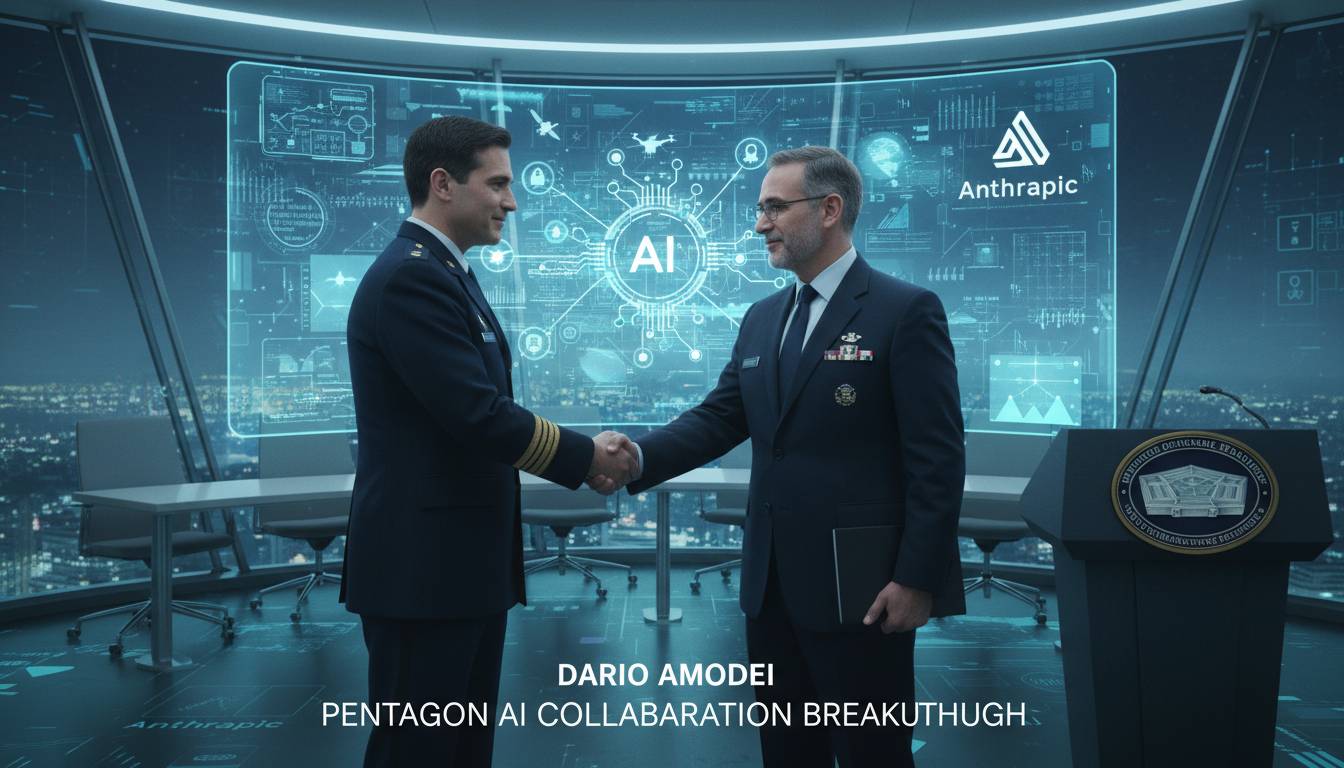
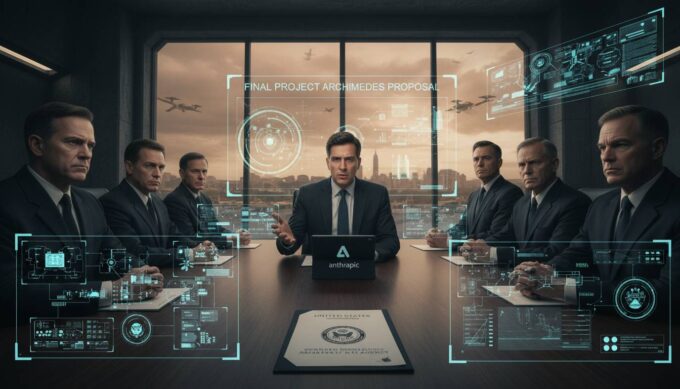
Dario Amodei, the CEO of Anthropic, has been exploring potential collaboration with the Pentagon, according to sources familiar with the discussions. This marks a notable shift for a company that’s built its reputation on AI safety and responsible development.
Anthropic, founded in 2021 by Amodei and other former OpenAI researchers, has positioned itself as a safety-first AI company behind the Claude AI assistant. Its founding principles emphasize alignment research and deploying AI systems that behave in accordance with human intentions. A Pentagon partnership would put those principles to the test in one of the most sensitive technology domains imaginable.
The Current State of AI-Defense Partnerships
The Pentagon has been actively courting Silicon Valley AI companies as it works to modernize its technological capabilities. Traditional defense contractors have handled most government tech projects for decades, but the emergence of commercially viable artificial intelligence has military leadership looking for partnerships with researchers who possess cutting-edge expertise.
The financial incentives are substantial. The Pentagon’s AI budget has grown significantly in recent years, with billions allocated toward research and development. Companies that secure these contracts gain access to classified datasets and computational infrastructure that would otherwise remain unavailable.
Anthropic has maintained a cautious public position on government partnerships. The company says it’s committed to responsible AI development while acknowledging the potential benefits of constructive engagement with governmental bodies. Any defense collaboration would likely face rigorous internal review given the sensitivity involved.
Implications for the AI Industry
If Anthropic enters the defense technology space, it would mark a notable expansion of commercial AI involvement in national security applications. Other leading AI companies, including OpenAI and Google DeepMind, have already established various forms of government engagement, though details often remain confidential.
The risks are significant. Public perception of defense-related AI work has become increasingly contentious. Privacy advocates, technologists, and civil society organizations have expressed concerns about AI technologies being deployed in ways that could undermine civil liberties or escalate international tensions. Companies that appear too closely aligned with military applications may face backlash from users, investors, and employees.
Expert Perspectives
Dr. Sarah Chen, a technology policy researcher at Stanford University, noted that the normalization of AI-defense partnerships represents a fundamental shift in how society thinks about artificial intelligence.
“We’re witnessing a transformation where AI technologies developed primarily for commercial applications are increasingly being adapted for national security purposes,” Chen said. “This evolution raises profound questions about oversight, accountability, and the long-term implications for international stability.”
Mark Thompson, a former defense technology advisor who now consults for technology companies, suggested that successful partnerships require robust governance mechanisms.
“Companies engaging with defense agencies need comprehensive protocols ensuring AI systems are deployed responsibly,” Thompson explained. “The stakes are too high to approach these relationships without thorough ethical frameworks in place.”
Technical and Operational Considerations
Implementing AI technologies within defense contexts presents substantial technical challenges that differ significantly from commercial applications. Defense systems must meet rigorous reliability and safety standards, as failures could have consequences far more severe than those in consumer software.
Anthropic’s technical approach emphasizes developing AI systems with strong alignment properties—designed to behave in accordance with human intentions and values. This focus on safety and interpretability could prove valuable in defense applications where understanding and predicting AI system behavior is essential.
The computational infrastructure required for sophisticated AI systems also presents challenges. Leading AI models need substantial computational resources that may not be readily available in all military contexts. Concerns about data security and intellectual property protection further complicate arrangements where AI companies might provide access to proprietary technologies or trained models.
Future Outlook
The reported discussions between Anthropic and the Pentagon represent one element of a broader trend toward increased government-commercial collaboration in artificial intelligence. As AI capabilities continue to advance, the incentive for both government agencies and technology companies to establish productive partnerships will likely grow.
The regulatory environment continues to develop, with Congress and executive branch agencies considering various frameworks for oversight. Potential areas of focus include export controls on advanced AI technologies, requirements for disclosure of government contracts, and standards for AI deployment in sensitive contexts.
Conclusion
The reported pursuit of Pentagon collaboration by Anthropic represents a significant development in the convergence of commercial AI and national security priorities. As one of the leading AI companies considers engagement with defense agencies, the technology industry faces fundamental questions about appropriate boundaries for AI development and deployment.
The implications extend far beyond individual company decisions, touching on the role of technology in society and the responsibilities of those who develop powerful new capabilities. Balancing innovation with ethical consideration, commercial opportunity with public accountability, remains the central challenge for an industry increasingly intertwined with consequential decisions facing governments and citizens alike.
Frequently Asked Questions
What is Anthropic’s current relationship with the Pentagon?
Anthropic has not publicly confirmed any formal contractual relationship with the Department of Defense. The reported discussions suggest exploratory conversations about potential collaboration areas, but specific details about the nature, scope, or timeline of any potential partnership remain limited.
Why are AI companies increasingly interested in defense contracts?
Defense contracts offer substantial financial rewards and access to unique resources, including specialized datasets, computational infrastructure, and institutional knowledge. National security applications also represent one of the most demanding use cases for AI technology, potentially driving innovation in safety and reliability that could benefit commercial applications.
What ethical concerns surround AI defense applications?
Critics raise concerns about AI technologies being used in ways that could harm civilians, escalate international conflicts, or undermine civil liberties. Questions about accountability when AI systems make consequential decisions, the potential for autonomous weapons, and the risks of AI proliferation to adversarial nations all feature prominently in ongoing ethical debates.
How do other major AI companies approach government partnerships?
Leading AI companies have established different approaches. Some have pursued defense contracts directly, while others have limited engagement to research partnerships or advisory roles. Each company’s approach reflects its particular values, business strategy, and assessment of associated risks and opportunities.
What regulatory frameworks govern AI defense contracts?
The regulatory environment remains evolving, with existing frameworks including export control regulations, classified contract requirements, and various agency-specific guidelines. Congress continues to consider additional legislation addressing AI safety, transparency, and accountability in government applications.
How might a Pentagon partnership affect Anthropic’s public perception?
A defense collaboration could generate both positive and negative reactions. Some might view responsible defense engagement as a contribution to national security, while others could express concern about the ethical implications of military AI applications. The ultimate impact would likely depend on the specific nature of any collaboration and how it is communicated.











Leave a comment