

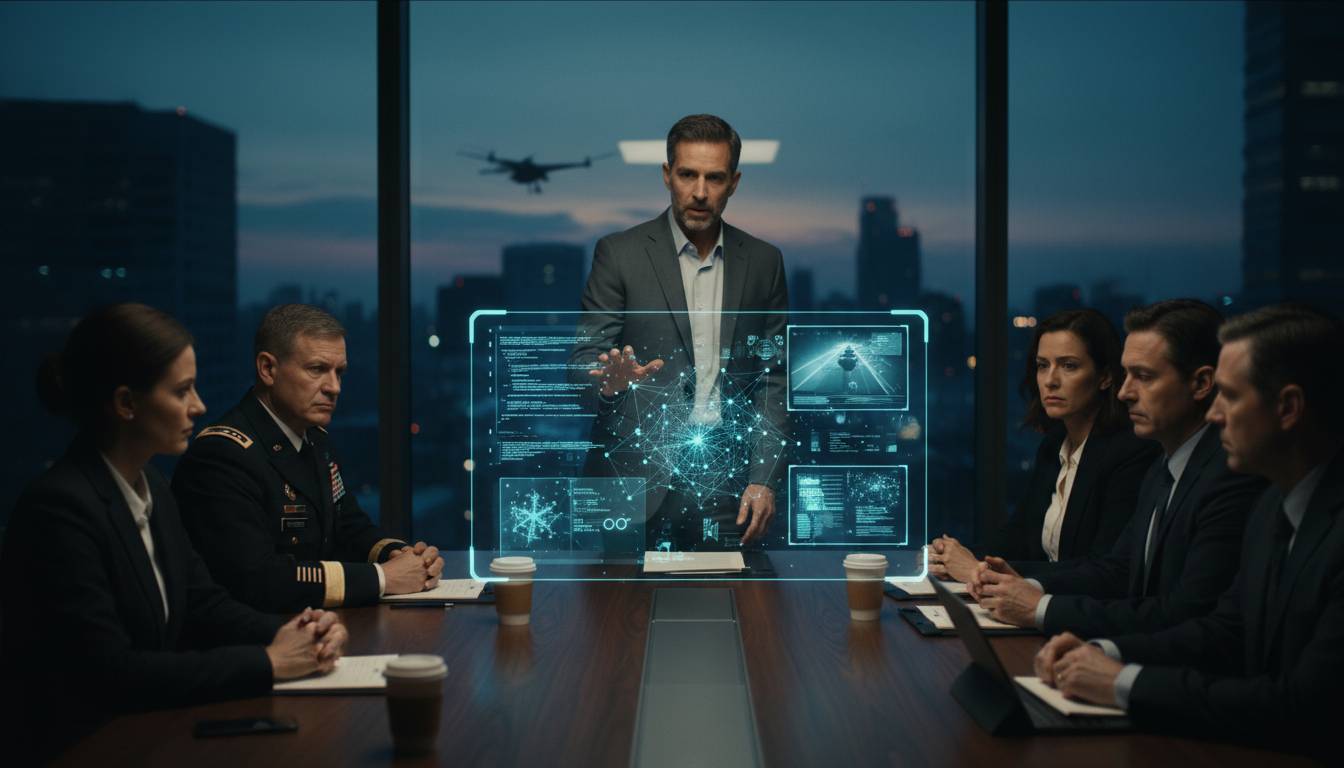
Anthropic CEO Dario Amodei is pushing for collaboration with the Pentagon—a move that could reshape how leading AI companies work with the U.S. military. The initiative marks a notable shift for a company that’s built its reputation on AI safety, and it’s raising hard questions about where AI fits in national defense.
The timing matters. The Defense Department wants more advanced AI capabilities, while Congress and watchdogs worry about the ethical implications of AI-military partnerships.
What the Collaboration Would Involve
Amodei has been meeting with Pentagon officials to discuss how Anthropic’s Claude model could support defense work—things like document analysis, logistics optimization, and cybersecurity. He’s also proposing a formal advisory framework to ensure any military use of Anthropic’s technology follows strict safety and ethical guidelines.
This represents a change from the company’s previous caution around military engagement. Amodei has said he sees strategic value in working with government partners, though he insists safety principles won’t be compromised.
The discussions have focused on areas where AI could help without crossing ethical lines that concern the public and Congress: strengthening cybersecurity, improving operational efficiency, and supporting strategic planning. Anthropic says any partnership would include safeguards against misuse and compliance with international humanitarian laws.
Why Now
Geopolitical pressure and the pace of AI development globally are driving this. The U.S. faces growing competition from adversaries with advanced AI, and the Pentagon wants to integrate AI across military operations.
The Defense Department has increased AI investments significantly. The 2024 budget allocated substantial resources toward AI research and deployment—evidence that Pentagon leadership sees AI superiority as potentially decisive in future conflicts. But the department has also faced criticism for moving fast without considering ethical implications carefully enough.
For Anthropic, this push is both opportunity and risk. The company has marketed itself as a responsible alternative to OpenAI and Google DeepMind. Working with the military could draw fire from privacy advocates and anti-war groups who see any military AI application as normalizing automated warfare.
But Amodei apparently believes staying entirely outside defense work could backfire, potentially leaving the field to less scrupulous companies.
What Came Before
Anthropic’s relationship with the Pentagon has evolved since the company was founded in 2021. Initially, it kept distance from defense contracts, focusing on academic research partnerships and commercial applications elsewhere. This matched the AI safety community’s preference for preventing military AI development without solid ethical frameworks.
The landscape has shifted. Anthropic secured funding from Google and Amazon—both with major defense contracts—and has had to address questions about how those investments might influence decisions. The company has also participated in government consultations on AI regulation, positioning itself as a constructive policy partner.
Before the current push, Anthropic had done some work for federal agencies, just not the Defense Department. It helped improve government website accessibility and assisted with regulatory compliance. Those projects served as a template for expanding government work while maintaining safety commitments.
The current initiative goes further—potentially more direct involvement in defense operations. Amodei has emphasized the need for clear boundaries so any collaboration serves legitimate defense purposes without contributing to autonomous weapons development.
Industry Reaction
The AI industry has responded with mixed reactions. Some see this as an inevitable evolution—AI companies seeking to influence how their technologies get used in national security. Others worry that military collaboration could undermine the safety principles Anthropic has championed.
Dr. Sarah Chen, a technology policy researcher at Stanford University, said the real question is whether engagement can be structured to minimize risks while capturing benefits. “The challenge for companies like Anthropic is proving they can maintain ethical commitments while working with defense agencies that have different priorities,” she explained. “The proof will be in the specific safeguards they negotiate and their willingness to walk away if those safeguards prove inadequate.”
Military ethics experts disagree. Some argue responsible AI companies should engage with defense institutions to prevent less ethical actors from dominating the field. Others contend any military AI application contributes to arms race dynamics that threaten global stability.
From a business angle, Pentagon collaboration could give Anthropic significant advantages. Defense contracts mean substantial funding and access to classified research. But they also carry reputational risks that could affect talent acquisition and consumer trust.
Implications for AI Safety and Governance
The debate over Anthropic’s Pentagon collaboration raises bigger questions about AI governance and private companies’ role in shaping national security policy. As AI systems become more capable, potential defense applications keep expanding, creating tough tradeoffs between security benefits and misuse risks.
Amodei’s approach suggests he believes AI companies can positively influence how their technologies get deployed in military contexts by participating directly in policy discussions. This incremental engagement strategy contrasts with calls from advocacy groups for an outright prohibition on AI-military partnerships until comprehensive international frameworks exist.
The outcome could set precedents for how other AI companies approach defense engagement. If Anthropic establishes a collaboration framework that maintains safety commitments while providing genuine value to defense operations, other companies may follow. Conversely, if the collaboration leads to uses that violate stated principles, it could reinforce arguments for stricter separation between AI development and military applications.
What Comes Next
The trajectory depends on several factors: negotiation outcomes, political developments around AI regulation, and shifts in public opinion about AI-military integration. Amodei has said the company will proceed cautiously and won’t accept arrangements that compromise core principles.
The Pentagon faces pressure to show it can integrate advanced AI capabilities responsibly while maintaining oversight. Congressional scrutiny of AI-military projects has increased recently, meaning any collaboration will get careful examination from policymakers worried about automated defense systems.
The AI industry and policy community will be watching to see whether this marks the beginning of a new era of AI-military cooperation or a cautionary tale about maintaining ethical commitments in competitive markets. These answers will significantly shape AI development’s future and its role in society.
What Amodei Wants from the Pentagon
Amodei wants formal collaboration between Anthropic and the Department of Defense. This would involve using Anthropic’s Claude AI model for tasks like document analysis, logistics optimization, and cybersecurity support. The proposal includes establishing ethical safeguards so any military applications follow safety principles.
Why It Matters
This matters because it represents a shift for Anthropic—a company that’s positioned itself as a leader in AI safety. The partnership could set precedents for how other AI companies engage with defense institutions while maintaining ethical commitments.
What’s Driving the Push
Competition from adversaries is a major factor. China and Russia are investing heavily in military AI, and the Pentagon doesn’t want to fall behind. Amodei also appears to believe that staying out entirely means less influential AI companies shape defense policy—which could lead to worse outcomes than engaged collaboration.
The Stakes for AI Safety
If Anthropic can work with the Pentagon and actually maintain meaningful safety guardrails, it would represent a significant proof of concept for responsible AI-military engagement. If it fails—if the collaboration leads to autonomous weapons development or other ethically problematic applications—it would validate critics who’ve argued that AI companies and defense agencies fundamentally can’t be trusted to self-regulate.
The next few months of negotiations will reveal a lot about whether this approach can work—or whether the tensions prove too fundamental to bridge.














Leave a comment