

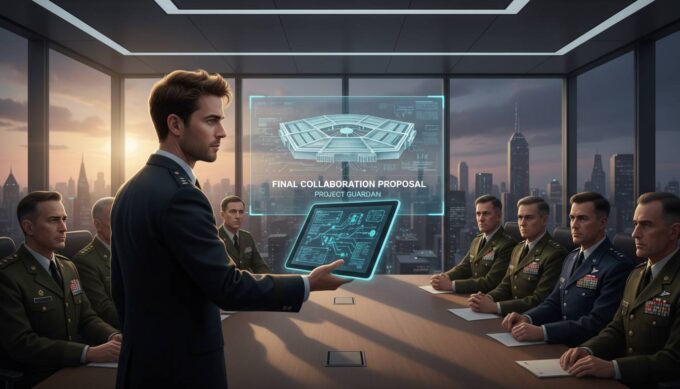
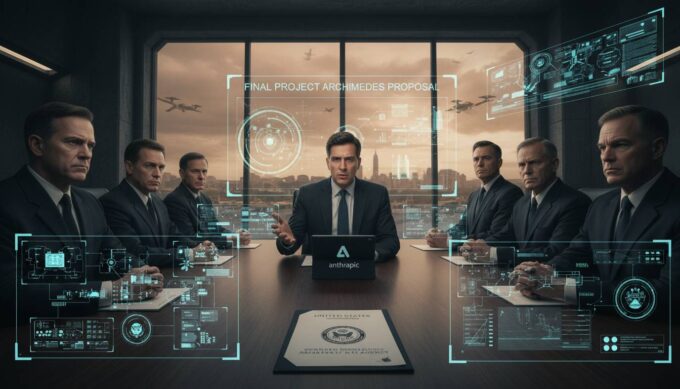
Anthropic CEO Dario Amodei is pushing harder than ever to establish formal collaboration channels with the Pentagon—an initiative that could fundamentally reshape how leading AI companies interact with the U.S. defense establishment. The move has sparked both enthusiasm and concern across the technology and policy worlds.
The timing matters. As the Department of Defense accelerates its adoption of machine learning and autonomous systems, the question of which AI companies will supply these capabilities—and under what constraints—has become impossible to ignore.
Silicon Valley and the Pentagon: A Complicated History
The relationship between Silicon Valley and the Pentagon has always been messy. During the Vietnam era, many tech leaders vocally opposed military involvement. After September 11, that posture shifted dramatically. Companies like Google, Microsoft, and Amazon started pursuing defense contracts, particularly for cloud computing and logistics.
Amodei himself has historically kept Anthropic at more of a distance from military applications than its competitors. He co-founded the company in 2021 after leaving OpenAI, and Anthropic built its reputation on AI safety research—developing systems designed to be helpful, harmless, and honest. The Claude chatbot line emphasizes constitutional AI approaches that attempt to embed ethical guidelines directly into model behavior.
So Amodei’s recent overtures to the Pentagon have caught some industry observers off guard. Either the company’s strategy has shifted, or Amodei has concluded that avoiding government contracts entirely is no longer realistic for a company that wants to influence AI policy.
What the Pentagon Wants
The Department of Defense has been clear about its ambition to lead in AI adoption. The Pentagon’s Joint Artificial Intelligence Center, now part of the Chief Digital and Artificial Intelligence Office, has coordinated efforts to integrate machine learning across logistics, maintenance, intelligence analysis, and autonomous systems.
Current and near-future applications include predictive maintenance systems that analyze sensor data from vehicles and aircraft to catch failures before they happen, intelligence platforms that process satellite imagery and signals data to identify threats, and autonomous drones and underwater vehicles that conduct reconnaissance in environments too dangerous for humans.
The traditional defense contractors—Raytheon, Lockheed Martin, General Dynamics—have invested heavily in AI research. But they can’t match what companies like Anthropic, OpenAI, and Google DeepMind have built with large language models and foundation models. This gap has prompted the Pentagon to increasingly seek partnerships with commercial AI developers, establishing programs specifically designed to accelerate acquisition of commercial AI technologies.
What Amodei Is Proposing
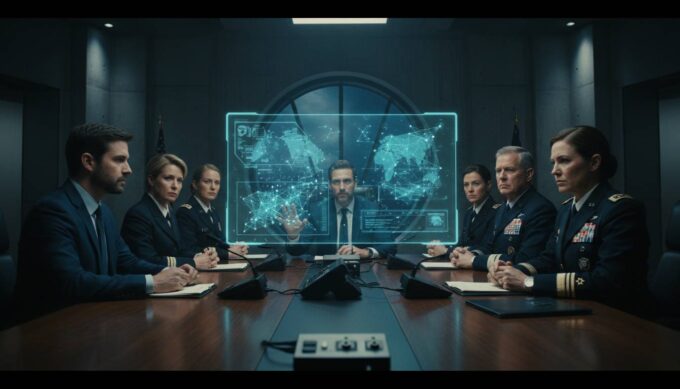
Sources familiar with the matter say Amodei’s recent efforts focus on establishing a structured engagement framework—not pursuing specific contracts yet. This would create regular dialogue channels between Anthropic researchers and Pentagon officials, allowing both sides to explore potential applications while setting clear guidelines for responsible development.
The initiative has several components. Amodei has proposed creating a dedicated team within Anthropic focused on defense and national security applications, staffed by researchers with appropriate security clearances. He’s suggested developing modified versions of Claude specifically for defense use cases, with additional safety measures beyond what’s in consumer products.
Most significantly, Amodei has advocated for an external oversight body that would review proposed defense applications before implementation. This body would include Anthropic representatives plus independent AI safety researchers and ethicists—a layer of accountability that goes beyond typical commercial contracts.
The timing reflects both strategic calculation and external pressure. As Anthropic competes with OpenAI and Google for government contracts worth billions, establishing early relationships with defense officials provides competitive advantages. At the same time, regulatory scrutiny of AI companies has intensified, making constructive engagement with government look more attractive than confrontation.
How Other AI Companies Handle Defense Work
The AI industry’s relationship with defense varies widely. OpenAI, despite starting as a safety-focused research organization, has moved toward greater defense engagement—removing provisions in its terms of service that prohibited military use. Google experienced significant employee backlash over Project Maven, a military imagery analysis project, and withdrew from the contract in 2018.
Anthropic has stayed more cautious, but training frontier models costs billions of dollars, and every viable revenue source matters. Government contracts—especially sensitive national security applications—often carry premium pricing that can offset development costs.
Microsoft has positioned itself as the primary defense AI partner through Azure and its relationships with military agencies. Amazon competes through AWS. This competitive landscape creates pressure for Anthropic to establish its own defense footprint rather than ceded the entire sector to rivals.
The market is substantial. Defense AI spending is projected to grow from roughly $10 billion annually to over $30 billion by 2030. Beyond direct contract value, defense relationships provide access to classified research, talent pipelines, and policy influence that matter across multiple dimensions.
The Criticisms Aren’t trivial
Not everyone welcomes closer AI-military collaboration. Critics raise concerns worth taking seriously.
AI safety researchers worry that defense applications create pressure to prioritize capability over safety. Military customers typically value performance and reliability more than the cautious, interpretable systems that safety researchers prefer. This tension could lead to deploying systems that lack adequate testing or behave unpredictably in high-stakes situations.
Ethicists highlight the risks of automating decisions that affect human life. While current AI systems primarily assist human decision-makers rather than replacing them entirely, autonomous weapons development raises troubling possibilities. International efforts to establish meaningful constraints on autonomous weapons have made limited progress, and commercial AI companies’ involvement could accelerate capabilities development.
Privacy advocates are concerned about how defense agencies might use AI systems for surveillance, intelligence analysis, or population monitoring. The same capabilities that enable helpful applications like document summarization can support activities that civil liberties organizations consider problematic.
Tech workers themselves have shown reluctance to contribute to military applications. Surveys indicate significant percentages of AI researchers prefer not to work on defense projects, which could create talent recruitment challenges for companies that pursue such contracts.
What Happens Next
If Amodei’s efforts succeed in establishing productive Pentagon relationships, the implications extend far beyond immediate contract awards. A successful collaboration model could serve as a template for how AI companies engage with defense agencies while maintaining safety commitments. Alternatively, it could normalize defense work across the industry, making it difficult for companies to maintain principled opposition.
Several factors will shape the outcome. Congressional actions could restrict or encourage AI-military partnerships through legislation addressing procurement, export controls, or research funding. Regulatory agencies like the Department of Commerce’s Bureau of Industry and Security may impose additional requirements on advanced AI chip exports that affect defense applications.
Public opinion will matter too. High-profile incidents involving AI systems in security contexts could generate negative publicity and pressure companies to reconsider defense engagements. Conversely, perceptions of foreign AI threats—particularly from Chinese developments—could increase acceptance of domestic AI-military cooperation.
Amodei’s personal involvement suggests Anthropic considers this initiative strategically critical. Whether his leadership produces meaningful collaboration or runs into insurmountable obstacles will become clearer as discussions progress. What’s certain is that the relationship between advanced AI companies and the defense establishment will keep evolving, with implications for both industries and for broader questions about technology’s role in society.
Conclusion
Amodei’s intensified efforts to collaborate with the Pentagon represent a genuine turning point in the negotiation between the AI industry and national security establishments. The outcome will influence not only commercial relationships but also fundamental questions about how powerful AI capabilities should be governed and deployed.
The tension between AI safety commitments and defense customer requirements creates real dilemmas for companies like Anthropic. Resolving these tensions requires creative approaches that satisfy both commercial imperatives and ethical obligations. Whether Amodei’s proposed frameworks achieve this balance remains uncertain, but the attempt signals a mature recognition that avoiding these questions is no longer viable.
As artificial intelligence capabilities continue advancing, the scope of potential defense applications will only expand. Companies that engage constructively with government partners may help shape how these applications develop, while those that refuse engagement may find themselves marginalized from consequential decisions. Amodei’s push represents a bet that proactive involvement offers the best path forward—a bet whose outcome will inform industry strategy for years.
Frequently Asked Questions
What is Dario Amodei’s background in AI development?
Dario Amodei is the co-founder and CEO of Anthropic, one of the leading artificial intelligence companies developing large language models. Before founding Anthropic in 2021, he served as a senior vice president of research at OpenAI. He holds a PhD in physics from Princeton University and has published extensively on AI safety and alignment.
What types of AI applications might the Pentagon be interested in?
The Pentagon explores AI applications including predictive maintenance for military equipment, intelligence analysis from satellite and signals data, autonomous vehicles for surveillance and reconnaissance, logistics optimization, and decision-support systems for commanders. Each application requires different capability levels and safety considerations.
How do other major AI companies approach defense work?
Microsoft has extensive defense contracts through its Azure platform and AI services. Amazon competes for government cloud contracts through AWS. Google reduced direct defense engagement following employee protests over Project Maven but continues some government work. OpenAI has moved toward permitting certain military applications after earlier restrictions.
What are the main concerns about AI in military applications?
Primary concerns include the risk of autonomous weapons making life-or-death decisions without human oversight, potential misuse for surveillance, insufficient testing before deployment, and the broader ethical implications of increasingly automated warfare. AI safety researchers also worry about capability-race dynamics that might reduce attention to safety measures.
Could Congress regulate AI-military partnerships?
Yes, Congress has authority over defense procurement and could impose requirements or restrictions on AI company involvement. Various legislative proposals have addressed AI in defense contexts, though comprehensive regulation remains under development. Export controls on advanced AI chips also provide a mechanism for influencing how AI technology reaches military users.












Leave a comment