

Introduction
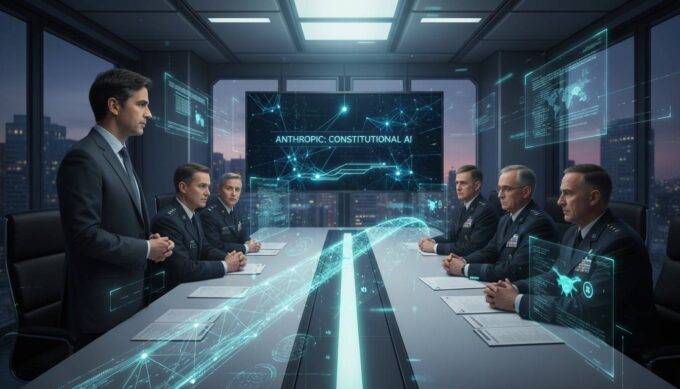
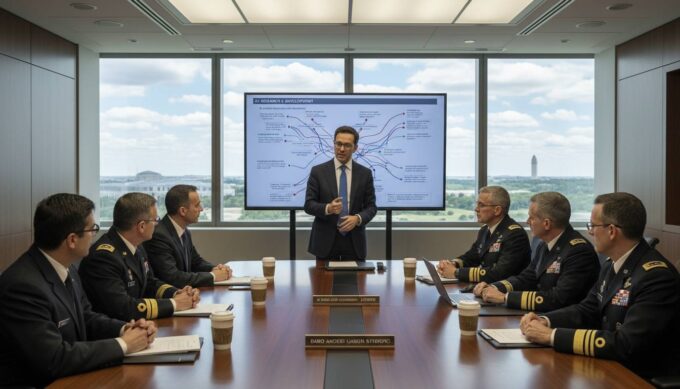
The AI industry and the Pentagon are getting cozier, and Dario Amodei wants in. The Anthropic CEO has been making a concerted push to establish a formal partnership between his company and the U.S. Department of Defense—what industry observers are calling his “final push” to lock down Pentagon collaboration.
This matters more than your typical tech-government handshake. We’re talking about one of the leading AI safety companies deciding whether to dive into defense work. The implications ripple outward: AI policy, military applications, and the fundamental question of how cutting-edge AI companies should relate to national security institutions.
The discussions have generated plenty of chatter in tech circles, policy forums, and government hallways alike. As the AI race heats up between major powers, the line between private innovation and government oversight keeps getting blurrier. This article breaks down where things stand, what it means for Anthropic and the broader AI ecosystem, and what to watch for as this story develops.
Understanding the Current State of AI-Pentagon Relations
The relationship between AI companies and the Pentagon has come a long way from the early days of cautious probing. Both prior administrations and the current leadership have woken up to what AI actually means for national security. The Defense Department has made clear that AI isn’t just another tech trend—it’s a core capability for future military operations, intelligence work, and operational efficiency.
Anthropic, founded in 2021 by Dario Amodei and other former OpenAI researchers, has built its reputation on AI safety. That’s what makes this potential partnership so interesting. The company talks a big game about building AI that’s helpful, honest, and harmless. Now it has to figure out how that mission translates to defense contracts.
Right now, Amodei’s push is happening alongside other AI companies scrambling for government business. Google, Microsoft, and others already have various defense connections. Anthropic wants a bigger piece of that pie—or at least a seat at the table. Analysts see this as a straightforward play: government AI markets could be worth billions over the next decade, and you can’t afford to sit that out.
The Strategic Importance of Defense Partnerships
Let’s be real about why AI companies want these partnerships. It’s not just about the money—though the money is significant.
Government contracts bring computational resources that most companies can’t match. They provide access to data sets that simply don’t exist in the commercial world. And perhaps most importantly, they give AI companies a seat at the policy table when decisions get made about how the industry will be regulated.
For Amodei, the calculations are pretty clear. First, defense spending on AI is projected to grow substantially as militaries worldwide rush to adopt these technologies. Second, government relationships provide stability in an industry where things change fast. Third, being involved in national security discussions lets Anthropic shape outcomes that will affect its entire industry.
But there are real risks here. Some commercial customers won’t want their data associated with military work. Employees have already pushed back at other tech companies over defense contracts. And the reputational hit from being linked to controversial military applications could be substantial.
Implications for AI Safety and Development
Here’s where things get genuinely complicated. Anthropic’s whole brand is built on AI safety. The company was founded on the idea that AI can be developed responsibly. How does that square with defense applications where the stakes are incomparably higher?
The safety questions aren’t theoretical in military contexts. We’re talking about scenarios where AI might make decisions with life-or-death consequences. Autonomous capability, human oversight, unintended consequences—these aren’t abstract concerns anymore. They’re the actual questions that would need answering before any partnership moves forward.
Policy folks who’ve thought about this say successful partnerships will need serious guardrails. Clear guidelines on use cases. Hard limits on autonomy. Ongoing oversight mechanisms. The companies that can actually demonstrate strong safety commitments might end up with better deal terms—and more public trust.
Industry Reactions and Market Dynamics
Reactions have been mixed, which shouldn’t surprise anyone.
Some people think this is just pragmatic realpolitik. American AI companies need to work with defense agencies or risk falling behind other countries that are aggressively pursuing AI military applications. The competitive angle is real—China isn’t slowing down, and the U.S. government wants domestic AI companies in its corner.
Others aren’t buying it. Critics point out that funneling resources toward military applications distorts AI development in problematic ways. Employee activism has already caused internal conflicts at other companies, and Anthropic may face similar pushback from its own staff as details emerge.
From a market perspective, landing defense contracts would change Anthropic’s competitive standing significantly. It would diversify revenue beyond the increasingly crowded commercial AI space and potentially provide access to resources that competitors don’t have. Investors are definitely watching how this plays out.
Regulatory Environment and Policy Considerations
The regulatory landscape shapes everything here. Current policies generally favor more collaboration between tech and government, though security concerns get more emphasis these days.
Congress has been increasingly active on AI governance. Multiple committees are working on legislation that could affect how AI gets developed and deployed. Defense work adds another layer of scrutiny—think data handling requirements, national security reviews, and the whole alphabet of compliance that comes with classified work.
And it’s not just domestic. International relationships affect how defense AI can be developed and used. Export controls, partner nation considerations, and the global nature of AI research all factor in.
Future Outlook and Potential Developments
What happens next depends on a few key variables: how Anthropic performs technically, what the government actually needs, and how the broader industry evolves.
Initial partnerships probably won’t be comprehensive deals. More likely, they’ll start with specific capability areas—both sides can test the relationship before going deeper. That’s standard practice for high-stakes government contracting.
The pace of AI advancement keeps accelerating, which creates new opportunities and new headaches. Large language models, reasoning systems, multimodal AI—these capabilities open up new defense use cases while also raising fresh safety questions. How Anthropic handles these emerging capabilities will say a lot about where this partnership goes.
One thing’s certain: the competition for government AI relationships is going to get fiercer. Anthropic will need to show it brings something unique to the table—ideally its safety focus becomes a selling point rather than an awkward complication.
Conclusion
Amodei’s push to get Anthropic into the Pentagon’s good graces is a big deal—not just for his company, but for how the entire AI industry relates to national security. The broader trends are clear: AI companies increasingly see government relationships as strategically essential, and the defense world is hungry for what leading AI labs can offer.
The safety questions don’t go away just because there’s money on the table. If anything, they become more important. How Anthropic navigates this—balancing its stated mission against commercial and strategic realities—will be one of the more interesting storylines in AI over the next few years.
The outcome will likely shape not just Anthropic’s future, but the whole framework for how AI companies work with government agencies going forward. That’s worth paying attention to.
Frequently Asked Questions
What is Dario Amodei’s background in AI development?
Dario Amodei is the co-founder and CEO of Anthropic, established in 2021. Before that, he worked as a senior research engineer at OpenAI, focusing on language models and AI safety research. He has a solid background in artificial intelligence, particularly in large language models and AI alignment—the challenge of making AI systems do what humans actually want them to do.
Why are AI companies seeking Pentagon partnerships?
The motivations are straightforward. Government contracts represent serious money—defense AI spending is projected to grow significantly. Beyond revenue, these partnerships provide access to computational resources and data that commercial markets can’t match. They also give AI companies leverage in policy discussions that will determine how the entire industry gets regulated.
What are the main concerns about AI defense applications?
The concerns fall into a few buckets. Safety questions are paramount: what happens when AI systems are deployed in scenarios where mistakes cost lives? There’s also the autonomous weapons angle—systems that make killing decisions without human involvement make a lot of people uncomfortable. And then there’s the broader worry about an AI arms race between countries, with all the escalation risks that entails.
How might this partnership affect consumers and commercial AI users?
It’s hard to say definitively without knowing what the partnership actually looks like. Some commercial customers might feel weird about their data being handled by a company doing defense work. On the flip side, research breakthroughs from defense projects could eventually filter down to civilian applications. The net effect on everyday users will depend heavily on what specific projects Anthropic ends up working on.
What safety measures are typically required for defense AI contracts?
Defense AI work usually requires formal safety protocols, human-in-the-loop systems for any consequential decisions, rigorous testing before deployment, and compliance with a range of military specifications. The exact requirements depend on what the AI system is being used for—logistics AI has different requirements than targeting systems, for instance.
How does Anthropic’s approach compare to other AI companies working with the Pentagon?
Anthropic’s differentiator is its explicit focus on AI safety and responsible development. Whether that translates into meaningfully different safety provisions in any Pentagon deals, or whether it’s mostly marketing, remains to be seen. The company will need to demonstrate actual commitments, not just talk about them, if it wants this focus to be a real competitive advantage.










Leave a comment