

Emerging Solution Combines Renewable Energy with Digital Infrastructure
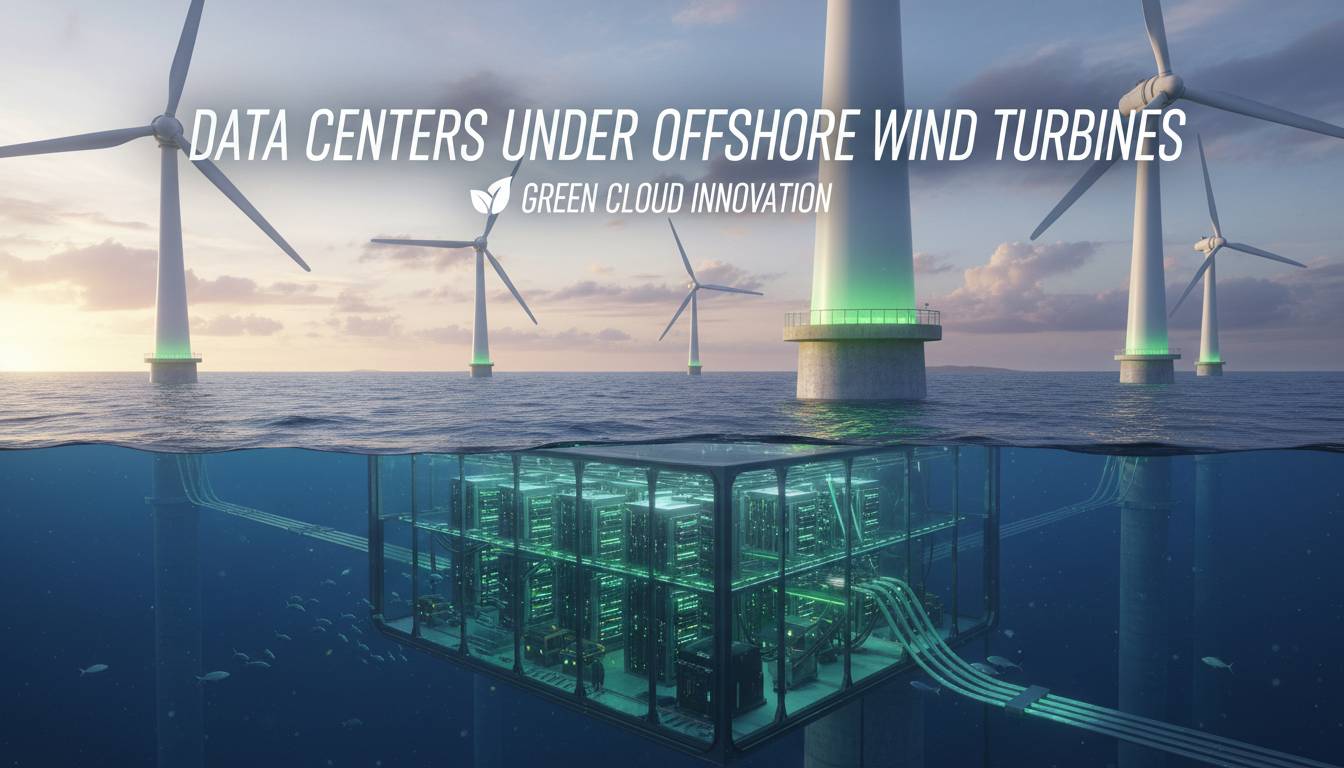
A startup has developed a way to put data centers underneath offshore wind turbines. The idea is simple: use the space already occupied by turbine foundations to house computing equipment, and run the servers directly on the power those turbines generate.
This solves two problems at once. Data centers need enormous amounts of electricity, and they need it constantly. Wind farms generate plenty of power, but often far from where anyone wants to build a traditional data center. Putting the two together cuts out the middleman—no long transmission lines, no extra land needed, and the cold ocean air handles a lot of the cooling work.
“The convergence of renewable energy generation with computing infrastructure creates opportunities that were previously unimaginable,” says Dr. Sarah Chen, a professor of sustainable computing at Stanford University. “By positioning data centers at the point of energy production, we eliminate transmission inefficiencies that can reach fifteen percent or more in traditional grid configurations.”
The Technology Behind Under-Turbine Data Centers
The engineering involves custom modular units designed to fit inside or below the concrete or steel bases that support offshore turbines. These modules don’t need their own foundations—they use the turbine structure instead, which cuts deployment costs significantly.
Most designs use immersion cooling, where server components sit submerged in specialized non-conductive liquids that absorb heat efficiently. This uses less energy than traditional air-based cooling systems.
The cold ocean water helps too. Some facilities circulate seawater through heat exchangers, which reduces the energy needed for thermal management by up to forty percent compared to land-based data centers. That kind of efficiency shows up in the Power Usage Effectiveness (PUE) ratings, which are noticeably better than industry averages.
Environmental Impact and Sustainability Benefits
The environmental advantages go beyond energy efficiency. Running on wind power means near-zero carbon emissions during operation—a meaningful shift for an industry that increasingly faces scrutiny over its environmental footprint.
The offshore location avoids land use conflicts that have become common around data center development. Communities have pushed back against massive new facilities eating up natural areas or farmland. Putting data centers in the ocean sidesteps that entirely.
The marine environment also dampens operational noise, and the modular design means decommissioning won’t leave behind permanent structures. Maintenance crews can service both turbines and data centers during the same vessel trips, which reduces transportation emissions.
Environmental advocates see this as a creative answer to competing demands—more digital infrastructure without more land development. That’s especially relevant in crowded regions where space is expensive and hard to find.
Economic Viability and Industry Implications
The numbers look promising. The colocation model shaves roughly thirty percent off capital costs compared to building both facilities separately, according to energy infrastructure analysts. Operational savings add up too—lower land costs, less power lost in transmission, and reduced cooling expenses all compound.
The data center market exceeds $200 billion annually and keeps growing as digital transformation projects expand. Offshore wind is one of the fastest-growing renewable energy sectors, with major economies investing heavily in new capacity. These two industries growing in parallel creates natural opportunities for integrated solutions.
Cloud providers have pledged to reach net-zero or carbon-negative operations within the next decade. That kind of commitment creates real demand for solutions that can deliver renewable computing capacity at scale, especially as regulators increase pressure on emissions.
Challenges and Future Development Considerations
This isn’t without obstacles. Harsh marine environments present real engineering problems—salt corrosion, extreme weather, wave stress on structures. Equipment needs to handle conditions that would destroy standard data center hardware.
Remote locations create logistics headaches. Deployment, maintenance, and emergency response all require specialized protocols and equipment. Getting people and parts to an offshore site is fundamentally harder than walking down a hallway to a server room.
Regulatory frameworks haven’t caught up yet. Current rules vary by jurisdiction and weren’t written with combined energy-computing facilities in mind. Policymakers will need to address marine environmental protection, cybersecurity for offshore installations, and questions about who controls facilities in international waters.
Connectivity is another practical concern. Offshore data centers need high-bandwidth, low-latency connections to serve users effectively. Existing submarine cables are increasing, but dedicated connections to specific offshore locations may require additional investment in undersea telecommunications infrastructure.
Conclusion
Putting data centers under offshore wind turbines is an interesting innovation that addresses real challenges in both industries—land scarcity, energy efficiency, carbon emissions, and sustainable computing expansion. Technical, regulatory, and logistical hurdles remain significant, but the basic logic of colocation makes sense and fits broader trends toward integrated infrastructure.
If this works at scale, it could drive more innovation in hybrid energy-computing facilities, potentially expanding to other renewable sources and configurations. As companies prioritize environmental sustainability in their technology decisions, solutions that can demonstrably deliver renewable computing capacity will have a market advantage. The next several years will determine whether this moves from demonstration projects to commercial-scale deployment.
Frequently Asked Questions
What is the main innovation behind placing data centers under offshore wind turbines?
The innovation is integrating data center infrastructure directly with offshore wind turbine foundations, using the physical space beneath turbines while leveraging proximity to renewable power generation. This colocation reduces transmission losses, provides natural marine cooling, and minimizes land or sea floor requirements.
How much energy efficiency improvement do these underwater data centers achieve?
These facilities achieve power usage effectiveness ratings significantly better than traditional land-based data centers, with estimates suggesting up to forty percent reduction in cooling energy consumption through natural marine environment cooling. Combined with eliminated transmission losses, overall efficiency improvements can exceed twenty percent.
What are the main technical challenges facing this technology?
Key technical challenges include developing corrosion-resistant equipment for marine environments, creating robust designs that withstand extreme weather and wave conditions, establishing reliable maintenance protocols for remote offshore locations, and ensuring secure high-bandwidth connectivity to onshore networks.
Are there other companies working on similar sustainable data center solutions?
Several companies and research initiatives are exploring related concepts, including underwater data center experiments, floating data center facilities, and various renewable energy colocation strategies. However, the specific under-turbine approach remains a relatively nascent concept with limited commercial deployment to date.
How does this solution address carbon emissions from data centers?
By operating entirely on renewable wind energy with near-zero operational carbon emissions, these facilities eliminate the Scope 2 emissions associated with grid electricity consumption. The reduced cooling energy requirements further decrease the indirect environmental impact compared to conventional data center operations.
When might we see widespread commercial deployment of this technology?
While demonstration projects exist, widespread commercial deployment likely remains five to ten years away, pending resolution of technical challenges, development of appropriate regulatory frameworks, and demonstration of economic viability at scale. Early adopters in regions with established offshore wind infrastructure may see initial deployments sooner.









Leave a comment