

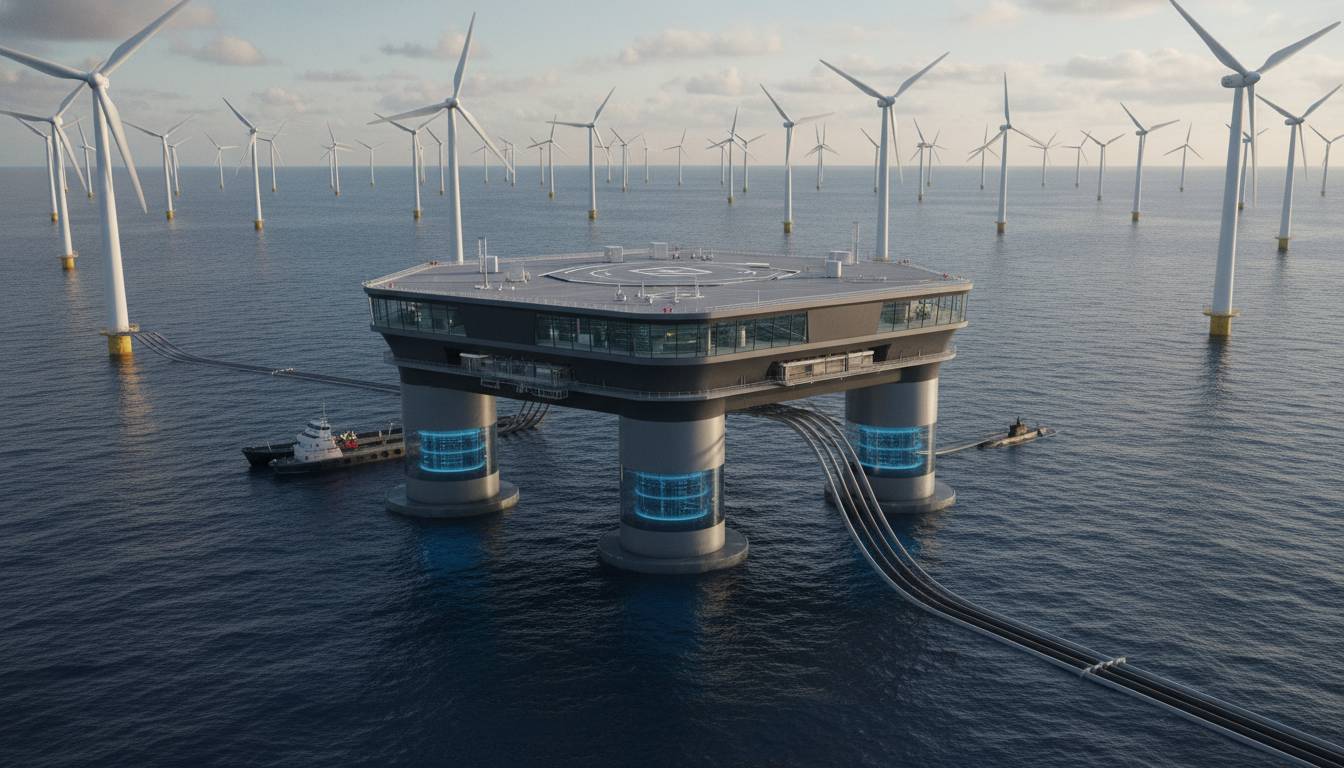
The intersection of two of the world’s most resource-intensive industries is giving rise to an innovative solution that could reshape how technology companies power their operations. As data centers consume ever-increasing amounts of electricity and offshore wind farms expand rapidly along coastlines, a novel concept has emerged: placing data centers beneath offshore wind turbines. This colocation strategy represents a promising frontier in sustainable infrastructure development, offering potential solutions to some of the most pressing challenges facing both the energy and technology sectors. The approach addresses land scarcity, reduces transmission losses, and leverages the natural proximity of power generation to computational demand, positioning it as a potentially transformative development for industries seeking to reduce their environmental footprint while maintaining operational efficiency.
Understanding Data Center and Offshore Wind Colocation
The concept of tucking data centers under offshore wind turbines involves constructing specialized data center facilities in the spaces between wind turbine installations within offshore wind farms. These facilities would be positioned either on floating platforms anchored to the seabed or on artificial islands constructed specifically for this purpose. The fundamental principle behind this approach is simple yet powerful: bring computing infrastructure directly to the source of clean electricity generation, eliminating the need for long-distance power transmission and reducing associated energy losses.
Offshore wind farms occupy vast oceanic areas, with individual turbine spacing requirements creating substantial usable space between installations. Rather than leaving these intermediate areas unused, the colocation concept proposes utilizing this space for digital infrastructure. The proximity to power generation eliminates the need for expensive onshore grid connections and reduces transmission inefficiencies that typically range from 5-15% in conventional power delivery systems. This direct connection to renewable generation also allows data centers to claim true zero-carbon operations, a growing priority for technology companies facing pressure from investors and regulators to demonstrate environmental responsibility.
The technical feasibility of such installations depends on several factors, including water depth, seabed conditions, and the specific design of wind turbines in a given project. Modern offshore wind turbines operate at capacities ranging from 5 to 15 megawatts each, with farms potentially comprising hundreds of installations. A single offshore wind farm can generate several gigawatts of power, more than enough to supply multiple large-scale data centers that typically require hundreds of megawatts to operate.
The Economics Driving This Emerging Trend
Several economic factors are converging to make offshore wind-data center colocation increasingly attractive to both industries. First and foremost is the escalating cost of electricity for traditional data center operations. Data centers in the United States spend approximately $2 billion annually on electricity, with costs rising as computational demands increase through artificial intelligence workloads, cloud computing expansion, and cryptocurrency operations. Locating facilities directly adjacent to power generation eliminates several cost layers associated with traditional grid infrastructure.
Land availability presents another compelling economic argument. Coastal regions where offshore wind farms are typically located face significant constraints on available real estate for large-scale data center construction. Inland areas offer cheaper land but often lack the robust grid infrastructure necessary to support facilities consuming hundreds of megawatts. Offshore wind farm colocation effectively sidesteps this land scarcity problem by utilizing marine space that would otherwise remain unproductive. This approach also addresses community opposition that frequently accompanies proposals for large inland data centers, as offshore installations minimize visual impact and noise concerns.
The declining cost trajectory of offshore wind energy further strengthens the economic case for colocation. Levelized costs of electricity from offshore wind have fallen by approximately 60% over the past decade, with continued reductions expected as technology improves and supply chains mature. This cost decline makes offshore wind increasingly competitive with fossil fuel alternatives and grid electricity, making colocated data center operations economically viable in more markets. Industry analysts project that offshore wind costs will reach parity with conventional power sources in most markets by the early 2030s, potentially accelerating adoption of colocation strategies.
Current Projects and Industry Initiatives
While the concept of offshore wind-data center colocation remains largely theoretical at this stage, several developments indicate growing industry interest in pursuing this approach. Major technology companies including Microsoft, Google, and Amazon have all announced commitments to achieving carbon-negative or carbon-free operations, driving exploration of innovative solutions for powering their vast data center networks. These companies have collectively signed power purchase agreements for thousands of megawatts of offshore wind capacity, establishing the foundation for potential colocation projects.
In Europe, where offshore wind deployment is most advanced, several consortiums have explored floating data center concepts in conjunction with wind farm developments. The North Sea and Baltic Sea regions, which host the world’s largest offshore wind fleets, represent the most likely locations for initial colocation projects given their established regulatory frameworks and industry expertise. European Union policies mandating renewable energy expansion and data center sustainability reporting requirements create additional incentives for pursuing innovative solutions.
American clean power associations have begun discussions with technology industry groups about potential colocation projects along the East Coast, where offshore wind development is accelerating under state-level renewable energy mandates. The Biden administration’s goal of deploying 30 gigawatts of offshore wind capacity by 2030 creates substantial opportunity for colocation development, particularly as states like New York, New Jersey, and Massachusetts pursue ambitious renewable energy targets. These policy drivers, combined with corporate sustainability commitments, create a favorable environment for advancing the concept from theoretical discussion to concrete project development.
Technical Challenges and Engineering Considerations
Despite the compelling logic behind offshore wind-data center colocation, significant technical challenges must be addressed before such projects become reality. Marine environments present harsh conditions for electronic equipment, requiring specialized housing systems capable of withstanding saltwater corrosion, extreme weather events, and constant vibration from nearby turbine operations. Data center operators have decades of experience with land-based facilities but limited track record in offshore environments.
Cooling represents perhaps the most significant engineering challenge. Traditional data centers rely on various cooling approaches, including air conditioning, evaporative cooling, and increasingly, direct liquid immersion technologies. Offshore environments offer natural cooling advantages through access to seawater, but also introduce risks associated with marine biological growth on cooling equipment and potential saltwater intrusion. Engineers would need to develop robust systems that leverage marine cooling efficiently while maintaining reliability standards that data center customers demand.
Maintenance and accessibility pose additional operational challenges. Offshore wind farms operate with minimal on-site personnel, relying on scheduled maintenance visits by specialized vessels. Data centers require more frequent maintenance and immediate response capabilities for hardware failures. Developing operational models that address these different maintenance cultures while ensuring data center availability standards presents a significant coordination challenge. Remote management capabilities and advances in predictive maintenance could partially address these concerns, but operational models would need substantial development.
Grid interconnection and power delivery also require careful consideration. While colocation eliminates long-distance transmission, power must still be transferred from individual turbines to the data center facility and potentially onward to onshore grids. High-voltage direct current transmission systems offer efficient power transfer over moderate distances, though the specific electrical architecture would depend on project scale and location. Floating substation technology, still in relatively early development stages, would likely be necessary for deep-water installations.
Regulatory and Environmental Considerations
The regulatory landscape for offshore wind-data center colocation remains largely undefined, presenting both a barrier and an opportunity for project developers. Existing offshore wind leasing processes through the Bureau of Ocean Energy Management in the United States and equivalent bodies in European nations were designed primarily with power generation in mind. Integrating data center infrastructure into these frameworks would require regulatory innovation and potentially new leasing categories that address the unique characteristics of colocation projects.
Environmental review processes would need to evaluate the combined impacts of wind turbines and data center facilities on marine ecosystems. While offshore wind farms have undergone extensive environmental review, the addition of substantial data center infrastructure with associated personnel traffic and potential cooling system discharges would introduce new considerations. Environmental advocacy groups have raised concerns about cumulative impacts of offshore development on marine wildlife, and project developers would need to demonstrate that colocation projects meet rigorous environmental standards.
Permitting timelines represent another significant consideration. Traditional offshore wind projects require years of regulatory review before construction can begin. Adding data center components could complicate and potentially extend these timelines, though the consolidated footprint of colocation projects might ultimately reduce overall environmental impact compared to separate installations. Policymakers interested in accelerating renewable energy and digital infrastructure development may need to create streamlined permitting pathways that address both industries simultaneously.
The Path Forward: What’s Next for This Emerging Trend
Industry observers anticipate that the first commercial offshore wind-data center colocation projects could emerge within the next five to seven years, assuming favorable regulatory developments and continued cost reductions in both offshore wind and data center construction. Early projects are likely to involve relatively small-scale facilities demonstrating technical viability before larger deployments become economically attractive. The timeline aligns with anticipated maturation of floating offshore wind technology, which will expand the range of viable project locations beyond shallow coastal waters.
Major technology companies and renewable energy developers are positioned to lead initial colocation initiatives given their resources and strategic interest in sustainable infrastructure. These organizations have both the capital investment capacity and the operational expertise to tackle the technical challenges involved. Partnership models that combine wind farm developers’ energy infrastructure experience with data center operators’ computational expertise seem likely to characterize early projects.
The broader implications of successful offshore wind-data center colocation extend beyond individual project economics. If demonstrated successfully, such projects could catalyze similar approaches in other marine environments and inspire innovation in floating data center design. The concept represents one example of a broader trend toward integrated infrastructure solutions that optimize land use, reduce environmental impact, and improve operational efficiency through strategic colocation. As digital infrastructure demands continue growing and renewable energy deployment accelerates, innovative solutions like offshore wind-data center colocation will likely play an increasingly important role in sustainable development strategies.
Conclusion
The concept of tucking data centers beneath offshore wind turbines represents a compelling intersection of two major industries pursuing sustainability and efficiency improvements. While significant technical, regulatory, and economic challenges remain, the fundamental logic of the approach—bringing computing directly to clean power generation—addresses real constraints facing both sectors. Land scarcity, transmission losses, and the imperative to reduce carbon emissions all point toward innovative solutions that break from traditional infrastructure development patterns.
The timeline for widespread adoption of offshore wind-data center colocation remains uncertain, depending heavily on technological progress, regulatory framework development, and continued cost reductions in both industries. However, the growing commitment of major technology companies to renewable energy procurement, combined with accelerating offshore wind deployment along coastlines worldwide, creates favorable conditions for advancing this concept. Industry participants would be wise to monitor developments closely and consider participation in early pilot projects that could establish templates for future deployment. The next frontier in sustainable digital infrastructure may well lie beneath the spinning blades of offshore wind turbines.
Frequently Asked Questions
What is offshore wind-data center colocation?
Offshore wind-data center colocation refers to the practice of building data center facilities within or adjacent to offshore wind farms, allowing computing infrastructure to operate directly from power generated by wind turbines. This approach eliminates long-distance power transmission and reduces associated energy losses while utilizing the substantial space between wind turbine installations.
Why are companies exploring this concept?
Companies are pursuing offshore wind-data center colocation for several reasons: it addresses land scarcity in coastal areas, reduces electricity transmission losses, provides direct access to zero-carbon power, and helps technology companies meet sustainability commitments. The approach also offers potential cost savings by eliminating traditional grid infrastructure requirements.
Where are offshore wind-data center projects being developed?
While no commercial projects are currently operational, development discussions are concentrated in Europe, particularly the North Sea and Baltic Sea regions, and along the United States East Coast. These areas have established offshore wind frameworks and significant renewable energy targets that encourage innovative approaches to energy infrastructure.
What are the main technical challenges?
Key technical challenges include protecting electronic equipment from harsh marine environments, managing cooling systems in saltwater conditions, establishing reliable maintenance procedures for offshore facilities, and developing appropriate power transmission infrastructure. Engineers would need to create specialized designs adapted to marine operating conditions.
When might the first projects become operational?
Industry analysts project that initial commercial projects could emerge within five to seven years, assuming favorable regulatory developments and continued cost reductions. Early implementations will likely involve smaller-scale demonstration facilities before larger deployments become economically viable.
How does this benefit environmental sustainability?
Offshore wind-data center colocation supports sustainability by enabling true zero-carbon computing operations, reducing transmission losses, and maximizing the productive use of marine space. The approach also helps technology companies meet carbon reduction commitments while accelerating renewable energy deployment.












Leave a comment