

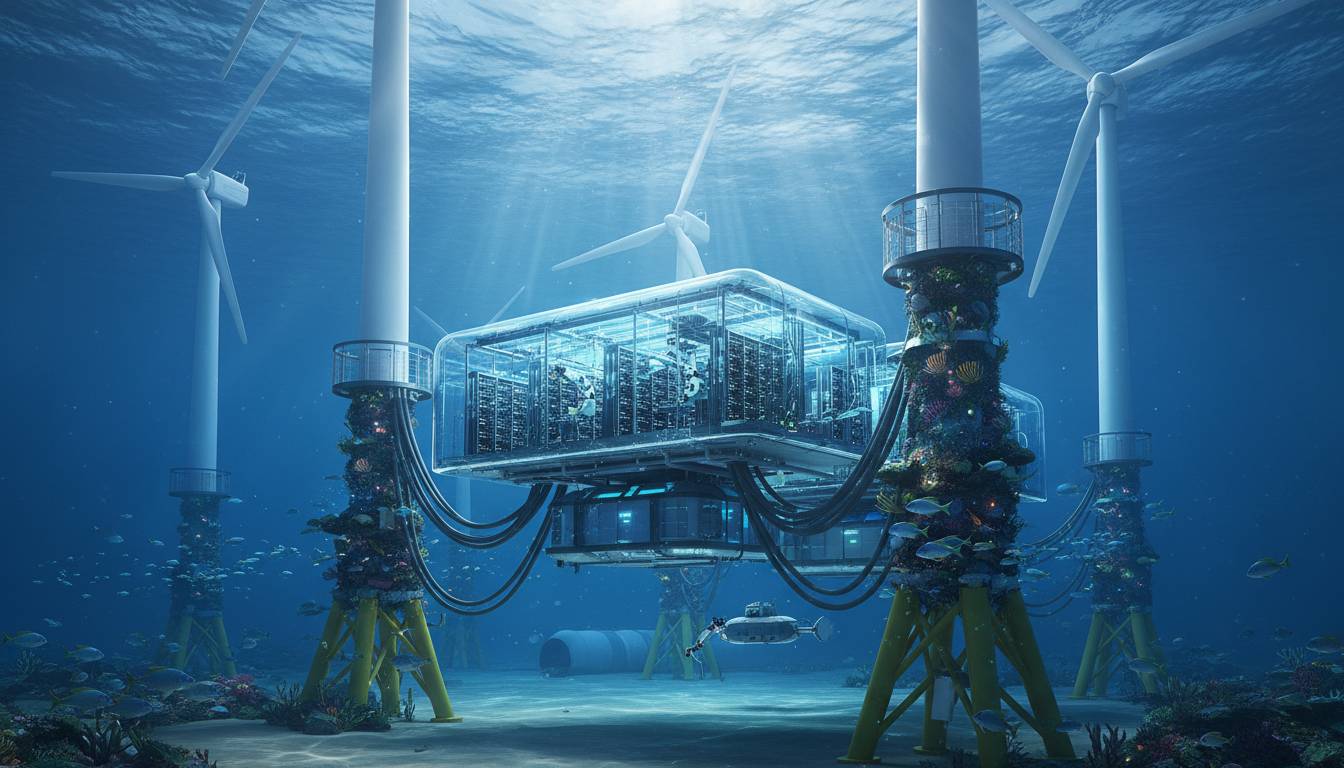
A startup has proposed placing data centers beneath offshore wind farms, combining power generation and data processing in one location. The concept addresses two growing concerns: the need for sustainable computing infrastructure and the demand for creative solutions to data center placement.
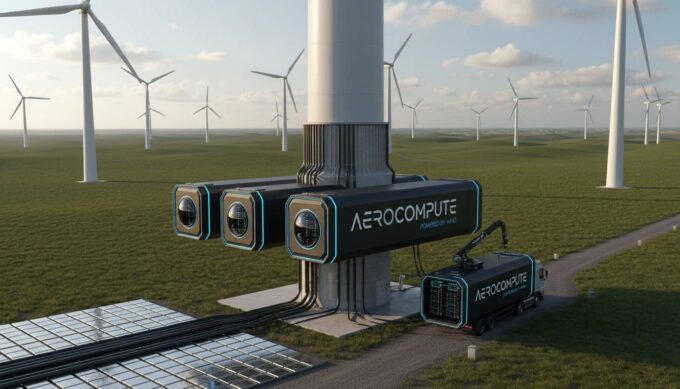
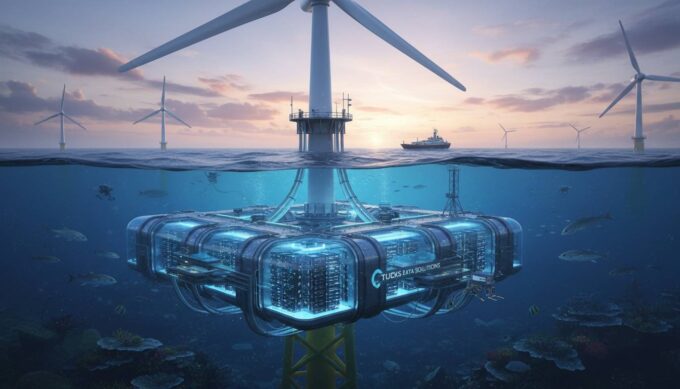
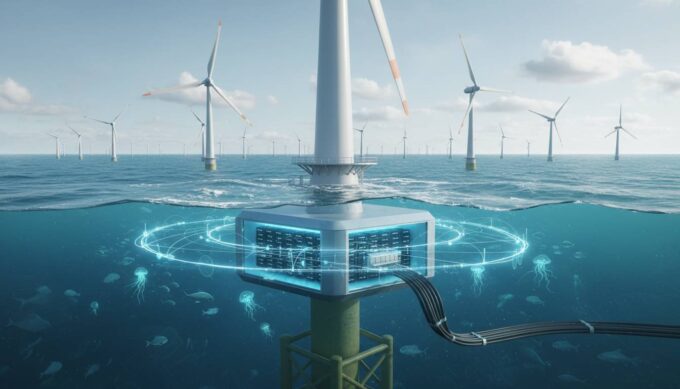
The proposed model would install modular data center units on the seabed beneath floating or fixed offshore wind turbines. This proximity would allow direct power transmission from turbines to data centers, reducing energy losses from long-distance transmission. As AI operations and cloud computing drive data center demand, companies are exploring ways to cut both carbon footprints and operational costs. Microsoft’s successful underwater experiments and other extreme location projects have paved the way for this approach.
The Growing Demand for Sustainable Data Centers
Global data centers consume approximately 200 terawatt-hours of electricity annually—roughly equivalent to the entire electricity consumption of some medium-sized countries. This figure is projected to increase substantially as generative AI technologies drive computational demands higher.
Major technology companies have committed to carbon-neutral or carbon-negative operations. Google aims to operate on carbon-free energy by 2030, while Microsoft, Amazon Web Services, and Meta have made similar pledges. Achieving these goals requires changes to how data centers are powered, cooled, and built.
Traditional data centers need consistent power and sophisticated cooling systems. Onshore locations increasingly face challenges including limited space in urban areas, rising real estate costs, and community opposition to large energy-consuming facilities. These constraints have driven innovation in alternative approaches, from building data centers in colder climates to exploring underwater and underground installations.
How Underwater Data Centers Could Work
The concept uses natural advantages. Water provides consistent, cool temperatures that can reduce or eliminate the need for traditional air conditioning. Ocean environments also offer protection from extreme weather, wildfires, and human interference. The seabed beneath offshore wind farms presents a particularly interesting opportunity because these locations already have the necessary electrical infrastructure.
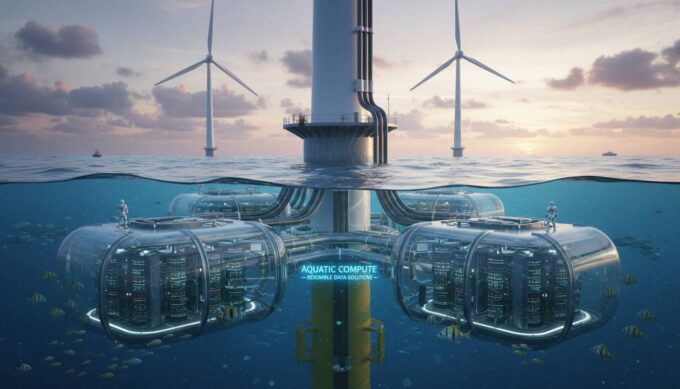
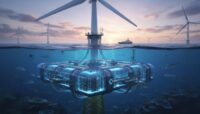
Under this model, data center modules would sit on the seafloor near wind turbine foundations. Power from the turbines would go directly to the data center units without long transmission distances. This proximity would reduce energy losses associated with sending electricity from offshore sites to onshore facilities. The modular design would allow for scalable deployment, with additional units added as demand grows.
Several technical challenges must be addressed. Equipment must withstand saltwater corrosion and immense pressure at ocean depths. Maintenance procedures must account for difficult access to underwater facilities. Data connectivity requires robust submarine cable infrastructure. However, advances in underwater robotics and sealed computing hardware are making these challenges increasingly tractable.
Comparison to Existing Underwater Data Center Projects
Microsoft’s Project Natick remains the most prominent experiment with underwater data centers. The company deployed a prototype off the coast of Scotland in 2018, keeping it submerged for nearly two years. Results were encouraging: the underwater unit experienced only eight failures compared to a predicted 90 for an equivalent land-based installation. The consistent temperature and nitrogen-filled environment appeared to improve reliability.
The key difference between previous initiatives and this startup’s proposal lies in integration with offshore wind infrastructure. Earlier projects operated as standalone installations with their own power and connectivity needs. The new approach would leverage existing offshore wind farm development, potentially reducing capital costs and accelerating deployment.
Other companies have explored similar concepts. Subsea Europe Services has promoted seabed data centers, while various startups have proposed floating platforms. However, positioning data centers beneath operating wind farms represents a novel variation, potentially offering advantages in regulatory approval and infrastructure sharing.
Environmental and Economic Implications
Environmental benefits extend beyond reduced cooling energy consumption. Offshore wind farms occupy significant marine areas, and utilizing the subsurface space for data centers could maximize return on that spatial investment. Proximity to renewable generation also addresses virtual curtailment—situations where renewable energy must be reduced due to transmission constraints or grid demand limitations.
From an economic standpoint, the colocation model could reduce several costs. Land acquisition costs are eliminated by using space already designated for energy production. Grid connection expenses may be reduced by avoiding long transmission runs. The consistent underwater temperatures could lower cooling-related energy costs significantly.
However, capital costs for underwater data centers remain substantial. Specialized pressure-resistant housings, underwater maintenance robotics, and submarine connectivity infrastructure require significant investment. The total cost of ownership must be analyzed against traditional onshore alternatives, particularly as construction methods and renewable energy costs continue to evolve.
Industry Reception and Challenges
Industry analysts have offered mixed responses. Proponents highlight potential for sustainable operations and reduced land conflicts. Critics point to logistical complexity of maintenance and relatively untested nature of large-scale deployments. Regulatory frameworks for such installations remain underdeveloped in most jurisdictions, creating uncertainty for potential investors.
The marine environment presents particular regulatory challenges. Offshore wind farms operate under environmental permits that may not account for data center infrastructure beneath them. Seabed rights, marine navigation, and environmental impact assessments would need coordination across multiple agencies. Developing clear regulatory pathways will be essential for commercial viability.
Connectivity represents another practical consideration. Data centers require high-bandwidth, low-latency connections to end users. While submarine fiber optic cables are common, establishing dedicated connections for offshore data centers would require additional infrastructure investment. Latency implications for certain applications—particularly those requiring real-time processing—must also be evaluated.
Future Outlook and Development Timeline
If the startup demonstrates technical and economic viability, the approach could contribute to sustainable data center growth. The combination of renewable energy proximity, natural cooling, and land conservation aligns with broader industry trends toward environmental responsibility. Several major technology companies have expressed interest in exploring alternative data center locations as they work toward carbon neutrality commitments.
Development timelines for such projects typically involve extended planning phases, regulatory approvals, and prototype testing before commercial deployment. Operational demonstrations could emerge within three to five years, with broader adoption following if initial results prove promising. However, the timeline depends heavily on technological development, regulatory progress, and market demand.
The concept also raises questions about the future of hybrid energy and infrastructure systems. As offshore wind development expands globally, opportunities for co-locating other marine industries—from aquaculture to hydrogen production—may similarly emerge. The underwater data center proposal represents one example of how traditional sector boundaries are increasingly blurring.
Conclusion
The startup’s proposal to locate data centers beneath offshore wind farms offers an innovative approach to addressing digital economy infrastructure demands. By combining renewable energy generation with digital processing in close proximity, the model offers potential benefits including reduced transmission losses, natural cooling, and more efficient land use. While significant technical and regulatory challenges remain, the concept reflects broader industry trends toward creative solutions for sustainable computing.
As data center operators face mounting pressure to reduce environmental impacts while meeting growing computational demands, unconventional approaches like underwater installations may play an increasingly important role. The success of this initiative will depend on demonstrating technical feasibility, achieving acceptable economics, and navigating regulatory requirements. Regardless of the outcome, the concept highlights continued innovation at the intersection of energy and technology sectors.
Frequently Asked Questions
What are the main advantages of placing data centers underwater?
Underwater data centers benefit from natural cooling, reduced land requirements, protection from environmental hazards, and proximity to offshore renewable energy sources. The stable underwater environment can also improve hardware reliability compared to traditional data centers.
How do underwater data centers handle maintenance?
Maintenance typically requires specialized underwater robotics and remotely operated vehicles. Some designs allow modular units to be retrieved to the surface for servicing, while others are designed for extended autonomous operation with minimal intervention.
Are underwater data centers environmentally friendly?
They can be more environmentally friendly due to reduced cooling energy consumption, elimination of land use impacts, and proximity to renewable energy sources. However, manufacturing and deploying specialized underwater infrastructure do have environmental footprints that must be considered.
What happens during severe weather?
Deepwater installations are largely unaffected by surface weather conditions. Floating or nearshore designs must account for storm surge, wave action, and other marine conditions. Microsoft’s Project Natick demonstrated resilience during its deployment.
How does this compare to Microsoft’s underwater data center project?
Project Natick was a research initiative demonstrating technical feasibility. The new startup’s proposal differs by integrating with offshore wind farm infrastructure, which could provide direct access to renewable power and reduce deployment costs through infrastructure sharing.
When might we see commercial underwater data centers?
Initial operational demonstrations could emerge within three to five years, with broader deployment potentially following in the latter half of the decade if early projects succeed. However, significant regulatory and technical hurdles remain.






Leave a comment