

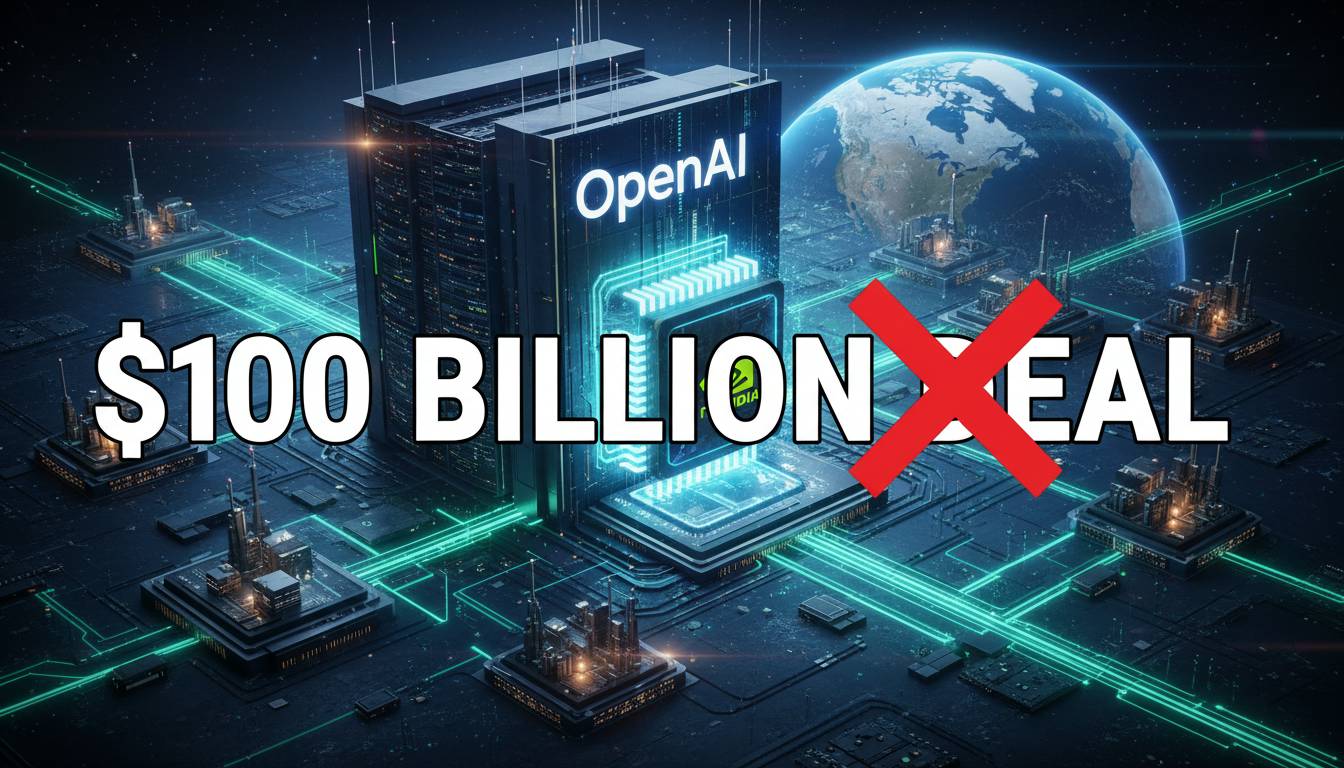
The AI industry has been buzzing with speculation about a potential partnership between OpenAI and Nvidia, with rumors suggesting a deal worth up to $100 billion. However, despite the excitement around AI investments and the close business relationship between the two companies, a full-scale acquisition or major strategic investment of that magnitude looks increasingly unlikely. Regulatory hurdles, competitive dynamics, and strategic considerations all stand in the way. Here’s why the tech world’s most talked-about potential partnership probably isn’t happening—and what the future holds for both companies.
Understanding the OpenAI-Nvidia Relationship
OpenAI and Nvidia have built an intertwined partnership over the past several years that powers much of the current AI boom. Nvidia’s GPUs, particularly the H100 and newer Blackwell architecture chips, have become the standard for training large language models. OpenAI has relied heavily on Nvidia’s hardware to power ChatGPT and develop advanced AI systems. The relationship is mutually beneficial: Nvidia gains a prestigious flagship customer while OpenAI gets priority access to scarce computing resources.
The partnership goes beyond simple customer-supplier dynamics. Nvidia’s CEO Jensen Huang has spoken publicly about the importance of OpenAI’s work, and OpenAI has credited Nvidia’s technology as essential to its achievements. This close collaboration has led many observers to speculate about an even deeper relationship, including the rumored $100 billion investment or acquisition. But the current arrangement works well for both sides without the complexity of a major equity transaction.
Regulatory Obstacles Make a Deal Extremely Difficult
Any significant acquisition or investment between OpenAI and Nvidia would face intense regulatory scrutiny. The FTC has been increasingly aggressive about overseeing tech deals, especially those involving AI companies. In recent years, the agency has blocked or closely examined acquisitions by major tech companies, signaling that a deal of this magnitude would trigger a lengthy and uncertain review process.
The regulatory environment has become particularly tough for deals involving AI infrastructure. Lawmakers and regulators have expressed concern about concentration in the AI chip market, where Nvidia already holds roughly 80% market share for data center AI chips. A deeper relationship between the two companies would likely raise antitrust concerns about market control and competitive barriers. CFIUS would also probably examine any deal involving Nvidia’s advanced chip technology and its potential implications for national security. These regulatory challenges create substantial obstacles that neither company would want to navigate.
Strategic Misalignment and Competing Interests
The fundamental business strategies of OpenAI and Nvidia make a comprehensive partnership complicated. OpenAI has positioned itself as an independent AI research organization with a mission to ensure artificial general intelligence benefits humanity. While the company has accepted significant investment from Microsoft, it has maintained operational independence and continues to pursue partnerships across the technology ecosystem. A deeper entanglement with Nvidia could compromise this perceived independence and create conflicts with OpenAI’s other partners and customers.
Nvidia, on the other hand, operates as a hardware company serving the entire AI industry, not just a single customer. The company supplies AI chips to virtually every major tech company, including Google, Microsoft, Amazon, Meta, and numerous startups. Prioritizing OpenAI through a major equity investment could alienate these other customers who compete with OpenAI in various AI applications. Maintaining neutrality while supplying the entire market has been central to Nvidia’s strategy and success, and an exclusive partnership would undermine that approach.
Financial Considerations and Valuation Complexities
The $100 billion valuation figure presents significant challenges for any potential transaction. Determining a fair price for such a deal would require navigating unprecedented territory in AI company valuations. OpenAI’s value has skyrocketed following ChatGPT’s success, with some estimates placing the company above $80 billion. However, traditional valuation metrics become difficult to apply to companies whose primary assets are intellectual property, talent, and future potential rather than proven revenue streams.
Nvidia’s financial position also complicates a major deal. While Nvidia has experienced tremendous revenue growth, with data center sales exceeding $18 billion in recent quarters, allocating such a massive amount of capital to a single customer would represent an extraordinary commitment. Investors would likely question such a strategic shift, and Nvidia’s stock could suffer from the perceived risk. Furthermore, the integration challenges and operational complexities of combining or deeply partnering two companies of this scale would distract from their respective core missions.
The Microsoft Factor
Microsoft’s existing $13 billion investment in OpenAI adds another layer of complexity to any potential Nvidia deal. The software giant has secured exclusive access to OpenAI’s technology for its Azure cloud platform and has integrated OpenAI’s models throughout its product suite. This partnership gives Microsoft significant influence over OpenAI’s direction and strategic decisions. Any major deal with Nvidia would require Microsoft’s approval and could potentially violate existing agreements or create conflicts of interest.
The tri-party relationship between OpenAI, Microsoft, and Nvidia already functions effectively without requiring equity ties. Microsoft provides the cloud infrastructure and capital, OpenAI provides the AI technology, and Nvidia provides the essential hardware. This triangular arrangement lets each company focus on its strengths while maintaining independence in other business areas. Disrupting this balance through a major new investment would likely create friction and potentially harm the existing productive relationships.
Market Dynamics and Competitive Pressures
The AI chip market is experiencing unprecedented demand, and Nvidia has emerged as the dominant player due to its technological lead and manufacturing partnerships. However, this dominance has attracted competition from multiple directions. AMD has invested heavily in AI chips and poses an increasing threat to Nvidia’s market share. Intel is developing AI accelerators, and numerous startups are attempting to enter the market. Additionally, major cloud companies including Google, Amazon, and Microsoft are developing their own custom AI chips to reduce reliance on Nvidia.
These competitive dynamics make it strategically important for Nvidia to maintain relationships across the entire AI ecosystem rather than becoming too closely aligned with any single customer. OpenAI, meanwhile, has incentives to diversify its hardware suppliers to ensure reliable access to computing resources and negotiate better terms. An exclusive partnership would work against both companies’ long-term interests in a competitive market that continues to evolve rapidly.
What the Future Holds
Despite the reasons why a $100 billion deal is unlikely, the relationship between OpenAI and Nvidia will continue to evolve in ways that benefit both companies. Nvidia will remain OpenAI’s primary supplier of advanced AI chips, and OpenAI will continue to be an important reference customer for Nvidia’s newest technology releases. The companies may announce additional collaborative efforts around AI research, reference architectures, or industry standards that strengthen their partnership without requiring equity investment.
The broader AI industry will likely see increased consolidation and partnership activity, but transactions will probably involve smaller companies or focus on specific technology areas rather than mega-deals between established leaders. Regulatory attention on AI investments will continue to increase, making large-scale transactions between major players more difficult to execute. Both OpenAI and Nvidia seem to recognize that their current arrangement serves their interests better than a deeper formal relationship.
Conclusion
The rumored $100 billion OpenAI-Nvidia deal faces numerous obstacles that make its realization highly improbable. Regulatory scrutiny, strategic misalignments, competitive dynamics, financial complexities, and the existing Microsoft partnership all contribute to keeping the two companies at arm’s length despite their close operational relationship. Rather than a transformative acquisition or investment, the future will likely see continued collaboration within the existing framework that allows both companies to maintain independence while benefiting from each other’s expertise and technology. The AI industry’s rapid growth will continue to create opportunities for partnership, but the specific circumstances surrounding OpenAI and Nvidia make a major deal between them unlikely in the foreseeable future.
Frequently Asked Questions
Is there actually a $100 billion deal between OpenAI and Nvidia?
No, there is no confirmed $100 billion deal between OpenAI and Nvidia. The speculation stems from rumors and market chatter about a potential deeper partnership, but no official announcement or transaction has been made public. The two companies maintain a standard customer-supplier relationship.
Why do people think Nvidia might invest in OpenAI?
Speculation arises because Nvidia’s chips are essential to OpenAI’s operations, and the two companies have a close working relationship. Industry observers often look for deeper partnerships when companies have such interdependent relationships, leading to rumors about investments or acquisitions.
What would prevent a deal from happening?
Several factors prevent a major deal: regulatory scrutiny from the FTC and other agencies, antitrust concerns about market concentration, the existing Microsoft partnership with OpenAI, competitive dynamics in the AI chip market, and strategic interests in maintaining independence.
Will OpenAI and Nvidia work together in the future?
Yes, OpenAI and Nvidia will continue working together in their current capacity. Nvidia will likely remain OpenAI’s primary chip supplier, and the companies may announce collaborative projects or technology initiatives that strengthen their partnership without involving equity investments.
Does Microsoft have a say in OpenAI’s partnerships?
Microsoft has invested $13 billion in OpenAI and has exclusive licensing rights to OpenAI’s technology. While Microsoft doesn’t control OpenAI’s every decision, any major partnership would likely require consideration of Microsoft’s interests and existing agreements.
Are there other potential buyers for OpenAI?
Various technology companies have the financial capacity to invest in OpenAI, but the company’s existing Microsoft partnership, regulatory environment, and independent mission make acquisitions unlikely. OpenAI has raised funding at high valuations from multiple investors, suggesting it prefers to maintain independence while accepting strategic investments.















Leave a comment