

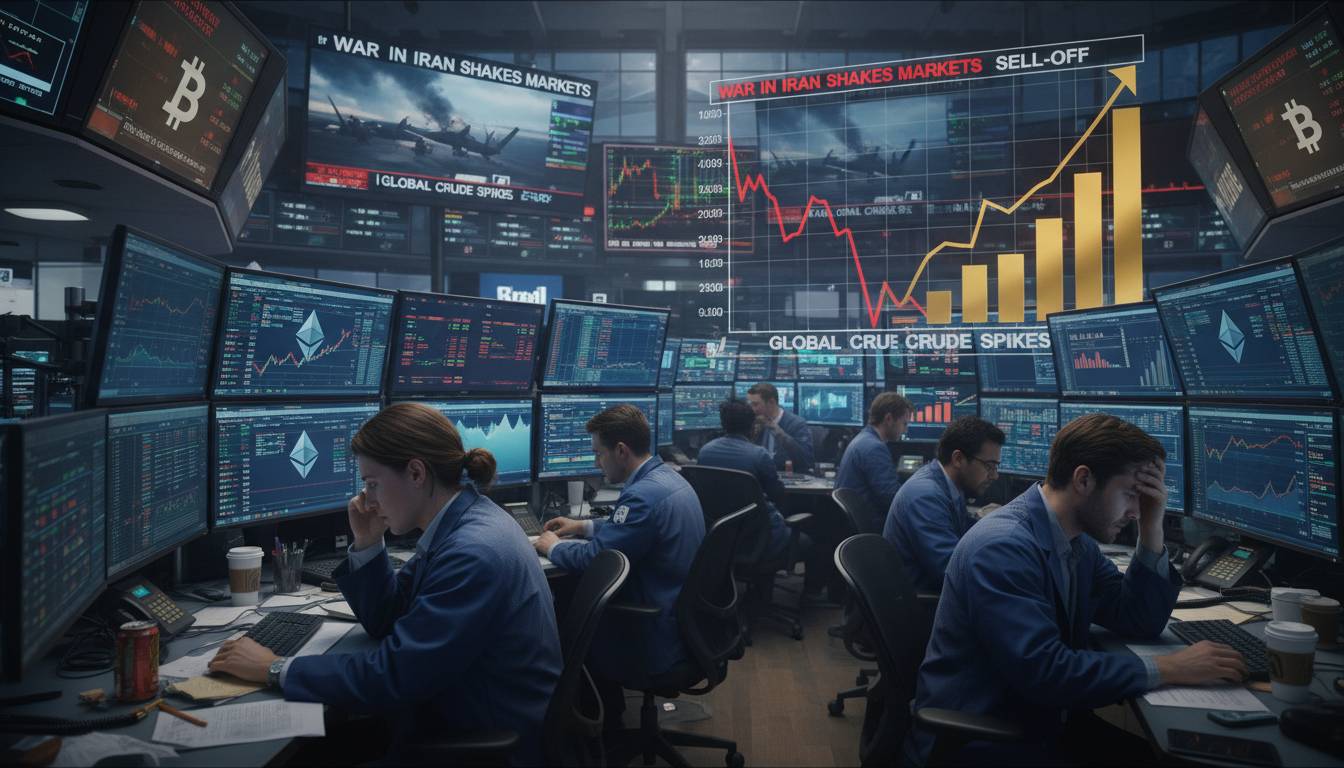
The escalating tensions in the Middle East have rippled through global financial markets, and cryptocurrency is no exception. As geopolitical concerns mount over the situation involving Iran, investors are watching closely to see how digital assets respond to the uncertainty. The intersection of traditional geopolitical risk and the emerging crypto market creates a complicated landscape for traders and institutions navigating this uncertain terrain.
The cryptocurrency market has always been volatile, and it has a track record of reacting to major geopolitical events in distinctive ways. During periods of international tension, investors often look for safe-haven assets, and digital currencies have increasingly become part of that conversation. However, the current situation presents unique challenges that are testing the resilience and adaptability of the crypto ecosystem in ways we haven’t seen before.
Current Market Response to Middle East Tensions
The cryptocurrency market has shown notable sensitivity to developments in the Middle East. Bitcoin, the largest cryptocurrency by market capitalization, has experienced measurable price fluctuations correlated with news cycles surrounding Iran-related events. Trading volumes have increased substantially as traders respond to breaking news and adjust their portfolios accordingly.
According to analysts at major crypto data firms, trading volumes across major exchanges surged during periods of heightened tension. This increased activity reflects the broader market’s attempt to price in geopolitical risk, with some investors viewing cryptocurrency as a potential hedge while others reduce exposure to risk assets during uncertain periods.
The correlation between Middle East news and crypto price movements has become more pronounced as institutional investors have entered the space. These larger participants bring more sophisticated risk management approaches and tend to react to geopolitical events in ways similar to traditional financial markets. The result is a market that increasingly mirrors the sentiment seen in equity and commodity markets during times of international tension.
Impact on Specific Cryptocurrencies
While Bitcoin often serves as the primary barometer for crypto market sentiment, other digital assets have shown varying degrees of sensitivity to Iran-related developments. Ethereum, the second-largest cryptocurrency, has experienced its own price dynamics tied to both general market sentiment and network-specific developments. The relationship between geopolitical events and altcoin performance remains complex, with factors beyond headline news influencing individual token prices.
Stablecoins, designed to maintain a fixed value, have seen increased trading volumes as some investors seek to move capital out of volatile positions while remaining in the crypto ecosystem. This flight to stability reflects a classic risk management response during uncertain times, though it also highlights the ongoing debate about whether stablecoins truly serve as safe-haven assets during geopolitical crises.
Iranian-focused cryptocurrencies and those with ties to regions experiencing sanctions have faced additional pressures. The regulatory environment surrounding transactions involving Iranian entities has created operational challenges for certain crypto projects and exchanges, adding another layer of complexity to the market dynamics.
Investor Sentiment and Behavioral Shifts
The current geopolitical situation has prompted significant shifts in investor behavior within the cryptocurrency space. Retail investors, who make up a substantial portion of crypto market participants, have shown mixed responses to the tensions. Some have increased their crypto holdings as a hedge against potential currency devaluation and economic instability, while others have reduced exposure to mitigate potential losses.
Institutional investors, who have become increasingly active in cryptocurrency markets over the past several years, have approached the situation with more structured risk management frameworks. Many institutional participants have established protocols for adjusting portfolio allocations during periods of elevated geopolitical risk, and the current situation has tested these frameworks in real-time.
The sentiment among crypto-native investors appears divided between those who view digital assets as increasingly relevant during times of geopolitical uncertainty and those who remain skeptical of crypto’s safe-haven credentials. This division reflects the ongoing maturation of the market as participants debate the fundamental role cryptocurrencies should play in diversified portfolios during global crises.
Expert Analysis and Market Predictions
Financial analysts and cryptocurrency experts have offered varied perspectives on how the situation involving Iran might continue to affect digital asset markets. Several prominent analysts have noted that the correlation between geopolitical events and crypto prices has strengthened as the market has grown and institutional participation has increased.
“The cryptocurrency market is increasingly behaving like a traditional risk asset during geopolitical crises,” noted a senior market analyst at a major cryptocurrency research firm. “While some investors still view Bitcoin as digital gold, the evidence suggests that during acute stress periods, crypto and other risk assets tend to move together.”
Other experts have emphasized the importance of distinguishing between short-term market reactions and longer-term structural changes. The fundamental adoption trajectory of cryptocurrency, these analysts suggest, remains driven by factors including regulatory developments, technological advancement, and institutional integration rather than geopolitical events alone.
Market watchers have also pointed to the role of information flow in amplifying price movements. Social media and 24-hour news cycles mean that geopolitical developments can be incorporated into market pricing more rapidly than in previous eras, potentially leading to more pronounced short-term volatility.
Historical Context and Precedent
Examining how cryptocurrency markets have responded to previous geopolitical events provides valuable perspective on current dynamics. During major international crises in recent years, including conflicts in Ukraine and tensions in various regions, cryptocurrency markets have generally exhibited short-term negative correlations with risk assets, followed by varying recovery patterns.
The 2022 conflict in Ukraine presented an early test case for how crypto markets would respond to large-scale European conflict. Initially, prices fell sharply alongside other risk assets, but cryptocurrency markets subsequently demonstrated remarkable resilience and even attracted increased attention as alternative payment mechanisms during the crisis.
The current situation differs in important respects, including the specific geopolitical actors involved and the current stage of cryptocurrency market development. These differences make direct historical comparisons imperfect while still providing useful context for understanding market behavior.
Regulatory Implications and Considerations
The intersection of geopolitical tension and cryptocurrency regulation has emerged as another important dimension of the current situation. Regulatory bodies in the United States and other major markets have maintained close oversight of how cryptocurrency markets function during periods of elevated risk, and enforcement actions have continued despite the geopolitical backdrop.
Sanctions-related considerations have also come to the fore, as regulators and exchanges navigate the complex task of ensuring compliance with international sanctions while maintaining open access to cryptocurrency markets. These challenges are not new but have gained additional prominence as geopolitical tensions have intensified.
Looking ahead, regulatory developments will likely play an important role in shaping how cryptocurrency markets respond to ongoing and future geopolitical events. Clearer regulatory frameworks could provide greater stability during crisis periods, while uncertainty about regulatory outcomes continues to add another layer of risk for market participants.
Future Outlook and Potential Scenarios
Market participants are carefully considering various scenarios regarding how the situation might evolve and what implications each trajectory might have for cryptocurrency markets. The range of outcomes spans from continued elevated volatility in the near term to potential stabilization if geopolitical tensions ease.
Several factors will influence how the crypto market ultimately responds, including the duration and intensity of the current tensions, broader economic conditions, and the evolution of regulatory frameworks. The interplay of these factors makes precise prediction challenging while also highlighting the importance of robust risk management approaches.
For investors considering their positioning, diversification across asset classes remains a commonly cited strategy. The role of cryptocurrency within a diversified portfolio continues to be debated, but the current situation has reinforced the importance of understanding how digital assets may behave during periods of global uncertainty.
Conclusion
The intersection of geopolitical tension involving Iran and cryptocurrency markets represents a significant development in the ongoing maturation of digital assets as financial instruments. While short-term market reactions continue to show correlation with geopolitical news flow, the longer-term trajectory of cryptocurrency adoption and integration into global financial systems depends on a broader set of factors.
Investors navigating this environment face the challenge of balancing potential opportunities against inherent risks. The lessons learned during current and future periods of tension will likely shape how market participants approach cryptocurrency investments during times of international uncertainty. As the situation continues to evolve, staying informed and maintaining disciplined risk management approaches remains essential for all market participants.
Frequently Asked Questions
How does geopolitical conflict typically affect cryptocurrency prices?
Geopolitical conflicts often cause initial price declines in cryptocurrency markets similar to other risk assets. Investors may sell positions to raise liquidity or reduce exposure during uncertain times. However, some investors view certain cryptocurrencies as potential hedges against currency devaluation or capital controls, which can create buying pressure during extended conflicts.
Is Bitcoin a safe-haven asset during wars?
The evidence remains mixed. While some investors treat Bitcoin as digital gold, during acute crisis periods, Bitcoin has frequently moved in tandem with other risk assets rather than serving as a reliable safe haven. Its safe-haven credentials continue to be debated among financial professionals.
Which cryptocurrencies are most affected by Middle East tensions?
Bitcoin and Ethereum typically show the strongest correlation to geopolitical news due to their market dominance and institutional involvement. Regional cryptocurrencies or tokens associated with sanctioned entities may face additional independent pressures beyond general market sentiment.
Should I buy or sell crypto during times of geopolitical tension?
Investment decisions depend on individual risk tolerance and investment timeframes. Short-term volatility during geopolitical crises can create opportunities for experienced traders, while long-term investors may benefit from Dollar-Cost Averaging strategies that smooth out price fluctuations over time.
How do sanctions affect cryptocurrency transactions involving Iran?
Sanctions create significant regulatory and operational challenges for transactions involving Iranian entities. Exchanges and cryptocurrency services must implement compliance measures, and certain tokens may face delisting or trading restrictions in jurisdictions enforcing sanctions.
What is the long-term outlook for crypto amid ongoing geopolitical uncertainty?
The long-term outlook depends on broader factors including regulatory clarity, technological development, and institutional adoption. While geopolitical uncertainty creates short-term volatility, fundamental growth drivers for cryptocurrency continue to evolve independently of geopolitical events.














Leave a comment