

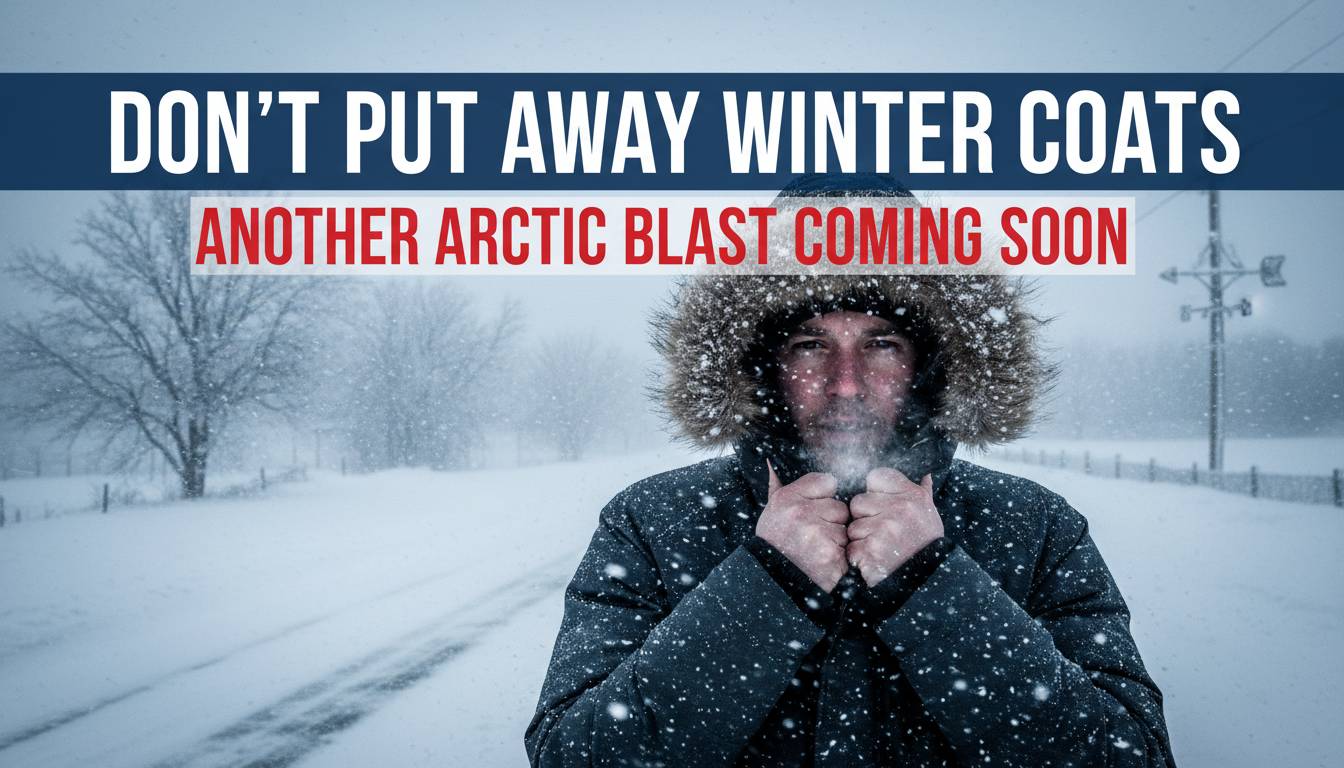
Meteorologists are warning much of the United States to keep winter gear within reach as another arctic blast heads our way this week. The National Weather Service has issued cold weather advisories for multiple states, warning that temperatures will drop well below seasonal norms and stay there for days. This latest cold snap follows a brief period of milder weather that had many wondering if winter had finally loosened its grip.
What to Expect From the Incoming Arctic Blast
The arctic blast developing over the northern polar regions will move southward beginning midweek, bringing dramatically colder temperatures to a vast swath of the nation. The cold front will initially impact the northern Plains and Midwest before spreading eastward to affect the Northeast and potentially reaching as far south as the Gulf Coast.
Temperatures in the northern tier of states will drop 15 to 30 degrees below average, with overnight lows in some areas falling to dangerous levels. Cities like Minneapolis, Chicago, and Detroit could see temperatures dip into the single digits or below zero Fahrenheit, while wind chill values could make it feel even colder. New England should prepare for bitter cold, with Boston and surrounding areas expecting highs struggling to reach the mid-teens.
“This is a significant cold outbreak that will affect a large portion of the country,” said one NWS meteorologist. “Don’t be fooled by the mild weather we’ve had recently. This arctic blast is coming and it will be felt strongly.”
The timing arrives just as many regions were beginning to see early signs of spring. The dramatic shift shows that winter weather in the United States can be unpredictable.
Timeline and Duration of the Cold Snap
Weather models suggest the arctic blast will begin its southward movement on Wednesday, with the coldest air arriving in northern states by Thursday morning. The cold front is expected to push through the Midwest and into the Northeast by Friday, bringing a sharp temperature drop of 20 to 40 degrees in less than 24 hours in some locations.
The cold spell will last approximately five to seven days, though forecast models differ on exactly how long the bitter cold will persist. Some projections indicate temperatures may begin to moderate by the following week, but residents should prepare for an extended period of below-normal temperatures.
“Models are fairly consistent showing this cold pattern holding through at least the weekend and potentially into early next week,” noted one forecaster at the Weather Prediction Center. “There’s a chance the cold could linger longer, so people should plan for an extended cold period rather than hoping for a quick return to mild weather.”
The prolonged nature means the cumulative impact could be significant. Extended periods of extreme cold put additional strain on energy grids, increase the risk of pipe bursts in poorly insulated homes, and create dangerous conditions for anyone spending time outdoors without proper protection.
Regions Most Affected by the Coming Cold
While much of the country will experience some degree of temperature reduction, certain regions will bear the brunt of this arctic blast. The Upper Midwest, including Minnesota, Wisconsin, Michigan, and parts of North Dakota and South Dakota, will see the most severe cold. In these areas, actual temperatures could fall 20 to 35 degrees below zero Fahrenheit, with wind chill values potentially reaching 40 to 50 below zero in exposed areas.
The Great Lakes region will contend with bitter cold and lake-effect snow in the wake of the arctic front. Areas downwind of the Great Lakes, particularly in western Michigan, northern Indiana, northwestern Ohio, and western New York, could see significant snow accumulations as moisture from the relatively warm lake waters interacts with the extremely cold air mass.
The Northeast will experience a sharp transition from recent mild weather to winter’s return. New York, Pennsylvania, and New England all face several days with high temperatures failing to reach the 20-degree mark, combined with gusty winds that will make outdoor conditions feel even more brutal.
Even traditionally milder southern states will feel the impact. Gulf Coast states, including Texas, Louisiana, Mississippi, Alabama, and Florida, will see temperatures drop to near or below freezing in some areas. While such cold is not unusual for these regions, the rapid transition from warm weather to cold snap could catch some residents off guard and increase the risk of cold-related health issues.
Safety Precautions and Preparation Tips
Health officials urge residents in affected areas to take precautions against the cold. The elderly, young children, and individuals with chronic health conditions face increased risk during extreme cold events and should limit outdoor exposure during the coldest periods.
“Frostbite can occur in as little as 10 to 15 minutes when wind chill values drop below zero,” warned a CDC representative. “Anyone who must go outside should dress in multiple layers, cover all exposed skin, and limit the time spent outdoors.”
Homeowners should protect their property from the cold. Insulating exposed pipes, allowing faucets to drip slightly to prevent freezing, and ensuring heating systems are functioning properly are essential precautions. Those who use space heaters should keep them away from flammable materials and never leave them unattended.
Utility companies ask customers to conserve energy during peak cold periods to help prevent grid overloads that could lead to widespread power outages. Simple measures such as lowering thermostats by a few degrees, unplugging unused electronics, and avoiding the use of major appliances during peak hours can help ensure the grid remains stable.
For those who must travel, the National Highway Traffic Safety Administration advises checking vehicle antifreeze levels, ensuring tires are properly inflated, and keeping emergency kits in vehicles including blankets, flashlights, and non-perishable food items. Travelers should also inform others of their expected arrival time and check road conditions before departing.
Impact on Energy Systems and Infrastructure
The coming cold blast will place significant stress on the nation’s energy infrastructure as demand for heating spikes dramatically. Natural gas demand is expected to reach near-record levels in many regions, potentially causing supply constraints and price volatility in energy markets.
Electric utilities are preparing for increased demand as households crank up electric heaters and other heating devices. Some grid operators have issued appeals for voluntary conservation, asking customers to reduce electricity usage during morning and evening hours when demand typically peaks.
The extreme cold also poses challenges for transportation infrastructure. Road salt becomes less effective at very low temperatures, and pavement can become dangerously icy even when precipitation is not occurring simply due to frozen moisture on road surfaces. Air travel may also be affected as deicing operations take longer in extremely cold conditions and some aircraft experience mechanical issues related to the cold.
Water utilities are particularly concerned about pipe failures during extended cold spells. When temperatures remain below freezing for multiple days, even well-insulated pipes can freeze and burst, leading to costly repairs and water service interruptions. Many utilities recommend that customers know how to locate their water shut-off valve in case of an emergency.
Looking Ahead: What the Forecast Shows
While this arctic blast is significant, meteorologists say it doesn’t necessarily indicate a pattern change for the remainder of winter. The late February and early March period often features such back-and-forth weather patterns as the atmosphere transitions from winter to spring.
Long-range forecast models suggest temperatures may return to near or above normal levels once this cold spell passes, though additional cold outbreaks remain possible through the end of meteorological winter, which concludes at the end of February.
“The arrival of an arctic blast in late February is not unusual and does not necessarily predict what March will bring,” explained a climate analyst at NOAA. “We’ll need to watch subsequent weather systems to determine the overall pattern for early spring.”
For now, the immediate focus remains on preparing for the cold air headed toward the country. Residents across multiple regions should stay informed about changing forecast conditions, heed any warnings or advisories issued by local weather services, and take appropriate precautions to stay safe and warm during this significant cold event.
The message from meteorologists and emergency management officials is clear: despite what may have been a relatively mild winter in some areas, now is not the time to put away those winter coats. Another arctic blast is coming, and being prepared could make all the difference.
Conclusion
The imminent arctic blast set to sweep across much of the United States serves as a reminder that winter weather can extend well into what many consider spring preparation season. With temperatures projected to fall significantly below normal across a broad geographic area, from the northern Plains through the Midwest and into the Northeast, millions of Americans will need to reacquaint themselves with bitter cold conditions.
The key to staying safe during this weather event lies in preparation and awareness. Stocking up on necessary supplies, protecting homes and vehicles from the cold, and limiting outdoor exposure during the most frigid periods will go a long way toward ensuring this cold snap passes without major incident. Staying informed through local weather forecasts and heeding any warnings from authorities will help residents navigate this extended period of cold weather.
While the cold will eventually moderate and warmer days are surely ahead, for now, the wise course of action is clear: don’t put away those winter coats just yet. Another arctic blast is coming soon, and being ready for it is essential.
Frequently Asked Questions
How long will this arctic blast last?
The current forecast indicates this cold spell will last approximately five to seven days, with the coldest conditions expected from Thursday through the weekend. Some models suggest the bitter cold could persist into early next week, though there remains some uncertainty about the exact duration.
Which states will be most affected by the cold?
The hardest-hit areas will include the Upper Midwest (Minnesota, Wisconsin, Michigan), the Great Lakes region, and the Northeast (New York, Pennsylvania, New England). Even the Gulf Coast states will experience significantly colder than normal temperatures.
How cold will temperatures get?
In the northern states, actual temperatures could drop to 20-35 degrees below zero Fahrenheit, with wind chill values potentially reaching 40-50 below zero. The Northeast can expect highs in the single digits to low teens Fahrenheit, while southern states may see temperatures near or below freezing.
What safety precautions should I take during this cold snap?
Dress in warm layers, cover all exposed skin, limit outdoor time, keep emergency supplies in your vehicle, protect pipes from freezing, and check on elderly or vulnerable neighbors. Ensure your heating system works properly and have an emergency plan in case of power outages.
Will this cold spell affect energy supplies?
Yes, energy demand is expected to spike significantly. Natural gas and electricity demand may reach near-record levels. Some utilities have requested voluntary conservation to prevent grid overloads and potential outages.
Is this type of late-February cold unusual?
While not extremely rare, significant arctic blasts in late February are less common as the season transitions toward spring. However, winter weather can persist into March, and additional cold outbreaks remain possible through the end of the winter season.














Leave a comment