

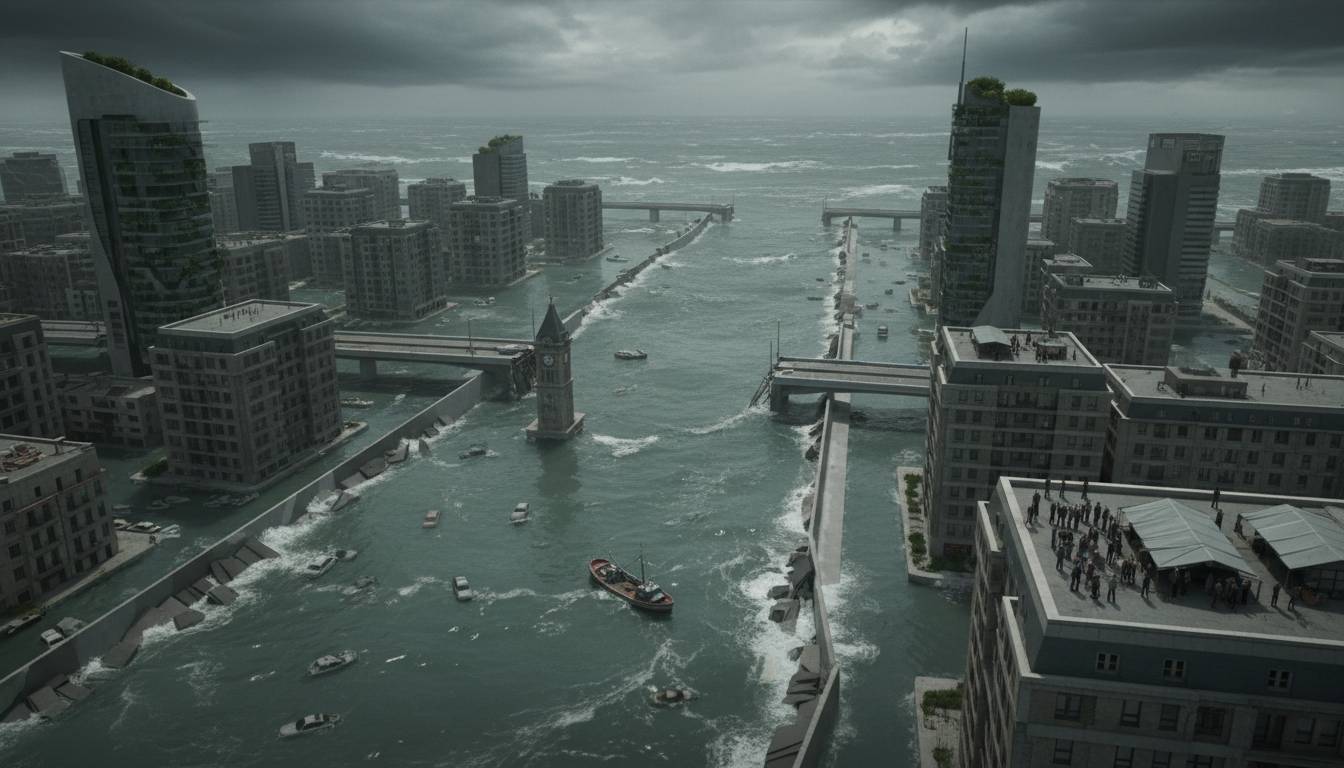
Rising seas pose an escalating threat to coastal communities across the United States and around the world. Recent scientific analyses suggest that previous projections may significantly underestimate the scale of potential inundation. Researchers emphasize that millions of people in low-lying regions face heightened risks from accelerating ice melt and thermal expansion, prompting calls for immediate adaptation measures and policy revisions. This article explores the latest findings, their implications for vulnerable populations, and the urgent need for coordinated response strategies.
The Science Behind Rising Sea Levels
Sea level rise occurs through two primary mechanisms: thermal expansion as ocean waters warm and retain more volume, and the melting of land-based ice sheets and glaciers. According to the National Oceanic and Atmospheric Administration, global mean sea level has risen approximately 8 to 9 inches since 1880, with the rate of increase accelerating in recent decades. This gradual but persistent rise threatens to transform coastlines, displace communities, and reshape ecosystems across the planet.
Climate scientists use sophisticated modeling techniques to project future sea levels, incorporating variables such as greenhouse gas emissions trajectories, ice sheet dynamics, and ocean temperature patterns. The Intergovernmental Panel on Climate Change provides comprehensive assessments that inform international policy discussions and adaptation planning.
Recent peer-reviewed research has examined how sensitive sea level projections are to various climate scenarios, highlighting the inherent uncertainties in forecasting ice sheet behavior. These studies underscore the importance of considering worst-case scenarios when planning infrastructure investments and coastal development strategies.
Coastal Communities Face Escalating Risks
The United States hosts numerous metropolitan areas and smaller communities situated in vulnerable low-lying zones. Major cities including Miami, New York, New Orleans, and Seattle confront varying degrees of exposure to coastal flooding and erosion. Smaller coastal towns and rural communities often lack the resources to implement extensive protective measures, leaving residents particularly susceptible to gradual sea level advances.
According to census data, millions of Americans reside in areas projected to experience regular tidal flooding within the coming decades. This includes communities along the Atlantic, Gulf, and Pacific coasts, as well as island territories such as Puerto Rico and the U.S. Virgin Islands. The demographic implications prove significant, as many affected areas host substantial populations of elderly residents and low-income households with limited capacity for relocation.
Property values in vulnerable coastal zones have historically reflected the amenities of waterfront living rather than long-term risk assessments. However, as flood events become more frequent and severe, insurance markets and real estate transactions increasingly incorporate climate risk considerations. Some mortgage lenders now require flood insurance beyond federally mandated coverage in designated zones.
Economic and Infrastructure Consequences
The economic stakes associated with sea level rise extend far beyond direct flood damages to encompass broader market disruptions and adaptation costs. The Congressional Budget Office has analyzed potential federal expenditures related to coastal resilience, projecting substantial increases in disaster assistance and infrastructure protection spending. These projections underscore the necessity of proactive investment in resilience measures versus reactive disaster response.
Critical infrastructure systems face particular vulnerability in coastal zones. Transportation networks including highways, bridges, and public transit systems crisscross low-lying areas, potentially suffering service disruptions from flooding. Power generation facilities and electrical grid components situated in flood-prone locations require protective upgrades or relocation. Healthcare facilities, schools, and emergency services must maintain operational continuity during extreme weather events.
The commercial implications also merit serious consideration. Ports and shipping facilities, essential components of national and global supply chains, often occupy coastal sites with limited elevation above sea level. Agricultural operations in coastal plains confront soil salinization as saltwater intrudes into freshwater aquifers. Tourism economies dependent on beach access and coastal aesthetics face potential degradation as shorelines shift.
Adaptation Strategies and Policy Responses
Communities across the nation have begun implementing diverse adaptation strategies tailored to local conditions and resources. Some municipalities have adopted zoning regulations restricting development in high-risk areas, while others invest in living shorelines and natural buffer systems. Structural approaches such as seawalls, levees, and flood gates provide protection in certain contexts, though they require substantial capital investment and ongoing maintenance.
Federal programs administered through FEMA provide flood insurance and disaster assistance, though critics argue these programs inadvertently encourage development in risky locations by socializing individual risk. The National Flood Insurance Program faces significant financial challenges, with debt exceeding established limits following major hurricane seasons.
State governments increasingly incorporate sea level rise projections into coastal management planning. Several states have established dedicated resilience authorities to coordinate adaptation efforts across agencies and jurisdictions. These entities work to integrate climate science into infrastructure design standards, emergency management protocols, and comprehensive planning processes.
International cooperation remains essential for addressing a phenomenon that transcends borders. The United States participates in multilateral climate frameworks and shares research through international scientific partnerships. Coastal nations collectively confront similar challenges, creating opportunities for technology transfer and shared learning regarding effective adaptation approaches.
The Path Forward: Urgency and Hope
While the challenges posed by rising seas demand serious attention and resources, they do not represent insurmountable obstacles. Scientific understanding continues to advance, improving the precision of projections and the effectiveness of adaptation measures. Technological innovations in materials science, water management, and renewable energy offer pathways to more resilient infrastructure systems.
Individual citizens can contribute to broader resilience efforts through informed decision-making regarding residential choices, emergency preparedness, and civic engagement. Community organizations play vital roles in amplifying local voices in planning processes and supporting neighbors during challenging circumstances. Business leaders increasingly recognize both the risks and opportunities associated with climate adaptation, driving private sector innovation.
The trajectory of sea level change depends fundamentally on the broader trajectory of global greenhouse gas emissions. Aggressive mitigation efforts to reduce carbon pollution offer the potential to limit long-term rise, though some increase remains inevitable due to historical emissions. This reality reinforces the importance of pursuing both mitigation and adaptation strategies in parallel, rather than treating them as mutually exclusive alternatives.
Frequently Asked Questions
How much have sea levels risen in recent decades?
Global mean sea level has risen approximately 8 to 9 inches since 1880, with the rate of increase accelerating significantly in recent decades. According to NOAA tide gauge and satellite measurements, current rates approach roughly one-eighth of an inch annually, with potential for further acceleration depending on ice sheet responses to warming temperatures.
Which areas in the United States face the greatest risk?
Multiple regions confront substantial exposure to sea level rise impacts. The Gulf Coast experiences particular vulnerability due to land subsidence combined with rising waters. The Atlantic seaboard faces increasing tidal flooding and hurricane storm surge risks. Pacific Northwest communities prepare for combined effects of sea level rise and changing precipitation patterns. Low-lying island communities confront potential existential threats from chronic inundation.
What does current research suggest about future sea level projections?
Scientific projections span wide ranges depending on emission scenarios and ice sheet behavior. Under moderate assumptions, seas may rise approximately 1 to 4 feet by 2100. However, some researchers emphasize that ice sheet instability could produce substantially higher outcomes. Uncertainty regarding ice sheet dynamics represents a significant factor in projection ranges.
How can communities prepare for rising sea levels?
Effective preparation combines multiple approaches tailored to local conditions. These include updating zoning and building codes to reflect current risk assessments, investing in protective infrastructure where cost-effective, restoring natural coastal ecosystems that buffer wave energy, and developing relocation plans for areas where protection proves impractical. Federal, state, and local governments coordinate these efforts through comprehensive resilience planning processes.
What role do greenhouse gas emissions play in sea level rise?
Burning fossil fuels and land use changes release greenhouse gases that trap heat in Earth’s atmosphere. This warming drives both thermal expansion of ocean waters and melting of land-based ice. Reducing emissions limits the severity of long-term rise, making mitigation an essential complement to adaptation efforts.
Are there success stories in coastal resilience?
Numerous communities have demonstrated effective adaptation approaches. The Netherlands has pioneered innovative water management systems while maintaining vibrant urban centers. New York City implemented extensive coastal protection following Hurricane Sandy, including neighborhood-scale barriers and parkland designed to flood temporarily. These examples provide models for other communities confronting similar challenges.













Leave a comment