

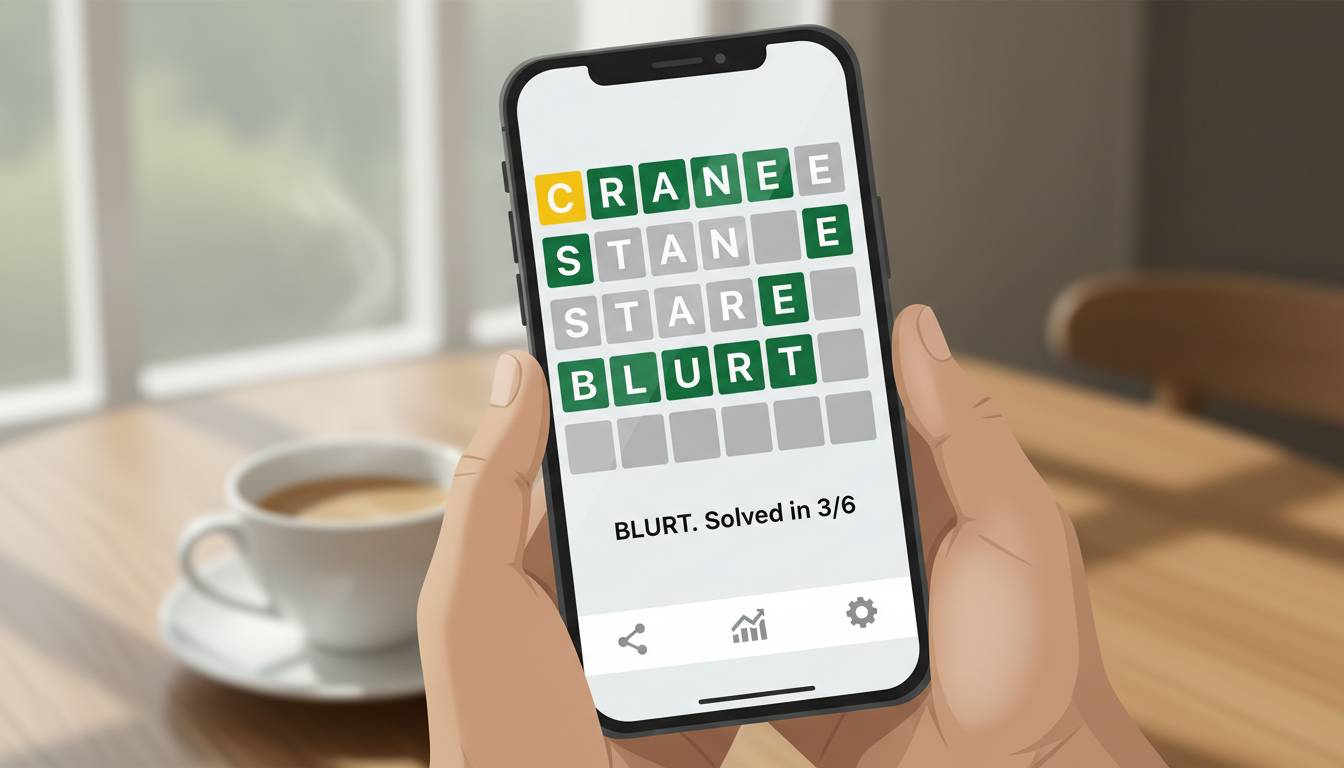
Wordle grabbed everyone’s attention in 2021 and still shows up in millions of Americans’ daily routines. What began as a simple browser game became something much bigger—daily conversations, heated strategy debates, and an entire internet ecosystem of puzzle enthusiasts sharing tips.
The New York Times bought Wordle in early 2022. Around 300,000 people play it every day in the US, and this huge community keeps refining their approaches. Watching these trends evolve tells us a lot about how puzzle lovers think through one of the most popular word games ever.
Finding the Best Starting Words
One of the biggest shifts in Wordle strategy has been figuring out which five-letter words give you the biggest advantage. Math nerds and dedicated players have run the numbers, and certain words keep popping up as winners.
The logic is straightforward: you want words with common vowels (A, E, I, O, U) and frequently used consonants (S, T, R, N). Words like “ADIEU,” “ERASE,” “STARE,” and “ROATE” cover a lot of ground quickly. They let you test multiple possibilities at once rather than wasting guesses on obscure letter combinations.
“The optimal starting word strategy centers on letter frequency analysis,” says Dr. James Morrison, a mathematics professor at Boston University who has studied puzzle game probabilities. “Players who prioritize words with multiple vowels and common consonants like S, T, R, and N tend to solve puzzles in fewer guesses on average.”
Data from Wordle tracking communities suggests players using strategic starting words solve puzzles in about 3.8 attempts on average, compared to 4.5 attempts for those picking words at random. That difference adds up when you’re playing daily.
The trend in 2024 involves picking starting words that account for potential answer patterns—not just maximizing letter coverage, but thinking about how your first guess might reveal information about double letters or common endings like “-ING” or “-ED.”
Letter Elimination Techniques
Beyond starting words, serious players have developed systematic approaches to eliminating possibilities based on Wordle’s color-coded feedback.
The “hard mode” feature forces you to use confirmed letter positions in later guesses. But many players go further, tracking letters across three categories: absent (gray), present but wrong position (yellow), and confirmed correct (green).
“I categorize all available letters after each guess,” explains Marcus Thompson, a Wordle enthusiast from Chicago who averages 3.2 guesses per puzzle. “This prevents the common mistake of guessing letters that have already been eliminated, which wastes valuable attempts.”
The latest elimination trend involves “probability clustering”—grouping potential answers by common patterns and choosing guesses that test entire clusters at once instead of focusing on single words.
Word Patterns and Frequency Analysis
Pattern recognition is where advanced Wordle play gets really interesting. Players who’ve gotten good at this develop an intuitive sense for common English word structures, frequent letter combinations, and typical vowel-consonant arrangements.
The Wordle answer list isn’t random—it follows specific patterns that attentive players learn to recognize. The combination “TH” shows up in roughly 3% of potential answers, making it way more likely than unusual pairs like “QX” or “JZ.”
“The pattern recognition skill transfers from general language experience, but players can accelerate their development by studying common word structures,” notes linguist Dr. Sarah Chen from UCLA’s English department. “Words with repeated letters appear much less frequently in the Wordle answer list than players might expect.”
Frequency analysis tools have become popular in the Wordle community. Several websites offer letter combination statistics and position-specific charts that help players make smarter guesses.
One pattern that’s influenced community thinking: double letters show up in about 25% of Wordle answers. That means three-quarters of puzzles feature five distinct letters—a useful thing to know when you’re eliminating possibilities.
Common Mistakes Players Make
As the Wordle community has matured, experienced players have pinpointed several mistakes that hurt performance.
The biggest one is skipping effective elimination. Some players treat Wordle like a guessing game where you try to “feel out” the answer, rather than systematically ruling out possibilities. Strategic guesses should focus on eliminating as many potential answers as possible.
Another common error is “tunnel vision”—getting fixated on what you think the answer might be and ignoring what the colored tiles are actually telling you. The feedback is objective, but people sometimes dismiss it because it contradicts their hunches.
Overthinking trips up plenty of players too. Strategic thinking helps, but too much analysis leads to paralysis or worse guesses. The best players combine thoughtful strategy with the willingness to just make a decision.
The “green-lock” mistake: confirming a letter is in the right spot and then accidentally moving it in your next guess. Hard mode prevents this mechanically, but even without hard mode, you should keep confirmed letters in place.
How the Community Keeps Evolving
Online Wordle communities have completely changed how people approach the puzzle. Reddit’s r/Wordle subreddit has over 500,000 members discussing strategies, sharing their solving approaches, and comparing notes on particularly tricky puzzles. They’ve developed their own vocabulary—”brick” for a useless guess, “spoon” for an elegant solving path, “golden set” for solving without any yellow tiles.
Twitter and TikTok have also become major platforms for Wordle content. Creators post daily puzzle analyses, tutorials, and stats breakdowns that reach way more people than dedicated puzzle forums ever could.
More players are tracking their performance with apps and spreadsheets, quantifying their improvement over time. This data-driven approach mirrors the broader trend toward self-improvement tracking in digital culture.
Where Wordle Strategy Is Heading
As Wordle enters its fourth year, strategy keeps evolving. AI and machine learning have started influencing discussions, with some players developing algorithmic approaches. These remain outside mainstream play, but they represent an interesting frontier.
Wordle’s spin-off games—Connections and Strands—have created a bigger puzzle ecosystem. Many players bring the same strategic frameworks to these new challenges.
Mobile accessibility keeps improving too. The New York Times has released better integrated apps, bringing in new players and keeping the community fresh.
Frequently Asked Questions
What is the best starting word for Wordle in 2024?
No single best word exists, but math favors words with multiple common vowels and frequent consonants. Words like ADIEU, STARE, and ERASE cover good ground. Your optimal choice depends on what you’re trying to accomplish—maximize vowel coverage or prioritize common consonants first.
How can I improve my Wordle solving speed?
Focus on elimination, not solution-guessing. Each guess should rule out as many possibilities as possible by testing letters you suspect are absent while keeping confirmed letters. Practice recognizing common English word structures and letter combinations.
What is hard mode in Wordle?
Hard mode requires you to use confirmed letter positions in subsequent guesses. This stops you from accidentally wasting a confirmed position and forces more disciplined solving. Many advanced players recommend it for building better strategy habits.
How does the Wordle answer list work?
Wordle uses around 2,300 common five-letter words as potential answers. It excludes obscure words, plurals ending in “S,” and anything potentially offensive. The New York Times maintains and occasionally updates this list.
Why do I sometimes get stuck on Wordle puzzles?
Getting stuck usually means you haven’t gathered enough information or your elimination strategy needs work. Look back at your previous guesses and make sure you’re using all the colored feedback effectively. Sometimes you need to test a specific letter rather than go for the solution directly.
Can Wordle strategies transfer to other word games?
Many Wordle strategies apply directly to similar puzzles. Letter frequency analysis, systematic elimination, and pattern recognition all work in Connections and Strands, the New York Times’ other word games.















Leave a comment