

Wordle, the daily word-guessing game The New York Times bought in early 2022, still pulls in millions of players. Now in its fourth year as a global hit, the strategies people use have come a long way from the early days. Players trade tips on Reddit, YouTube, and TikTok, building a surprisingly sophisticated community around a simple five-letter puzzle.
This article breaks down the most popular strategies floating around online in 2024.
How Wordle Strategies Have Changed
Back in October 2021 when Wordle launched, most people just guessed based on gut feeling. The rules were simple—six tries to guess a five-letter word—but nobody was thinking too hard about optimal approaches. That didn’t last long.
Now you can’t scroll through r/Wordle without bumping into detailed statistical breakdowns, heat maps, and heated debates about the “best” starting words. YouTube creators post daily solve videos. TikTok overflows with tutorials. The result is a much more competitive player base armed with better information.
What’s interesting about 2024 is how polished these strategies have gotten. Early on, it was mostly about which letters show up most often. Now players throw around psychology, pattern recognition, and even game theory. People aren’t just guessing anymore—they’re executing planned sequences designed to squeeze out as much information as possible with each try.
Vowel Elimination Method
The vowel elimination approach has stuck around for good reason. Vowels show up in almost every five-letter English word, so figuring out which ones are in the solution early saves a lot of time.
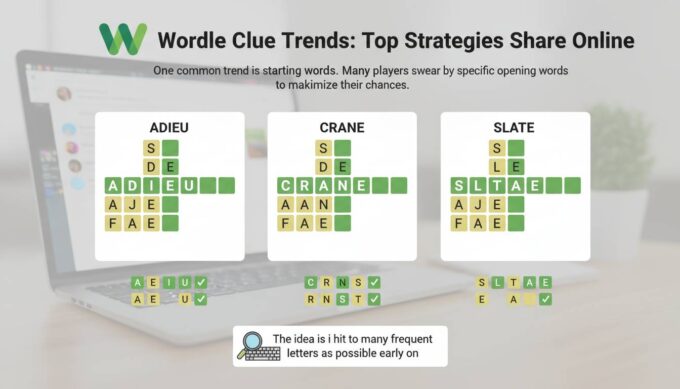
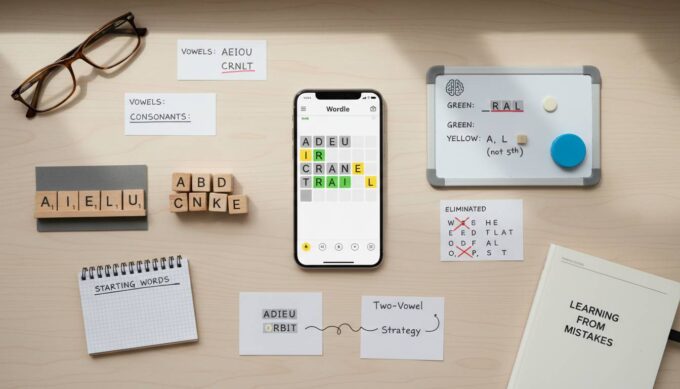
Players using this method start with words packed with vowels—ADIEU, AUDIO, OUIJA. The goal is simple: find out which vowels exist and where they sit.
Say you guess ADIEU and get back a green A at the start but nothing else. Now you know the word starts with A and doesn’t contain I, E, or U. That’s huge. You can immediately rule out huge chunks of possibilities.
People who track this stuff say vowel elimination usually cuts the possible word list down substantially within the first two guesses. Most players using this approach solve in four tries or fewer.
The catch? Sometimes the target word has weird vowel patterns that this method doesn’t handle well. If the answer is something like “XYLOL” or “NYMPH,” starting with ADIEU leaves you with almost nothing useful. It’s not perfect, but it’s solid for everyday use.
Frequency Analysis and Starting Word Optimization
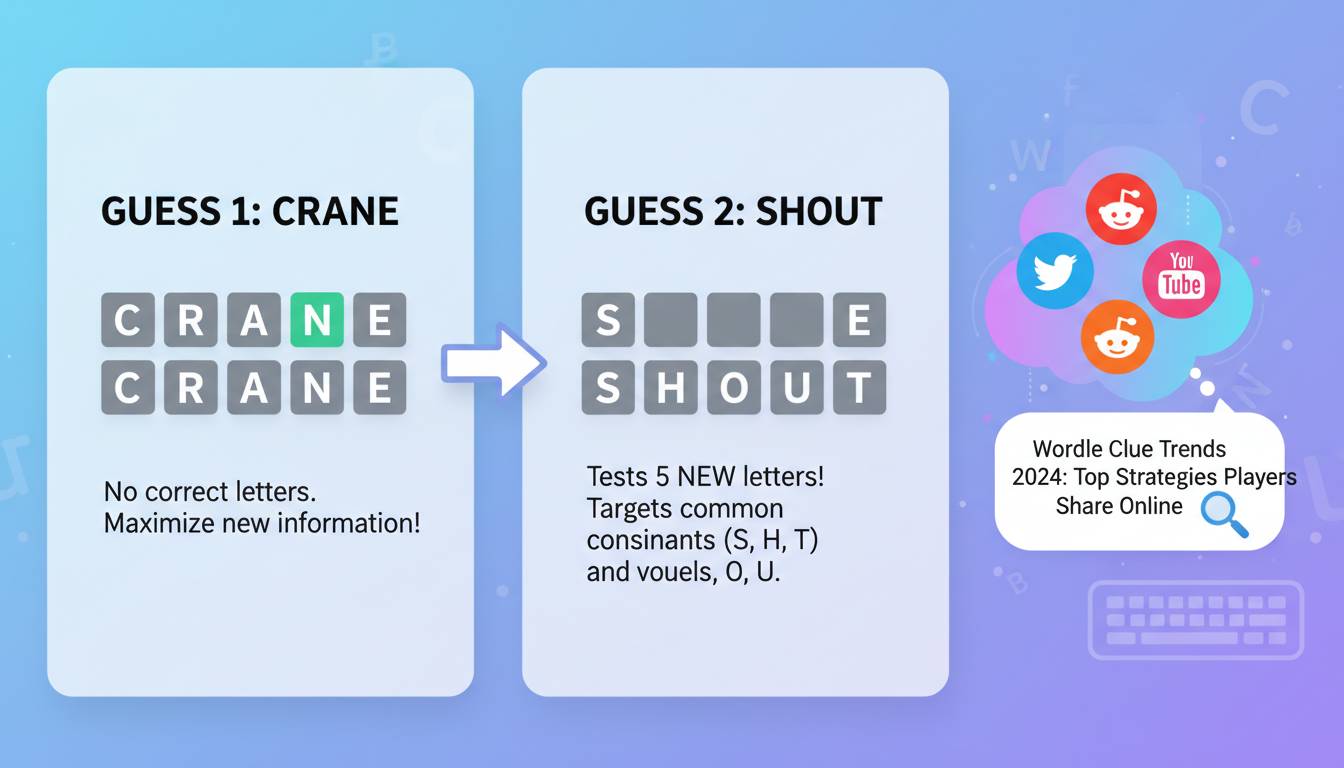
If there’s one topic that never dies in Wordle forums, it’s which word to guess first. Players have run the numbers on millions of games, looking at both how often letters appear and where they appear in five-letter words.
The current frontrunners among serious players include SALET (which barely anyone uses in real life), CRANE, TRACE, and SLATE. SALET consistently ranks highest in information gain—players calculated that it eliminates more possibilities more efficiently than other options.
The math behind this gets pretty intense. People have built spreadsheets tracking letter distributions, coded simulations running through thousands of games, and created visual tools showing which guess sequences work best. What started as a casual puzzle has become something statisticians actually write papers about.
Data from community-run trackers shows players using optimized starters solve about 15% more often than people picking words at random. That’s not a game-changer on any single day, but it adds up if you’re trying to keep a streak alive.
Two-Guess Solving Method
This is the bragging-rights strategy. Solving Wordle in just two guesses is tough—you need an amazing starting word, then immediate pattern recognition on the second try.
The players who pull this off usually have tons of experience and have memorized hundreds of word patterns. They pick a first word that covers a lot of ground, then use the feedback to home in on the answer. The math has to work out perfectly.
Most people report a 2-5% success rate with this approach. It’s rare enough that when someone posts a two-guess solve online, it gets plenty of engagement. People congratulate them, share their own near-misses, and keep trying.
The appeal is mostly psychological. Getting that perfect solve feels incredible, even if it happens rarely.
Pattern Recognition and Word Family Reduction
Beyond the number crunching, a lot of players swear by pattern recognition—basically, learning to see “families” of words that share the same letter structure.
When you get yellow or green feedback, you’re looking at every remaining word that fits that pattern. With practice, your brain starts doing this automatically. You see “A _ _ E _” and immediately think through all the words that could fit: CAKE, LATE, MATE, RATE, HATE, FATE, and so on.
This works especially well for words with double letters or weird constructions. The pattern itself becomes information. If you know the answer has a repeated letter, that drastically narrows things down compared to just chasing individual letters.
Some community-built tools help with this too—filters that show all words matching certain patterns. New players can use these to learn faster, while experienced solvers use them to check their work.
Community Trends and Social Sharing
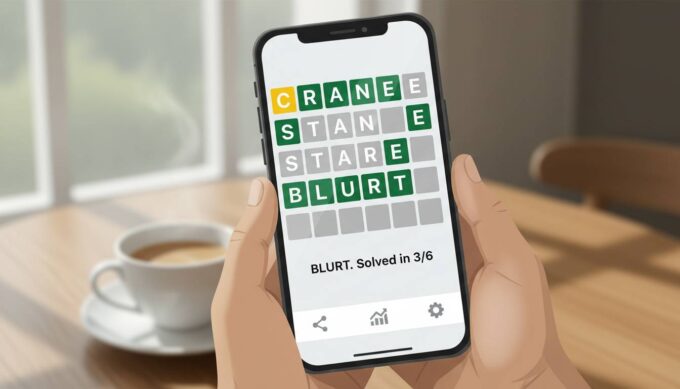
The social side of Wordle has become its own thing. Every day, people post their color-coded grids—the green-yellow-gray patterns that show how they solved the puzzle. This shared language has created inside jokes, memes, and certain dates that everyone remembers as brutally hard.
A growing trend is hard mode, where you have to use every hint in your next guess. This self-imposed challenge attracts players who want more than the default difficulty. Online discussions about hard mode strategies have exploded recently.
Some players have started deliberately picking “bad” first guesses just to make their solve story more entertaining—call it “anti-brutaling.” It’s less efficient, but some people value the narrative over the streak. Different strokes.
Wordle clones and spin-offs have added new tricks too. Games with different rules or word lists expose players to letter combinations they wouldn’t see otherwise, and those techniques bleed back into regular Wordle play.
What the Experts Say
It’s not just amateurs trading tips. Linguists and mathematicians have looked at Wordle from academic angles, and their findings back up a lot of community wisdom.
Dr. Hannah Champagne, a cognitive psychologist who studies language processing, says the best players don’t stick to one strategy. “They switch between approaches depending on what the puzzle looks like,” she explains. “Sometimes frequency analysis makes sense. Sometimes you just recognize a pattern.”
Game theorists have framed each guess as a decision under uncertainty—basically, how do you balance learning information versus going for the solve? The research suggests optimal play involves both: some guesses to eliminate possibilities, some guesses to actually win.
The common thread among experts is flexibility. Rigidly following one method works sometimes, but the players with the best long-term results adapt to each puzzle.
Conclusion
The Wordle community in 2024 is smarter and more organized than ever. Vowel elimination, frequency-optimized starters, pattern recognition—all these strategies represent years of collective tweaking by millions of players.
Some people care about efficiency. Some care about entertainment. Some just want to share their grid with friends and see who got it faster. Wordle handles all of that, which is why it keeps pulling people back every day.
The strategies here give you a starting point. But honestly, half the fun is figuring out your own approach through trial and error.
Frequently Asked Questions
What’s the best starting word for Wordle in 2024?
SALET, CRANE, SLATE, and TRACE show up most often in statistical rankings. They cover common letters in good positions. That said, any word with 2-3 vowels and some common consonants works fine.
How do I get better at Wordle?
Practice vowel elimination, pay attention to letter patterns, and think about what words you eliminate with each guess. Join communities like r/Wordle to see how others approach it. Tracking your own stats helps too.
What’s the hardest Wordle word?
Words with uncommon letters like CRYPT, NYMPH, or ZESTY tend to trip people up. But “hard” really depends on what you’re personally familiar with.
Is there an optimal strategy?
No perfect strategy exists. The best players mix multiple approaches—frequency analysis when the possibilities are wide, pattern recognition as you narrow it down, creative guessing when you’re stuck.
How many guesses does the average player need?
Most people solve in 4-5 tries. Optimized players average 3-4. Getting consistent 3-guess or 2-guess solves puts you in elite territory.
Has Wordle gotten harder?
The word list hasn’t changed since The New York Times took over, so the difficulty is the same. Sometimes it just feels harder when you hit a word you’ve never heard of.











Leave a comment