

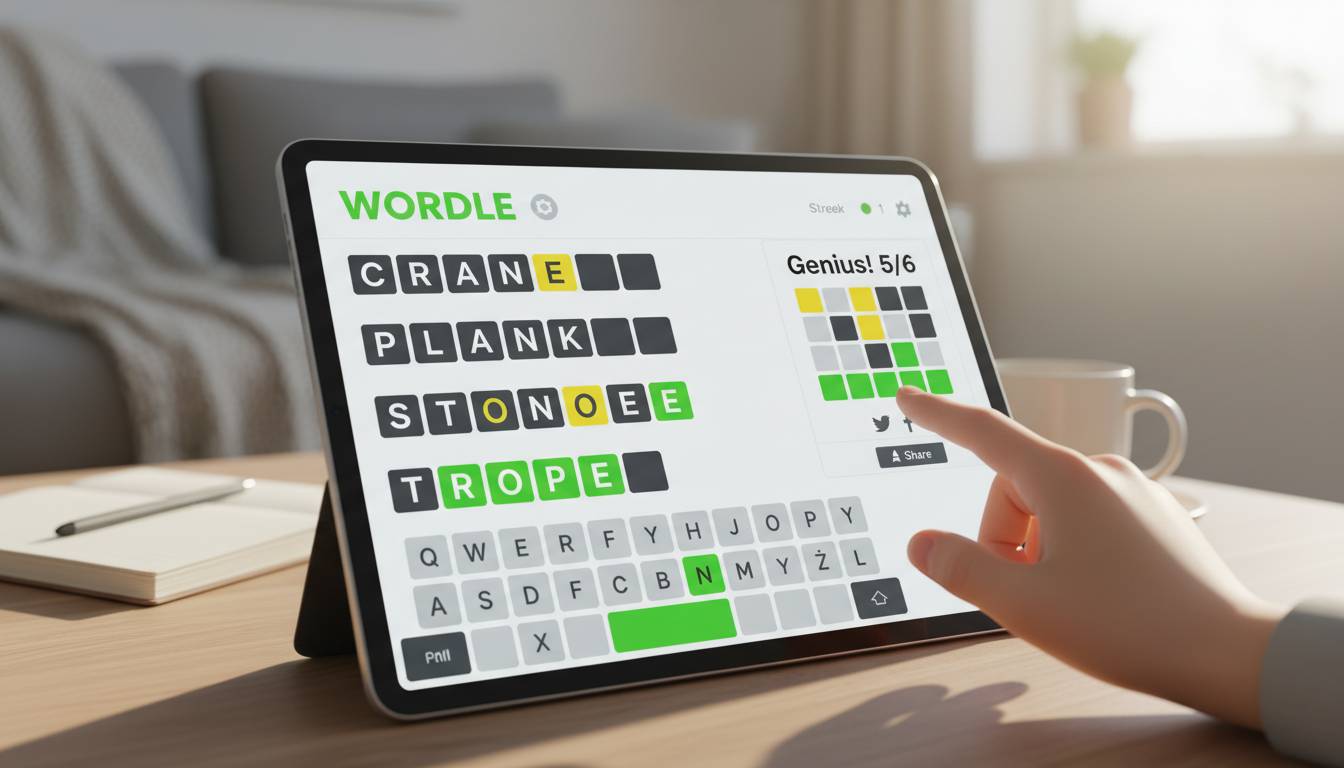
The way players share strategies has changed a lot since the game started as a side project by Josh Wardle. Now players can access tons of shared knowledge, analytical tools, and community wisdom. This article looks at the most popular strategies players use online, which ones actually work, and how the community keeps refining its solving techniques.
How to Pick Your First Word
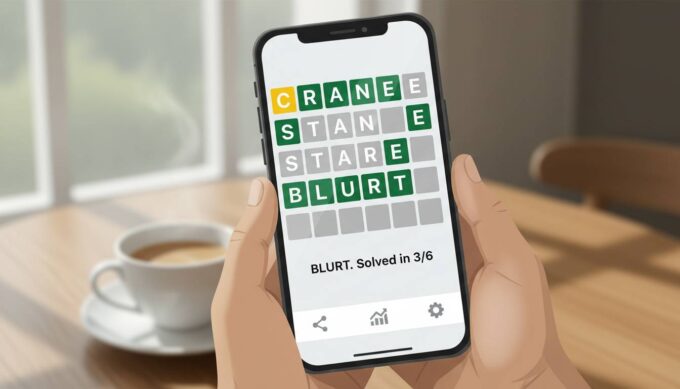
Choosing the best opening word is one of the most talked-about topics in Wordle strategy. Early players mostly went with their gut, picking words that felt comfortable or personal. But as more analytical players joined the conversation, a consensus around mathematically better first guesses started to form.
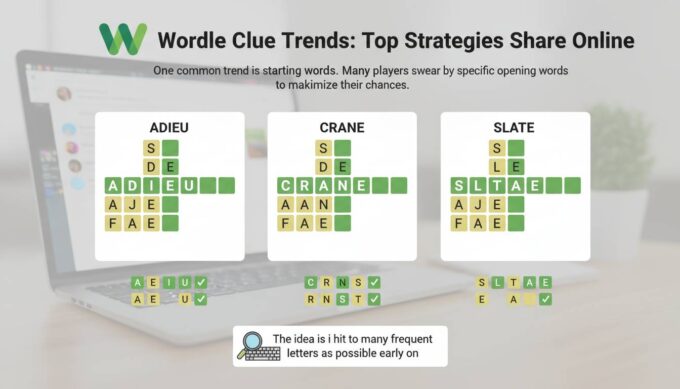
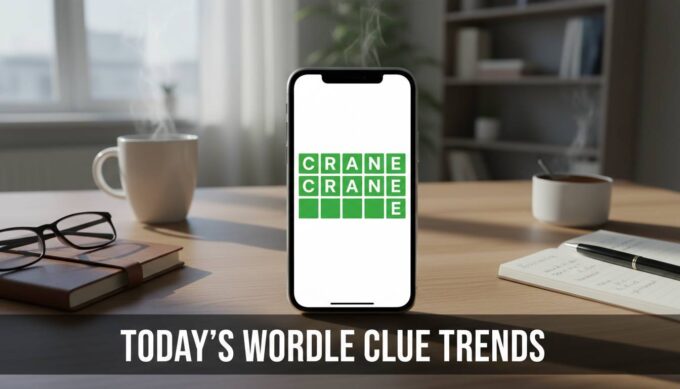
Data from Wordle solver communities shows that the best starter words focus on vowels and common consonants. Words like “SLATE,” “CRANE,” “ADIEU,” and “ROATE” consistently rank highest in letter frequency analysis. The reasoning is simple: finding vowels early narrows down the possibilities fast, while common consonants like R, T, N, and S appear in about half of all five-letter English words.
“SLATE” has become a favorite among strategy fans. It has three common consonants (S, L, T) and one vowel (A), giving players a balanced first guess that usually rules out or confirms several letters. Players who start with “SLATE” solve the puzzle in about 3.8 tries on average, compared to the global average of 4.2 tries.
Some players avoid repeated letters in early guesses since they give less unique information. Others argue that certain repeated patterns, like the double E in “SHEET,” can still tell you something useful about letter placement.
Beyond starter words, serious players use detailed letter frequency analysis that goes beyond just finding vowels. They look at where letters tend to appear in solutions, which letter pairs are common, and how to narrow down the possible answers.
Letter frequency in Wordle answers is different from regular English. Analysis of the official word list shows that some letters show up more often in specific positions. For instance, S often starts words but rarely ends them. E is common in the middle positions but less so at the beginning.
Several online tools now help players use this data. Wordle solver sites offer letter frequency charts, position-specific analysis, and algorithm-generated suggestions for each puzzle. These tools have become go-to resources for players trying to optimize their approach.
The Wordle solution set itself has been thoroughly analyzed. With about 2,300 possible answers in the official list, players can spot patterns that improve their chances. Words with common digraphs like “TH,” “CH,” and “SH” show up often, making them useful additions to solving strategies.
Reddit’s r/Wordle has become the main hub for strategy sharing and daily puzzle discussion. With over 500,000 members, the subreddit has daily threads where players analyze the day’s puzzle, share their solving paths, and argue about the best approaches. The community has developed its own vocabulary and methods that new players often find really helpful.
One popular community technique applies information theory to Wordle solving. Players calculate how much each guess eliminates possibilities, prioritizing words that narrow things down rather than just guessing letters they think might be right. This approach takes more mental math but works well for players who like the analytical side.
The hard mode setting, which requires using confirmed letter information in later guesses, has shaped a lot of community discussion. Hard mode players tend to be more careful early on, making sure they have solid positional information before trying to solve the puzzle. Many in the community think hard mode is the real way to play, saying it rewards logical deduction over lucky guessing.
Hint sharing has become an art form in these communities. Players have come up with ways to give helpful hints without giving away the answer. These range from cryptic descriptions of word characteristics to more direct but still indirect guidance about letter patterns or word types.
The New York Times Wordle has a built-in hint system that gives more help as players use more attempts. This has created three types of players: those who never use hints, those who use them sometimes for tough puzzles, and those who rely on them regularly.
The daily puzzle has made Wordle a morning ritual for many Americans. The 24-hour window for each puzzle creates a shared experience, with millions solving the same word on the same day. This timing has driven social media engagement, with green square results showing up everywhere on Twitter/X and Facebook.
The puzzle releases at midnight Eastern Time, which has created interesting community dynamics. West Coast players often solve before East Coast people wake up, sometimes causing accidental spoilers for those who check social media before playing.
Crossword fans have added Wordle to their daily puzzle routine. Many now do both the daily crossword and Wordle each morning, and some crosswords even include Wordle-related themes or answers.
The mobile-first design of Wordle has affected strategy development. Players on phones often prefer different approaches than those on physical keyboards. Shorter words might be easier to type, and swipe keyboards have changed how players enter guesses.
Accessibility features have also shaped strategy. The color-blind mode, which uses orange/blue/purple instead of green/yellow/gray, has sparked discussions about strategy changes. Some players say the alternative colors require conscious adjustment after getting used to the original system.
Browser extensions and third-party tools have come out to support players with accessibility needs, from screen reader compatibility to text-to-speech for people with visual impairments.
Besides math and analysis, psychology plays a big role in Wordle strategy. The “dread word”—a solution players really fear—has become a recognized idea in community discussions. Words like “JAZZY,” “QUIZZ,” and “FUZZY” often make players’ lists of most-hated answers because of their unusual letter combinations.
Risk tolerance varies a lot among players. Some like aggressive early guesses that might solve it quickly but have higher failure risk. Others take a conservative approach that almost guarantees a solution but needs more attempts. The best strategy depends on personal preference and how much weight players put on solving in few versus many tries.
The social sharing aspect has added another strategic consideration: making results that look good visually. Some players deliberately choose words that create attractive patterns of colored squares, balancing this aesthetic concern against pure mathematical efficiency.
The Wordle strategy scene keeps changing. As more players join and share their approaches, collective knowledge grows. New analytical tools come out regularly, offering more sophisticated ways to solve puzzles.
The recent addition of Wordle Bot by The New York Times gives players automatic performance tracking and personalized suggestions. This AI assistant looks at each player’s history and offers targeted advice, making advanced strategy concepts available to everyone rather than just dedicated fans.
Community discussions often speculate about potential game changes—longer words, different difficulty levels, or new game modes. Any official expansion could significantly reshape current strategy approaches.
Wordle stays popular partly because it’s easy to play but also because of the rich strategic depth that comes from millions of players sharing approaches and analyzing solutions. From mathematically optimal first words to community-driven hint systems, the Wordle strategy world has become more sophisticated than its simple appearance suggests.
The most successful players combine several approaches: thoughtful first word choice, letter frequency awareness, and参与社区知识. As the game continues and new players join, this collective wisdom will only grow.
Whether you prefer the precision of letter frequency analysis or the intuition of following your instincts, Wordle rewards both analytical thinking and creative deduction. The strategies shared online reflect this variety, so there’s always something new to learn for players who want to explore what the community knows.
What is the best first word for Wordle?
Based on letter frequency analysis, “SLATE,” “CRANE,” “ADIEU,” and “ROATE” are commonly considered top first words. These prioritize common vowels and consonants, giving maximum information about the daily solution. “SLATE” is especially popular because it has three common consonants and one vowel, effectively narrowing down possibilities.
How do I improve my Wordle strategy?
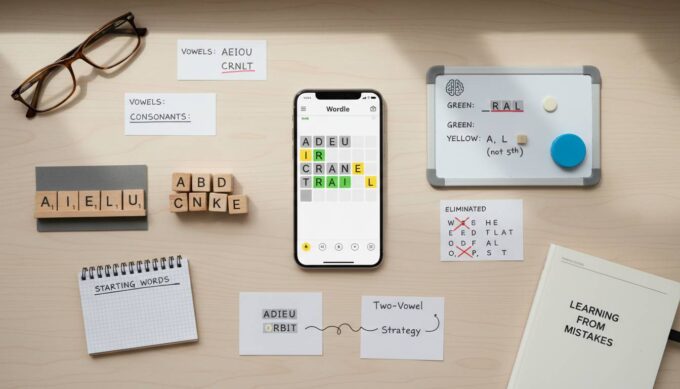
Focus on learning letter frequency patterns in Wordle solutions rather than general English. Use words with multiple vowels in early guesses. Try hard mode to force yourself to apply logical deduction. Consider joining communities like Reddit’s r/Wordle to learn from other players’ approaches and daily discussions.
What is hard mode in Wordle?
Hard mode is a setting that requires using all revealed letter information in subsequent guesses. If you discover a letter is in the correct position, hard mode forces you to keep it in that same position for all future guesses until you solve the puzzle or run out of attempts.
How does the Wordle hint system work?
The hint system, available through The New York Times app, gives progressive hints after each failed attempt. The first hint reveals one letter in the solution, while later hints provide additional letters or show their correct positions. Players can also reveal the answer if they get completely stuck.
Why do players share their Wordle results on social media?
Sharing results has become a daily social ritual. The colored square grid shows puzzle-solving success without revealing the answer, making it safe to share publicly. This social aspect has helped Wordle stay popular and created community among players.
Can I play previous Wordle puzzles?
The official Wordle game only provides access to the current daily puzzle. However, various third-party archives exist that let players solve past puzzles. These aren’t affiliated with The New York Times and may use different word lists than the official game.











Leave a comment