

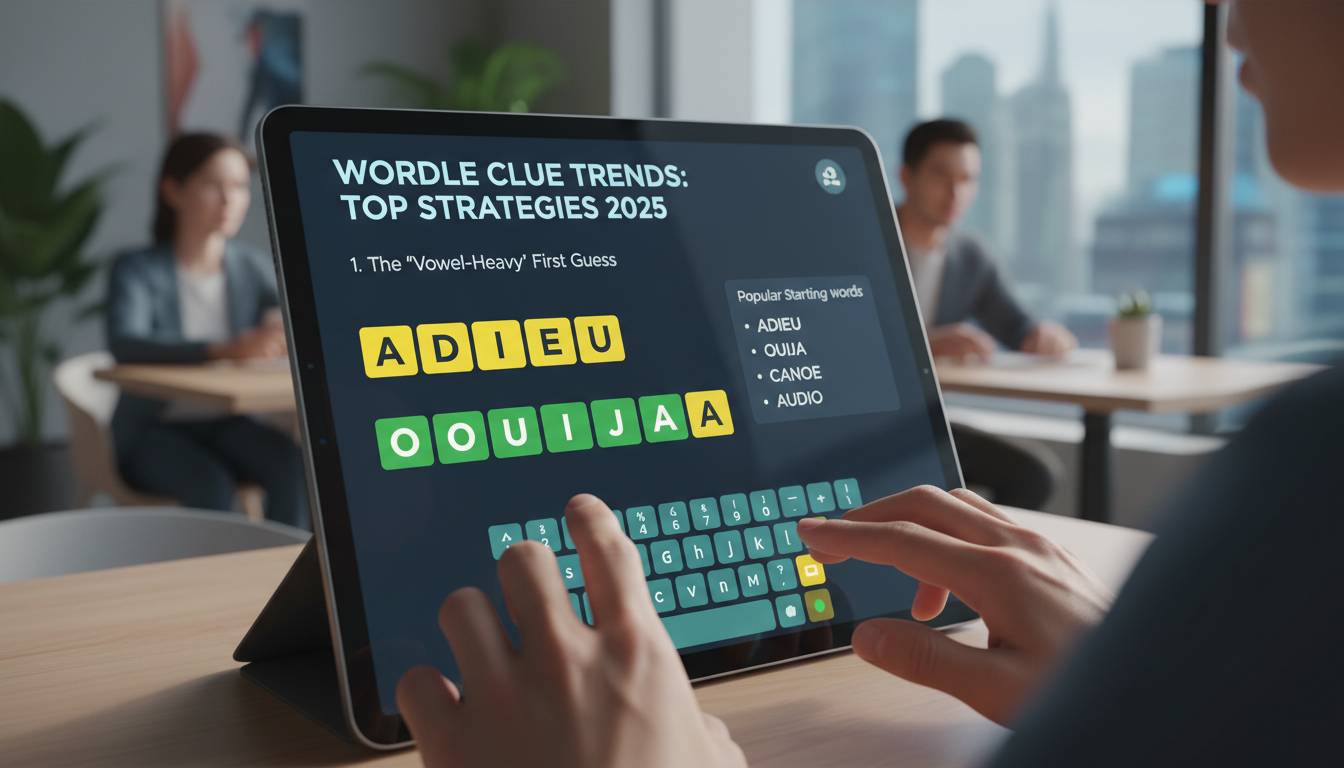
Wordle still dominates morning routines across America, years after it first went viral in 2021. The daily five-letter guessing game has grown into something bigger than anyone expected—players now share strategies on Reddit, Discord, and gaming forums, constantly refining their approaches based on statistical analysis and collective experience. This article dives into the most effective strategies floating around the Wordle community in 2025, looking at how shared knowledge has shaped modern solving techniques and what these trends reveal about puzzle-solving in the digital age.
Data-Driven Strategies Take Over
The Wordle community changed after The New York Times bought the game. What started as a casual daily habit became something much more analytical. Players now track win percentages, map letter frequency distributions, and post detailed breakdowns of their solving paths.
The numbers side of Wordle has gotten serious. Players have built databases tracking which letters show up most often in winning solutions. Letters like E, A, R, O, T, L, I, and S appear constantly, while Q, Z, X, and J barely show up. People use this info to pick starting words that hit common letters early.
Community tools like heat maps and letter performance visualizations have also popped up. These track recent puzzle history, letting players see which letters have been overused. The idea is that if a letter hasn’t appeared much lately, it might be due. The game actually picks words randomly, but players find comfort in the analysis anyway.
The Starting Word Debate
Every Wordle community argues about starting words. Which five-letter word gives you the best shot at solving fast? The debate gets pretty heated.
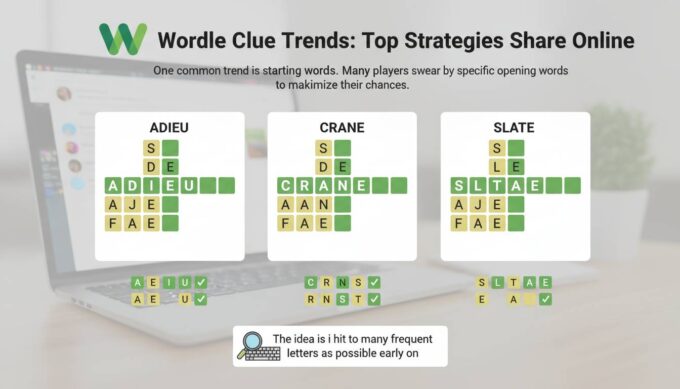
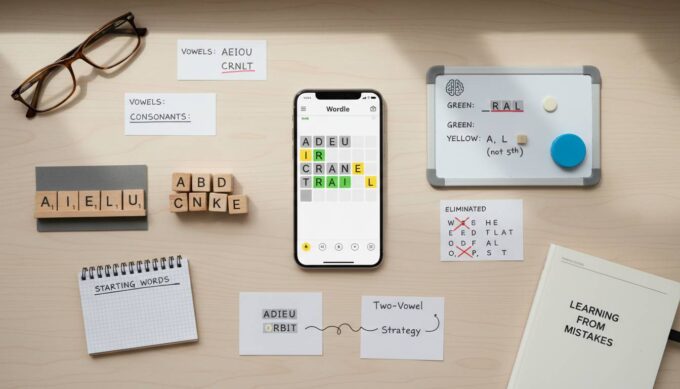
Old favorites like “ADIEU,” “STARE,” and “CRANE” still come up constantly. They hit multiple vowels, which helps you figure out quickly if A, E, I, O, or U are in the daily word. “ADIEU” covers four of five vowels—pretty efficient. But some players think this wastes the chance to find common consonants that show up in multiple spots.
Lately, “double-letter” starting words have gained fans. “SPEED,” “STEAM,” and “LLAMA” can reveal repeated letters, which show up in about 20% of solutions. If one instance turns yellow, you know that letter appears twice—a big advantage.
“Balanced” starting words have also caught on. Words like “SLATE,” “ROATE,” and “LATER” mix high-frequency consonants with vowels. Some players rotate through different starting words each day to get varied information.
Two-Letter Words: The Secret Weapon
The biggest strategy shift in recent years: two-letter words have become essential. These tiny words help eliminate letters during the middle rounds when you already have most of the puzzle figured out.
Wordle accepts around 100 two-letter words, though players usually memorize only the useful ones—”BY,” “EX,” “OW,” “QI,” “JO,” “XA.” They let you test rare letters that would otherwise go untested.
Experienced players have routines for using them. After getting three or four letters right with their opening words, they use remaining guesses to test two-letter combinations with suspected letters. This works well against puzzles containing Q, Z, X, and J, which show up in two-letter words way more often than in five-letter answers.
Tutorials about two-letter words have spread online. Most provide lists of the fifteen or twenty most useful ones, explain when to use them, and give practice scenarios. Players who master this technique often see real improvements in their solve rates.
Elimination Over Luck
Beyond specific word choices, the Wordle community has developed solving methods focused on elimination rather than lucky guessing. Each guess becomes an information-gathering tool, not a solution attempt.
The elimination method starts with your first guess and continues throughout. You prioritize words that eliminate as many letters as possible while testing new positions. A “good” guess eliminates lots of letters and tests letter spots, regardless of whether you get greens or yellows.
This methodical approach led to decision trees and flowcharts players use to guide their solving. After each result, they figure out which letters must be in the answer, which are impossible, and which remain possible. The goal narrows the field until only one word works.
Players argue about “breadth versus depth.” Some test many different letters early to eliminate big chunks of the alphabet. Others prefer learning specific letter positions before expanding their testing. Both approaches have fans, and skilled players switch between them depending on the puzzle.
Daily Patterns and Social Sharing
Players analyze daily puzzles themselves, looking for patterns in how the game generates words. The game picks randomly, but the community keeps tracking anyway.
Recent analysis has found some interesting patterns. Certain letter combinations—”TH,” “CH,” “SH,” or “ING” endings—show up more often than you’d expect. This affects starting words and follow-up guesses, as players test common pairs before trying obscure combinations.
Some players claim Monday puzzles are easier and midweek ones harder. Nobody’s proven this statistically, but the belief affects how people approach their daily solve.
Social media drives a lot of Wordle discussion. Twitter/X threads, Reddit posts, and Facebook groups fill up after each daily release. Players share results, celebrate hard solves, and talk about the puzzle immediately. This creates a shared experience—people check social media before playing to see how tough the day’s word might be.
Community Tools and Resources
The Wordle strategy world now includes tons of third-party tools. These range from simple letter frequency calculators to solvers that can crack any puzzle in three guesses or fewer.
Solver tools interest players who want to improve. They analyze available information and suggest mathematically optimal guesses. Studying how they think teaches you a lot about strategy—even if using them to play kills the fun for most people.
Tracking apps have also taken off. They记录 your solve times, guess counts, and streaks, giving you detailed performance analytics. Many include social features for comparing stats with friends, adding competition to what used to be a solo activity.
Educational content fills another niche. YouTube tutorials, podcasts, and guides explain strategy in detail, breaking complex concepts into manageable pieces. These resources let new players learn advanced techniques quickly instead of spending months figuring things out alone.
Where Wordle Strategy Is Heading
The Wordle community isn’t giving up on solving perfection anytime soon. New players join constantly, bringing fresh questions that keep discussions alive. Experienced players keep refining their approaches, looking for small improvements that might lower their average guesses or extend their streaks.
The New York Times has kept the core game the same while occasionally making small changes. These updates force established strategies to adapt occasionally, keeping longtime players engaged.
What’s interesting is how Wordle strategy reflects broader trends in digital problem-solving. Thousands of players analyzing, debating, and sharing has created an evolving knowledge base that helps everyone involved. This collaborative approach shows how even simple games can build real intellectual community.
As Wordle heads into its fifth year of massive popularity, these strategies represent the current state of community knowledge. Players who use these techniques, talk with other enthusiasts, and keep improving will be ready for whatever the daily puzzle throws at them.
Frequently Asked Questions
What is the best first word in Wordle?
There’s no single best choice, but popular options include “ADIEU” for testing many vowels, “STARE” or “CRANE” for balanced vowel and consonant coverage, and double-letter words like “SPEED” to find repeated letters. Many players rotate starting words to gather different information across puzzles.
How do I get better at Wordle without cheating?
Play regularly and study your losses—figure out which letter combinations and patterns you keep missing. Learn common two-letter words for elimination rounds. Focus on systematic elimination instead of random guessing. Looking at your game history reveals personal weak spots.
What strategies do advanced Wordle players use?
Experienced players use data-driven approaches: letter frequency analysis, elimination methods, and strategic two-letter words. Many remember common letter patterns and adjust starting words based on recent puzzle trends.
How many guesses should it take to solve Wordle?
Mathematically, three guesses or fewer is optimal. Casual players usually average three to five. A four-guess average or better is solid performance.
Are there patterns in daily Wordle puzzles?
Wordle picks words randomly, though players have noticed certain letter combinations (like “TH” or “ING”) appear frequently. These are probably coincidental. No reliable way exists to predict future puzzles.
Should I use Wordle solver tools?
Solvers teach you about optimal strategy by showing their decision-making. But using them to actually play removes the satisfaction of solving yourself. Many players use solvers for analysis after completing their daily puzzle instead of during gameplay.











Leave a comment