

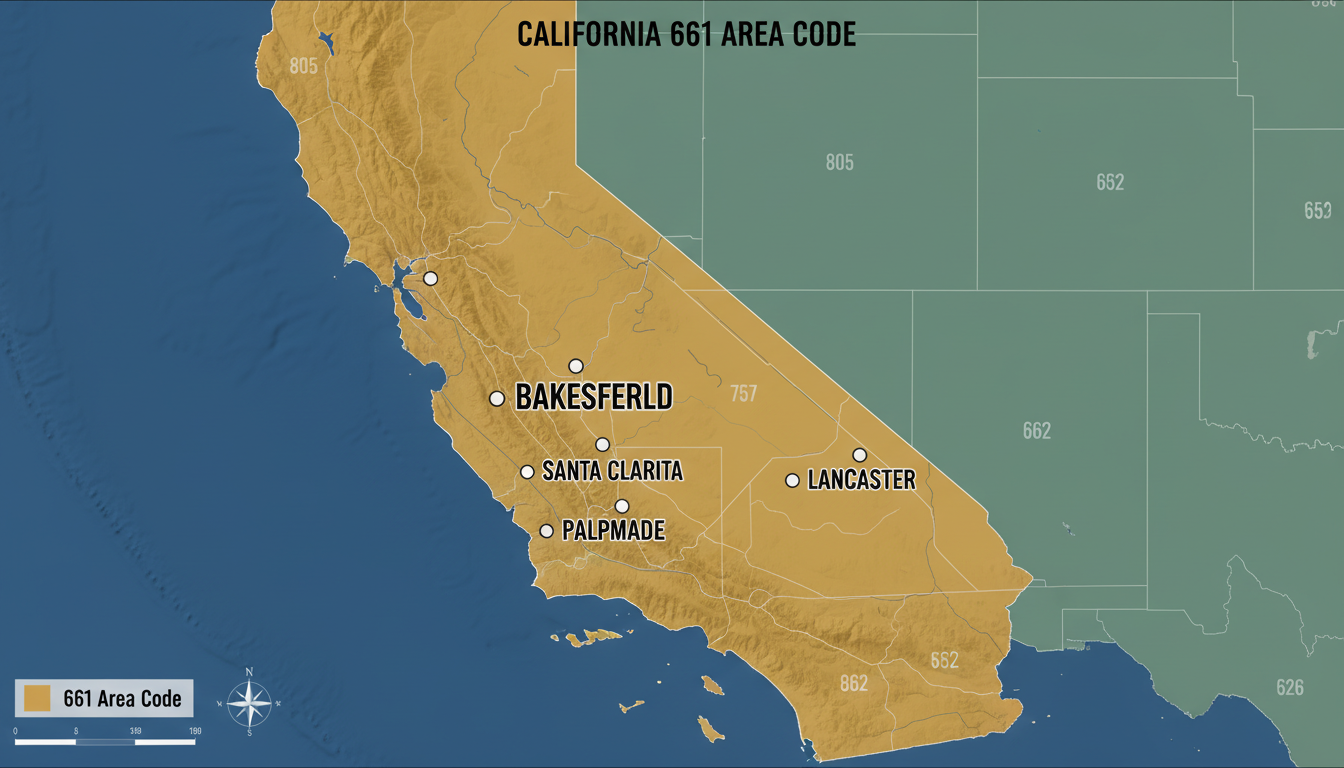
661 Area Code: What You Need to Know isn’t just another string of digits—it’s a window into California’s dynamic Central Valley and northern Los Angeles County. Glance at any number beginning with 661, and you’re tapping into places like Bakersfield, Palmdale, Lancaster, and a cluster of smaller towns with unique stories. Let’s stroll through this region’s geography, history, and quirky facts—though yeah, my brain might wander a bit, so forgive the occasional informal tone.
Geography and Coverage of 661
Where does it reach?
The 661 area code anchors itself in California, carving out the southern San Joaquin Valley and stretching into the northern fringes of the Los Angeles metro area. Major hubs include Bakersfield, Santa Clarita Valley, Lancaster, and Palmdale . It even nudges into parts of Ventura, Santa Barbara, and Tulare Counties, brushing the edges of urban and rural terrains alike .
Towns and landscapes within 661
The region is dotted with a mix of cities, CDPs, and charming hamlets:
– Kern County essentials: Bakersfield, Delano, Tehachapi, Wasco, Arvin, Mojave, and more .
– Northern L.A. county residents: Santa Clarita, Lancaster, Palmdale, Acton, Lake Hughes, Leona Valley, Pearblossom, Desert View Highlands, and others .
– Rural fringes: small locales in Santa Barbara and Tulare like Cuyama, Earlimart .
It’s kinda neat how one area code blankets sun-baked deserts, mountain fringes, and bustling suburban valleys.
Origins and Evolution
Back in February 13, 1999, 661 emerged from the western half of area code 805 via a classic split strategy—phone demand was climbing, and coastal codes like 805 needed relief . Funny as it sounds, splitting an area code sounds technical but really stems from people wanting to call someone without dialing extra digits. Since then, no overlay has been added—which means as of now, local 7-digit dialing is still alive in most parts, a rare holdover in California .
Demographics, Economy & Communities
Population makeup
Based on older census-derived data, around 1.15 million people live under the 661 umbrella, reckoned from 2010 figures: a mix that includes substantial Latino and multicultural populations . More recent estimates hint at over 1.3 million total—a logical jump given how fast places like Palmdale and Lancaster have grown .
Economic highlights by region
The region wears many economic hats:
– Bakersfield stands as an agricultural and energy base—fields, oil, and pipelines dominate .
– Lancaster and Palmdale lean aerospace-heavy, riding on defense, manufacturing, and commuter connections to LA .
– Rural outposts like Tehachapi lean into tourism and agriculture, while places like Mojave tap into desert logistics and aviation stops.
Sociocultural variety
Driving along, you’ll encounter vineyards in Leona Valley nestled next to military-owned Mojave airspace. This melding of desert, farmland, and suburbs makes the 661 region feel like California condensed—rich, varied, and ever-changing.
Practical Notes and Quick Insight
Let’s boil it down in list form—because sometimes a bullet list just does the job best:
- Dialing info: Local calls often remain 7 digits. For calls from outside, dial 1 + 661 + the number .
- Time zone: Firmly in the Pacific Time Zone, observing PST/PDT .
- Overlay activity: Currently none—so 661 remains the one and only code for this territory .
- County coverage: Primarily Kern and Los Angeles, plus bits of Ventura, Santa Barbara, Tulare, and maybe a sliver of San Bernardino .
“Area code 661 reflects California’s interior blend—from agricultural hum to aerospace connections—offering insight into growing suburban, rural, and industrial communities.”
— Telecom Analyst, speaking after reviewing 661 region data
Why It Matters—A Personal-ish Take
You might ignore area codes—until you don’t. Maybe you’re calling a friend in Bakersfield, scanning for a local plumber in Palmdale, or vetting a business number in Santa Clarita. Recognizing 661 helps you grasp regional identity, anticipate dialing rules, or maybe just feel clever decoding geography from digits.
Also, geography nerd confession: I find it kinda charming that one area code ties together desert sun, oil fields, vineyards, and mountain passes. It’s like the telephone lines stitch a quilt through California’s landforms.
Conclusion
The 661 area code isn’t just a relic of telecom planning—it’s a living slice of California. From its birth in 1999 via an 805 split, this code has come to represent diverse towns, flourishing suburbs, and economic strongholds across Kern and northern LA counties. With no overlay yet, it still allows 7-digit dialing—a quaint nod to simpler times. Whether you’re calling, studying demographics, or just geeking out on phone trivia, 661 stands as a reminder that tech history often entwines with place and people.
FAQs
What is the geographic range of area code 661?
It spans southern San Joaquin Valley and northern Los Angeles County, covering major cities like Bakersfield, Palmdale, Lancaster, Santa Clarita, and numerous rural communities across Kern, L.A., Tulare, Santa Barbara, Ventura, and parts of San Bernardino Counties.
When was area code 661 introduced?
Area code 661 was created on February 13, 1999, as a split from area code 805 to meet growing demand for phone numbers in inland California.
Can I still dial locally within 661 using just seven digits?
Yes, because there’s no overlay, many residents and businesses in the 661 region still use 7-digit dialing for local calls. Calls from outside require dialing 1 + 661 + the 7-digit number.
What industries define the 661 region’s economy?
The area is diverse: Bakersfield drives agriculture and oil; Lancaster and Palmdale focus on aerospace and manufacturing; townships like Tehachapi lean into tourism and agriculture, and Mojave touches energy and aviation logistics.
Which time zone does area code 661 observe?
661 lies in the Pacific Time Zone, following PST during winter and PDT during daylight savings.
Any signs of changes to the 661 area code soon?
Currently, there are no official plans for overlays or splits in the 661 area. Authorities continue managing number resources, but as of now, the code remains stable and intact.














Leave a comment