

Contextual Introduction
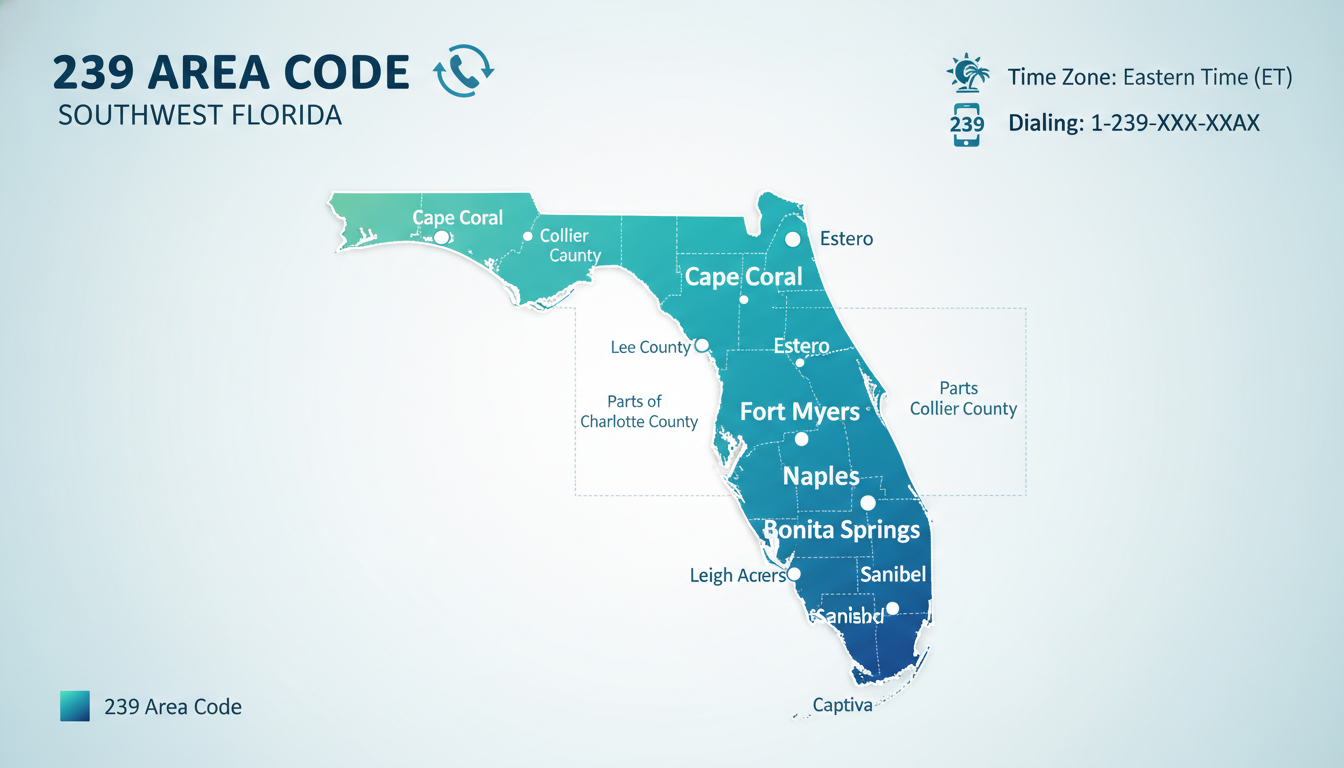
The 239 area code might seem like just another sequence of digits at first—yet it’s so much more than that. It’s tied to Southwest Florida, covering places like Fort Myers, Naples, and Cape Coral, and it offers insight into the region’s growth, communication patterns, and even cultural identity. The story of 239 reminds us that area codes aren’t static—they evolve with population shifts, new technologies, and regulatory decisions. Let’s wander through this telephone-code tale, blending lively storytelling with practical information—and maybe a few quirky detours along the way.
Origins and Geography Behind 239
What region does 239 serve?
239 spans a scenic stretch of Florida’s Gulf Coast, hitting cities like Naples, Fort Myers, Cape Coral, Bonita Springs, and Marco Island. Add in growing suburbs and tourist hotspots, and it’s clear that this area code blankets a dynamic, ever-expanding region.
Why that number? A quick glance
Originally, the 239 code emerged around 2002 due to rising demand. The need for more numbers came as Florida’s Southwest population boomed—thank you, retirees and seasonal residents. Switching from the classic 941 to 239 helped avoid number shortages. It’s maybe not romantic, but it’s functional, and it made communication easier across a growing population.
How Changes in 239 Shape Communications
The impact on local businesses and residents
In practice, changing or adding an area code means updating business cards, stationery, and all sorts of local marketing materials. There’s always a small scramble when new codes are rolled out, even though everyone eventually adapts.
Ever-growing demand—and what’s next
This region keeps expanding—new subdivisions, more businesses, increased tourism. That means 239 might need splits or overlays again in the future, especially if the phone-number pool starts filling up. Planning for those shifts is almost a strategic exercise for local planners and telecoms.
Real-World Example: Naperville meets Naples—or, US telecom meets Florida sun
Let’s detour a bit. Imagine a marketing agency in Naples rolling out a campaign. They have to tailor materials to reflect the 239 area code. Misplace that, and you might confuse demographic targeting or misroute leads. This tiny detail can undermine trust in a campaign, even if the rest is brilliant. So area codes are small but mighty in local operations.
Telecommunication Trends & 239’s Future
Why area codes still matter—even in a mobile-first world
With mobile phone ubiquity, many folks don’t think about their area code as a fixed identity anymore. But area codes still matter for local trust, perceptions, and regulatory tracking. After all, businesses want to appear local, and consumers use those numbers as quick signals of location and legitimacy.
Overlay vs. split: which holds up longer?
Typically, overlays (adding another code to a region without splitting) avoid changing existing numbers but require ten-digit dialing. Splits keep seven-digit dialing for a while but disrupt existing numbers. Overlays are becoming more common—more predictable, less invasive—though they do take some getting used to.
Expert Insight
“Effective communication infrastructure is about balancing continuity and growth. Area codes like 239 reflect a region’s evolution, yet they anchor identity in a fragmented telecom world.”
That sentence (kinda polished, I’ll admit) captures how codes are both functional bits and cultural threads. They connect individuals, businesses, and even seasons—like snowbirds heading south again—and area codes tie it all together.
Managing Your 239 Presence: Quick Tips
- Update confidently: If you’re business based in 239, double-check your materials—magnetic signs, online profiles, ad copy.
- Embrace local identity: Use “239-based” in your messaging to strike a familiar tone with customers.
- Prepare for dialing changes: If new codes or overlays emerge, get ahead of it—communicate early, train staff, update help desk scripts.
- Watch regulatory outlook: Area code exhaustion forecasts are public. Check Florida telecom authority publications for projections.
Conclusion
The 239 area code isn’t just a set of digits—it’s a mirror of Southwest Florida’s growth, identity, and technological adaptation. From its origin as an answer to number shortages to its role in local branding and communication, 239 illustrates how even small details echo wider changes. Keep an eye on population shifts, regulatory notices, and local developments—because the next chapter in the area code story might already be waiting just around the bend.
FAQs
Q: When was the 239 area code established?
It was introduced in the early 2000s, around 2002, as a split from the older 941 code to accommodate growing demand in Southwest Florida.
Q: Why might dialing rules around 239 change?
If number demand keeps rising, regulators might overlay another area code on the same region, requiring ten-digit dialing even for local calls.
Q: Do area codes still impact businesses?
Absolutely. Using the 239 code communicates local presence and trust, especially in regions where local identity matters, such as Naples or Fort Myers.
Q: How do I stay updated about changes in the 239 area code?
Telecom authorities and public utility commissions in Florida publish updates and projections about area code usage and planned changes—check their websites regularly.
Q: Can I keep my number if a new area code is added?
Yes. Overlays typically allow existing numbers to remain the same—only new numbers get the new code—though dialing habits may change.
Q: Are overlays better than splits?
Overlays cause less disruption to existing users, since numbers don’t change, but they do require everyone to dial ten digits for local calls.














Leave a comment