

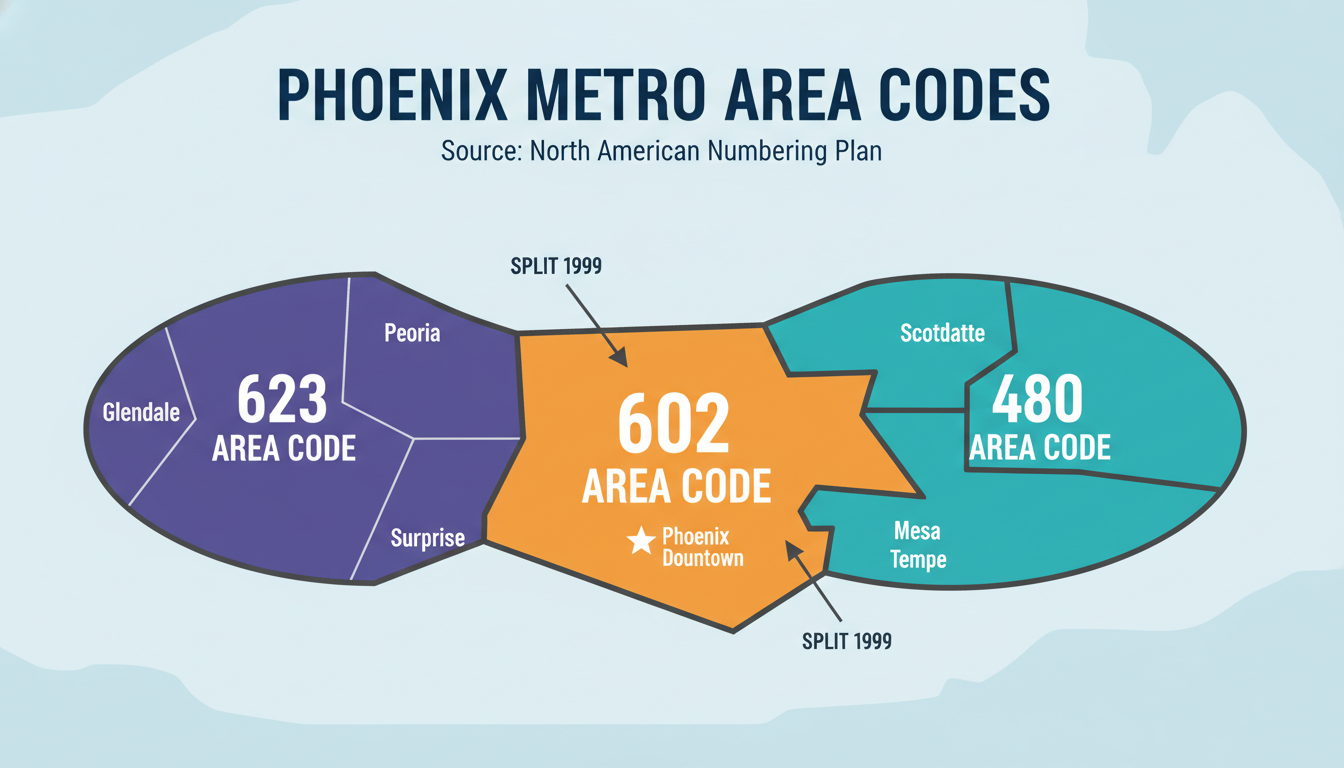
Ever glance at a phone number staring back at you with that “602” tag and wonder, “Okay, but what’s the story behind that?” You’re not alone. The 602 area code isn’t just a string of digits—it’s embedded in Arizona’s cultural and telecommunications history, but also tangled in modern twists like overlays and dialing quirks that make folks scratch their heads. This bit dives into everything you need to know, from roots to dialing tactics, without pretending it’s more complex than it truly is. Let’s get going.
A Brief Historical Snapshot: Origins of the 602 Area Code
The 602 area code dates back to the late 1940s when it was established to serve all of Arizona. Over the years, population boomed (especially in Phoenix), and demand for phone numbers kept climbing. That growth triggered a split in 1995—introducing area code 520 for southern Arizona—and later, others followed to keep up. Though it may sound technical, at its core, this shift mirrors the state’s surge in growth and connectivity.
On one level, it’s all number logistics. Yet it also reflects how Arizona became a hotspot—from desert calm to bustling metro hubs.
Navigating the Number Maze: Dialing Rules and Overlays
The Play-by-Play of Dialing
If dialing within the 602 area, you might assume that seven digits is enough. Well, that was once true. But nowadays? Ten-digit dialing (area code + phone number) is often the norm—even when calling next door. This shift stems from how overlays work.
Overlays: When One Area Needs More Digits
An overlay occurs when multiple area codes serve the same region—in this case, 602, 480, and 623 all cover parts of Phoenix. They were added precisely because the old numbers ran out. This approach avoids forcing everyone to switch their existing numbers, but it does mean dialing ten digits for local calls—a minor inconvenience, maybe, but might as well be on your radar when setting up speed dials or frustration-proofing your grandma.
Real-World Impacts: What This Means for You
Business and Branding Considerations
Imagine launching a startup in Phoenix. You pick a 602 number for its City Center edge. That’s great for local identity and maybe even instant legibility. But be mindful—any confusion with 480 or 623 might trip up a customer who hears your number and misdials. On the other hand, a well-marketed number can carry local authenticity.
Homegrown vs. Home Button
Internally, families might feel varying levels of attachment: some households in East Mesa (480) may bristle at being lumped in with “metro Phoenix” or at the 10-digit dialing requirement. Yet in other scenarios—like working remote across multiple zones—everyone ends up dialing the same way and, frankly, adjusting fast.
Dialing Behavior & Tech Culture: An Informal Study
A quick peek at how people actually adjust shows a kind of patchwork adaptation. People who grew up when “602 meant Phoenix” have a mental shortcut; they might instinctively drop the area code when dialing a neighbor but catch themselves when it doesn’t go through. Younger residents, who’ve only ever known ten-digit norms, just dial the whole thing without thinking.
Here’s a theory: familiarity breeds ease of use. Over time, people stop noticing. Yet, at dialing parties (okay, maybe not actual parties), mixes still happen—enter the Google or contacts check.
Expert Insight: What Telecom Folks Say
“Overlays were a way to manage explosive growth without uprooting existing users. Dialing rules follow suit—people adapt quickly, but educating the public is key.” — Communications planner, regional telecom authority.
That rings true. It’s a sort of compromise: preserve existing numbers (a nod to trustworthiness), while ensuring new ones can weave into the system. Add consistent messaging and it works.
How to Navigate This: Practical Tips
To keep your communication smooth:
- Always program your frequently dialed local numbers by ten digits—prevents mix-ups.
- When print marketing, include area code plus number clearly—“602-xxx-xxxx”—to avoid ambiguity.
- When relocating within metro Phoenix, ask if your new number will stay 602 or shift to 480 or 623 (or be part of an overlay).
- For businesses: using a 602 number signals centrality, but clarity in voice prompts or digital listings is crucial to counter misdial risk.
These tips may seem small, but they make a real difference—especially when every missed call could be a missed opportunity.
Why It Still Matters Today
Even though mobile phones make area codes less rigid, the psychological and brand associations remain. A 602 number still carries that “you’re in downtown Phoenix” vibe. It’s hipper than 623 maybe, or not—but it feels central. And if you’re sending out mailers,pooled across regions, or branding for local pride, you’ll see the edge.
Concluding Summary
Peeling back the layers, the 602 area code shows how something as mundane as digit assignments intersects with technology, identity, and everyday life. Splits and overlays evolved to balance growth and convenience. Dialing rules morphed to reflect new realities. What remains constant is adaptation—slow or fast, everyone who lives there figures it out. So next time you see “602,” you’ll know it’s more than a number—it’s part of a region’s story.
FAQs
What geographic area does the 602 area code cover?
The 602 code primarily covers downtown Phoenix and surrounding urban zones. It’s not the only code for the metro area, but it anchors central city.
Why do I have to dial ten digits even for local calls?
Ten-digit dialing became necessary because of overlays—multiple area codes like 602, 480, and 623 share the same region. This ensures calls route correctly in the system.
Is it better for a business to have a 602 number vs. 480 or 623?
A 602 number conveys a central Phoenix identity, which might help brand recognition. However, the choice depends on target audience and clarity—especially if customers may confuse area codes, so clear communication matters.
Can my area code change if I move within metro Phoenix?
It’s possible. Some neighborhoods shift between area codes or adopt overlays when moving or changing service. Always check with your provider whether you’ll keep your number or get a new one.
Do newer phone systems ignore area codes?
Modern carriers generally require ten-digit dialing, regardless of landline or mobile, due to technical routing rules. So, while mobile phones are less tied to geography, dialing structure still matters.
How can I minimize misdials when using overlays?
Best bet: save numbers using full 10-digit format and include the area code prominently in all listings or print materials. That way, you reduce mix-ups and smooth your personal or business comms.
With all that said, 602 isn’t just a phone code—it’s part Phoenix’s story, part your daily dialing habit. The little awkwardness around ten-digit dialing fades with time, but the connection to place stays.
















Leave a comment