

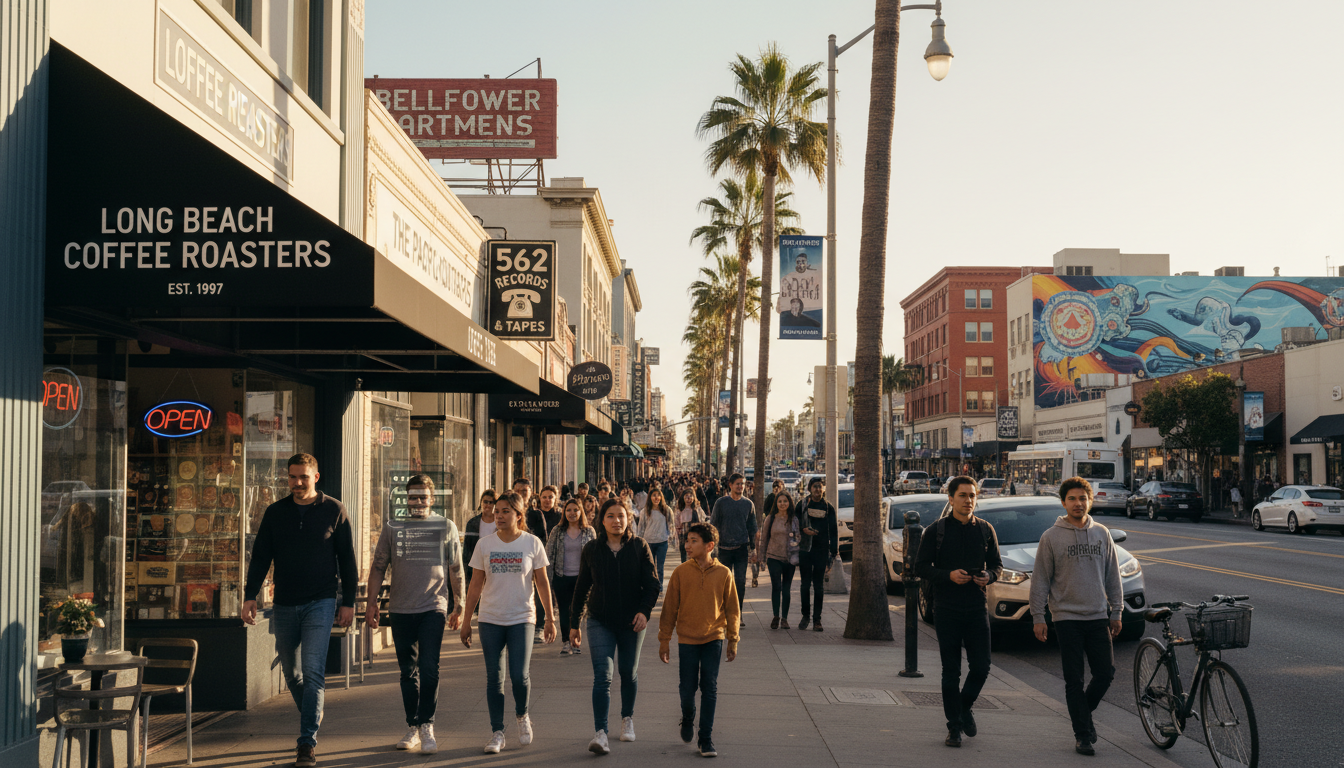
Ever dial a random number and notice the 562 code pop up? Or maybe you’ve wondered why some local businesses list it while others don’t. Let’s walk through what the 562 area code actually covers, how it came to be, and why it matters for both residents and businesses. I’ll try to sound real, maybe a bit conversational—like I’m explaining this over coffee—so don’t expect perfect grammar or a stiff tone.
Why the 562 Area Code Exists (and Split Off from 310)
Back in the early ’90s, California’s booming phone demand meant the 310 area code was running out of numbers. So, the telephone industry carved out a piece—around 1997—to form 562. The goal? Keep things local numbers spacious enough for growth, but also avoid one code reaching capacity too fast.
Putting it another way: the division wasn’t just bureaucratic red tape. It was necessity. The big lesson here is how telecom regions evolve according to population and technology growth. Weirdly human, right? Even our phone codes adapt to bigger shifts.
What Geographic Areas Fall Under 562
Discernible but not perfectly obvious, 562 primarily covers southeast Los Angeles County. That includes cities like:
- Long Beach
- Downey
- Norwalk
- Lakewood
- Pico Rivera
- Bellflower
There’s a fair bit of territorial overlap—some parts of LA County, Orange County border areas—where dialing behavior might feel inconsistent. Knowing your precise location helps if you’re setting up services or targeting regional audiences.
How Does It Affect Businesses?
For local businesses, 562 can be a branding boon or a headache depending on how you look at it. Many customers equate 562 with long-established, local presence—good for trust-building. On the flip side, growing startups or digital-only services sometimes prefer neutral or statewide area codes (like 909, 213, 818) to avoid hyper-local tagging or perceived limitation.
A simple move like picking the right area code can influence how your business is perceived—especially for service industries like HVAC, plumbing, real estate, and home services where locality matters.
Dialing Rules: What You Need to Know in Everyday Life
You probably know this already: within the same 562 area, you can often dial just seven digits. But once you cross certain boundaries—even nearby ones that don’t share the prefix—you’ll need the full ten-digit number. As landline use dwindles, the 10-digit norm is becoming more reliable, though it can still catch you off guard when gifting a “local” number to someone outside the area.
Also, if you’re calling cell phones from landlines—even in the same code—sometimes it automatically switches to 1 + area code + number, depending on your provider. Good to verify with your carrier if you’re setting up service or code-based filters.
Evolution and Overlay: Future of 562?
Right now, 562 is stable; there’s no overlay or split pending in public pipeline. But telecom patterns suggest that as demand grows—particularly among mobile and VoIP usage—plans can pop up. The key hint: keep your ear to the ground via the North American Numbering Plan Administrator (NANPA) sites, or local telecom advisories. Doesn’t hurt to check every year or so.
Real-World Example: Local Shops & Area Code Identity
Consider a beloved mom-and-pop shop in Long Beach that’s been around for decades. Their number: (562) 555‑1234. The area code alone signals to locals that this is their neighborhood. That familiarity can be worth more than any ad campaign. Yet their new e‑commerce offshoot, with national reach, uses a toll‑free number to appear more accessible nationwide.
It’s a fascinating balance between hyper‑local branding and broader reach—which is partly what telephony geography still drives, even in a global digital world.
“An area code isn’t just a number—it’s a tiny piece of identity. For businesses and communities, it says, ‘I’m from here,’ and that matters more than we often admit.”
Summary Takeaways
- 562 stems from a split of 310 in the late ’90s to manage number scarcity.
- It covers southeast Los Angeles County cities like Long Beach, Downey, Lakewood, and others.
- For businesses, choosing 562 can reinforce local credibility—or feel limiting if you aim for broader reach.
- Dialing behaviors vary—generally seven‑digit locally, but ten‑digit or 1+area code grows common, especially across boundaries.
- No current overlays, but telecom demand could change area code dynamics in the future.
FAQs
1. What areas exactly use the 562 area code?
It primarily serves southeast Los Angeles County—including cities like Long Beach, Downey, Norwalk, Lakewood, Pico Rivera, and Bellflower—but boundaries can blur near county lines.
2. Can I dial just seven digits within the 562 code?
In many cases, yes if you’re calling locally within 562—but 10-digit dialing is increasingly common and sometimes required depending on provider or location.
3. Is 562 being phased out or replaced soon?
Not at present. It remains active without any announced splits or overlays, though staying tuned to NANPA or telecom news is wise.
4. Why do some businesses prefer 562 while others use different codes?
Local businesses often use 562 to convey community roots or trust, while businesses aiming at wider geographic markets might choose other codes—including toll-free numbers—to avoid being pigeonholed.
5. Are there any dialing quirks tied to cell phones or landlines in 562?
Sometimes carriers default to 1 + area code + number, even locally—so always check with your provider when setting up services or if dialing oddly differs.
Let me know if you want a deeper dive into specific city boundaries, overlay history, or dialing behavior trivia.










Leave a comment